

New York’s home-care fraud scandal exposes Medicaid’s rotten incentives

Premium domains for sale
Freedom Is Back In Style
Medicaid is federally funded and state-run, but the program’s beneficiaries often have the least say in who provides their care and what that care costs.
Freedom Is Back
In Style
Premium domains for sale
That’s a built-in flaw. States have every incentive to maximize federal matching funds while federal taxpayers bear much of the cost. The result pits state bureaucrats against Washington’s need to control Medicaid spending — and against taxpayers’ interest in stopping providers, insurers, and contractors from cashing in on weak oversight.
New York’s home-care scandal is not merely a contracting failure. It is a warning about Medicaid’s overall design.
That is why cosmetic Medicaid reforms so often produce more spending, more inefficiency, and more fraud.
Just look at New York.
Democrat Governor Kathy Hochul’s administration botched the reform of its roughly $11 billion Consumer Directed Personal Assistance Program, a Medicaid-financed home-care benefit, so badly that federal prosecutors came knocking.
The U.S. Justice Department recently sued the New York State Department of Health and Public Partnerships LLC, the program’s sole fiscal intermediary since 2025. Prosecutors allege that New York’s CDPAP reform, supposedly designed to reduce waste in a billion-dollar program, instead created conditions for an ongoing Medicaid fraud scheme.
Personal care — nonmedical long-term care provided in the homes of elderly and disabled patients — is especially vulnerable to waste and abuse. The reason? It’s difficult to verify that caregivers worked the hours billed or provided the services claimed.
“The service is delivered by unlicensed caregivers in private residences, usually with no on-site supervision,” Bill Hammond of the Empire Center has explained. “The risk is heightened when the aide is a friend or family member of the patient, which is allowed under the popular and rapidly growing [CDPAP].”
New York’s numbers show the scale of the problem.
In 2021, the state employed 138 home-health and personal care aides per 1,000 residents age 65 or older — more than double the national average. New York City employed 236 aides per 1,000 older residents. By 2024, the statewide rate had climbed to 171 aides per 1,000 older residents.
Home care was supposed to reduce New Yorkers’ reliance on nursing homes. Yet the share of elderly New Yorkers living in nursing homes declined more slowly than in almost every other state, while New York’s per capita Medicaid spending on nursing homes remained the highest in the nation and more than double the U.S. average.
RELATED: Medicare red tape turned insurers into villains
 NoDerog/Getty Images
Over the decade leading up to 2025, hundreds of fiscal intermediaries emerged to process payroll for CDPAP lay caregivers and perform other administrative duties. These intermediaries eagerly tapped loosely supervised Medicaid dollars.
Many aggressively advertised the opportunity to become a CDPAP caregiver and get paid by Medicaid to care for a family member — eventually at the same legally mandated minimum pay as professionally trained home-care aides.
That helped fuel what Hammond described as “seemingly bottomless and unchecked demand for a costly Medicaid benefit, which has been rising almost 10 times faster than the growth of the state’s elderly population.”
In 2024, New York passed legislation consolidating CDPAP management under a single statewide contractor. The state awarded that role to PPL.
By then, CDPAP relied on nearly 600 intermediary firms, and enrollment had exploded from roughly 12,000 to more than 250,000 between 2015 and 2023.
By shrinking the bureaucracy, New York lawmakers claimed they would restrain CDPAP’s soaring costs. Once again, they promised greater accountability and hundreds of millions of dollars in savings.
They did not deliver.
According to the Justice Department, the procurement process for “one of the most lucrative contracts for administering a Medicaid program in the nation” was compromised from the beginning. Prosecutors allege that “PPL was preselected as the winner through a sham bid process.”
The transition from hundreds of intermediaries to PPL was also disorderly. An unrealistic timeline, evident to both PPL and the Department of Health, disrupted patient care.
Most important, prosecutors allege that “PPL and New York, without explanation, have disregarded key limits the contract imposed on the revenues and profits PPL was entitled to.” Those limits were “central to the goal of saving hundreds of millions of dollars through the CDPAP transition.”
PPL allegedly “siphoned millions of dollars of Medicaid funding,” with the state Department of Health complicit in the ongoing scheme.
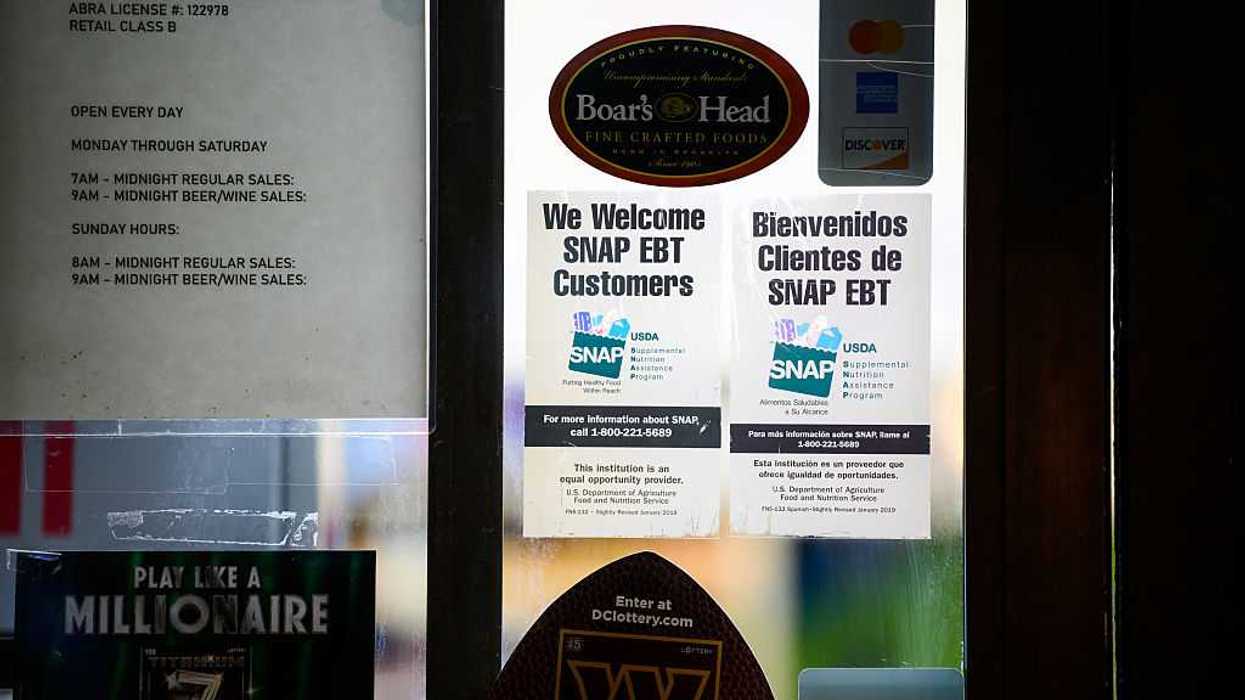
RELATED: SNAP may be paying for manicures, bongs, and an obesity epidemic — on your dime
 Pete Kiehart/Bloomberg/Getty Images
PPL can be replaced. But another company eager to rent-seek will inevitably take its place unless the incentive structure changes.
As long as federal taxpayers contribute anywhere from $1 to $9 for every $1 New York contributes to fund Medicaid for New Yorkers, state administrations and health officials will remain too complacent about the misuse of taxpayer money.
Any money recovered from this alleged scheme would be dwarfed by Medicaid’s broader improper spending crisis, which may have exceeded $1 trillion over the past decade.
New York’s home-care scandal is not merely a contracting failure. It is a warning about Medicaid’s overall design.
The program rewards states for spending more, obscures responsibility for waste, and leaves taxpayers chasing fraud after the money is gone. Overhauling Medicaid to restore accountability is long overdue.
More from this network:
Domains for Sale · GOTPeople.org · TheDSAPlatform · The Truth About Socialism
Originally Published at Daily Wire, Daily Signal, The Blaze, or Fox News
What's Your Reaction?
 Like
0
Like
0
 Dislike
0
Dislike
0
 Love
0
Love
0
 Funny
0
Funny
0
 Wow
0
Wow
0
 Sad
0
Sad
0
 Angry
0
Angry
0

I am just an average American. My teen years were in the late 70s and I participated in all that that decade offered. Started working young, too young. Then I joined the Army before I graduated High School. I spent 25 years in, mostly in Infantry units. Since then I've worked in information technology positions all at small family owned companies. At this rate I'll never be a tech millionaire. When I was young I rode horses as much as I could. I do believe I should have been a cowboy. I'm getting in the saddle again by taking riding lessons and see where it goes.
Premium domains for sale


















Comments (0)