

Not the Usual 6-3: Supreme Court Clears Way for Lawsuit Over Suicide Bombing

Premium domains for sale
Freedom Is Back In Style
The Supreme Court had another 6-3 ruling in deciding that a veteran wounded by a suicide bomber in Afghanistan could sue a military contractor.
Freedom Is Back
In Style
Premium domains for sale
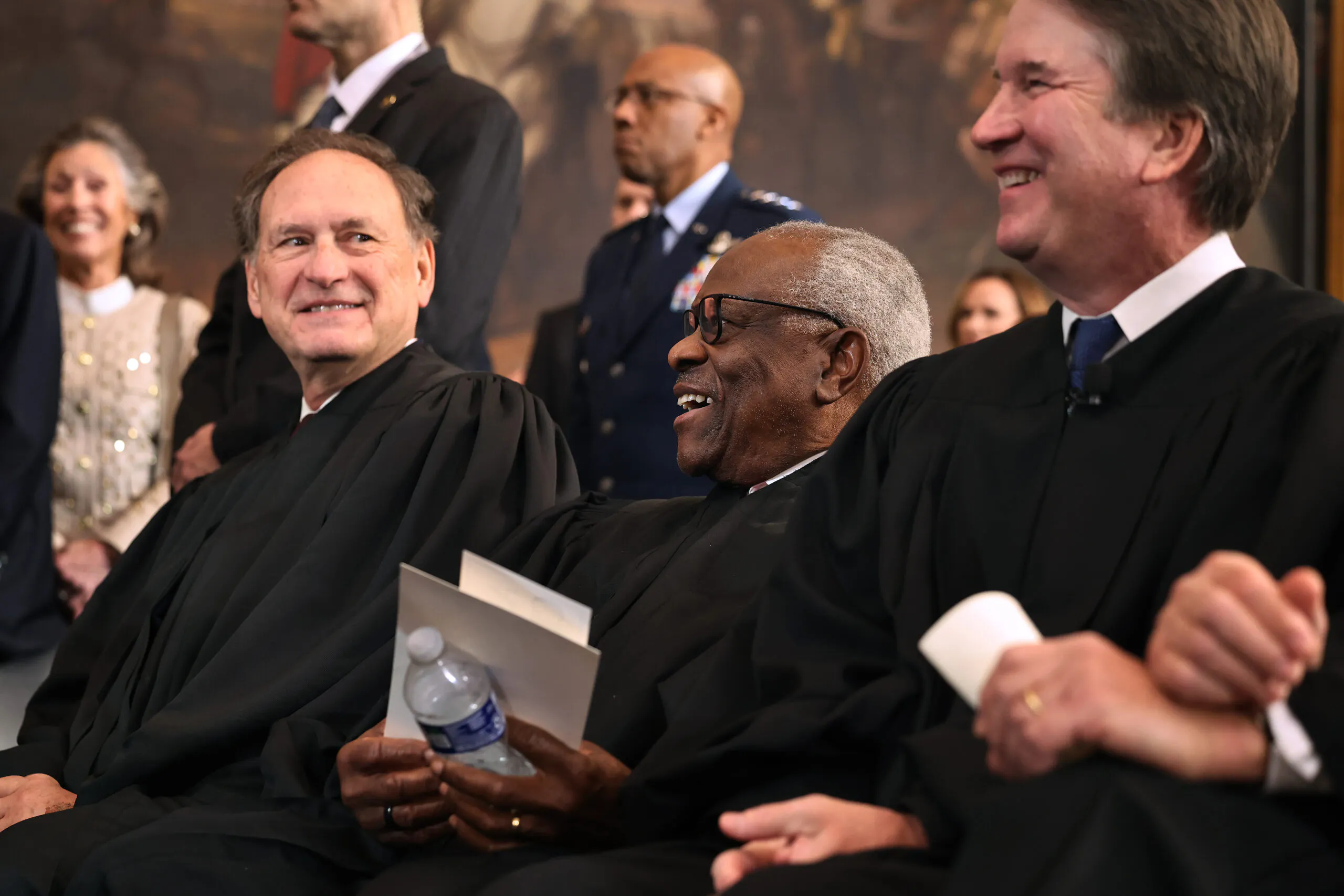
In an unusual twist, however, the court’s three liberals—Justices Sonia Sotomayor, Elena Kagan, and Ketanji Brown Jackson—joined Justice Clarence Thomas in the majority opinion on Wednesday. The case largely addressed whether government immunity from most lawsuits extends to private companies working for the government.
The story behind the case involved former Army Specialist Winston Hencely, who suffered severe brain injuries in 2016 while attempting to stop an Afghan suicide bomber who blew himself up at Bagram Airfield. The bomber was employed by a military contractor.
Justice Thomas, in his majority opinion, rejected the “battlefield preemption” argument made by Fluor Intercontinental, a Texas-based military contractor that operated in Afghanistan.
“Fluor has not identified any provision of law expressly preempting Hencely’s suit,” Thomas wrote.
Conservative-leaning Justices Neil Gorsuch and Amy Coney Barrett also joined the majority. Dissenting were Chief Justice John Roberts and Justices Samuel Alito and Brett Kavanaugh, all conservative-leaning justices appointed by Republican presidents.
Hencely was wounded at Bagram when he stopped Ahmad Nayeb, who was wearing a suicide vest, from entering a crowded area.
Nayeb blew himself up, killing five people and wounding more than a dozen, the Associated Press reported. He was attempting to detonate the vest at a Veterans Day weekend 5K race on the base.
Hencely’s skull was fractured, leaving him with a traumatic brain injury and without full use of the left side of his body. He sued Fluor after an Army investigation faulted the company for failing to properly supervise Nayeb, who built the vest on the job site inside the base, according to court documents.
The company argued that it was immune from lawsuits because it was operating during wartime on behalf of the government, which generally has sovereign immunity.
More from this network:
Domains for Sale · GOTPeople.org · TheDSAPlatform · The Truth About Socialism
What's Your Reaction?
 Like
0
Like
0
 Dislike
0
Dislike
0
 Love
0
Love
0
 Funny
0
Funny
0
 Wow
0
Wow
0
 Sad
0
Sad
0
 Angry
0
Angry
0

I am just an average American. My teen years were in the late 70s and I participated in all that that decade offered. Started working young, too young. Then I joined the Army before I graduated High School. I spent 25 years in, mostly in Infantry units. Since then I've worked in information technology positions all at small family owned companies. At this rate I'll never be a tech millionaire. When I was young I rode horses as much as I could. I do believe I should have been a cowboy. I'm getting in the saddle again by taking riding lessons and see where it goes.
Premium domains for sale
















Comments (0)