

People Are Ditching Convenience For Something They Can Actually Control
Premium domains for sale
Freedom Is Back In Style
This article is part of Upstream, The Daily Wire’s new home for culture and lifestyle. Real human insight and human stories — from our featured writers to you.
Freedom Is Back
In Style
Premium domains for sale
***
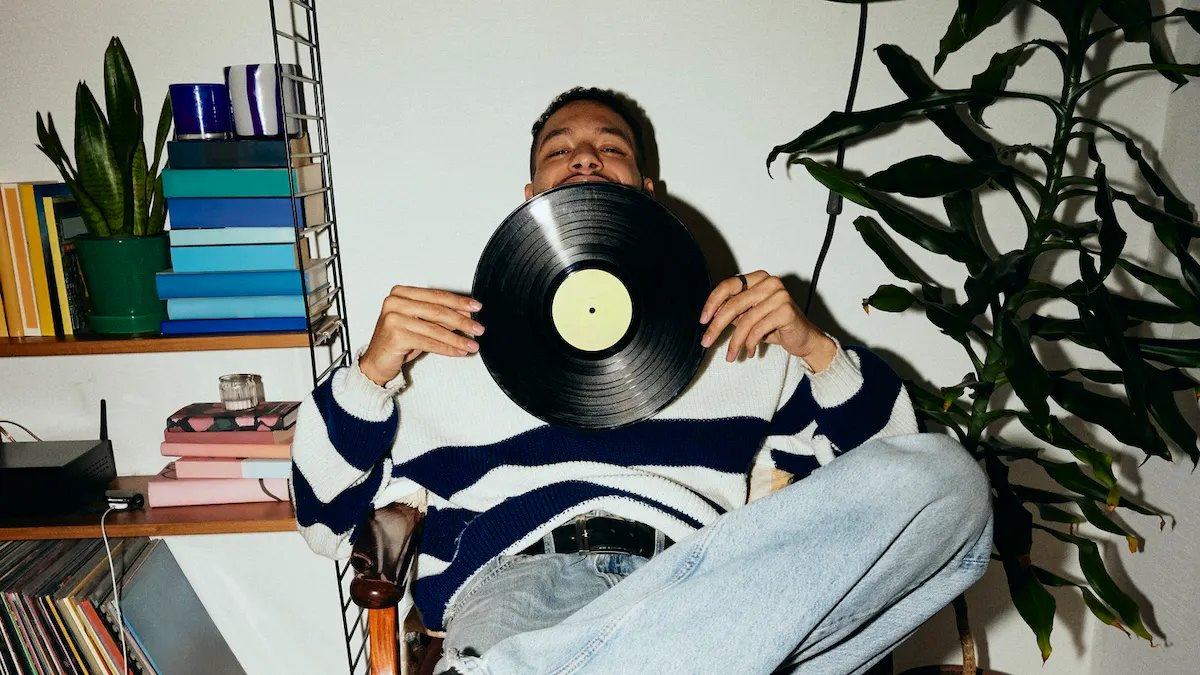
“Younger customers are gravitating toward CDs, looking to curate collections of the music they grew up with,” explained the owner of She Said Boom, a local music and used bookstore in downtown Toronto. Sales are now divided roughly equally between CDs and LPs, he told me. While vinyl remains strong, CDs have seen a notable resurgence in recent years, driven both by rapidly rising record prices and by a new customer base that came of age in the waning years of the compact disc and now wants to recreate that era. Similar experiences were echoed in Montreal’s Cheap Thrills, where the owner buttressed the rebounding CD market: “If you’re a young person looking to build a music collection, you can buy over five CDs for every record. It’s a no brainer.”
This trend isn’t merely anecdotal. The Guardian reported a 74% increase in CD player sales in 2025 — a notion that, in the 2010s, would have seemed inconceivable. It is an intriguing development and a reminder that cultural trends are often cyclical, pleated trousers and all. Millennials, after all, were the generation that revived vinyl from the dustbin of obsolescence, ironically turning the LP into something between a viable listening format and a Pinterest decor piece.
Vinyl’s quixotic appeal has always depended in part on ritual, but that same ritual has also made it costly. The running joke among vinyl enthusiasts is that “the two things that really drew me to vinyl are the expense and inconvenience.” Vinyl is expensive to manufacture, and niche formats do not benefit from the economies of scale that once made mass-market physical media cheap. In the United States, vinyl revenue reached about $1.4 billion in 2024, the highest level since 1984. Yet even now, the format remains well below its 1970s commercial peak. Millennial hipsters have also helped turn the used market into a racket, driving prices to such absurd levels that one can now encounter a battered copy of “Born in the U.S.A.” selling for $20 and a digitally sourced reissue at Urban Outfitters for $40.
And so the compact disc, largely ignored in the early phases of the physical-media revival for lacking analog’s romantic mystique, begins to look appealing again for reasons that are almost embarrassingly practical. The same qualities that helped CDs overtake vinyl in the 1980s now commend them to younger listeners confined to shoebox apartments: They are lighter, smaller, more durable, free of vinyl’s dreaded static, and capable of excellent sound quality. I remember an electrical engineering professor from my undergraduate days giving a lengthy explanation of digital sampling and why CDs suffer no meaningful auditory disadvantage next to their analog counterparts. She was explaining the Nyquist-Shannon sampling theorem, but I had the guitar solo from “Whole Lotta Love” ringing through my ears. In a market where vinyl increasingly veers toward luxury, CDs remain a democratic and accessible format.
The same instinct seems to be animating renewed interest in DVDs. Bay Street Video, a local film store in Toronto, has experienced profound growth in the past five years. Visiting the local establishment felt like a throwback to the 2000s, when we would visit Blockbuster as a family and pick out movies for the weekend, a nostalgic ritual replaced today by aimlessly scrolling Netflix and wondering why we pay for a service where nothing seems remotely interesting. Bay Street Video, meanwhile, was so bustling and busy that I could not in good conscience waste the cashiers’ time without making a purchase. Perusing the aisles, from Criterion classics to modern releases, I realized I did not even own my favorite movie. And so, with a copy of “Casablanca” (yes, I am that cliché) in hand, I spoke with the owner, who gleefully confirmed recent reporting that has suggested out-of-control streaming prices and fragmentation have been a boon for his business.
It is a dizzying exercise to keep up with the proliferation of streaming services and the endless reshuffling of their catalogs. Not only are movies and shows scattered across a dozen competing platforms, but the services themselves seem to rename and rebrand on a whim. Is it HBO Max, just Max, HBO Plus, or my pitch for the next iteration, HBO: Supreme Streamer?
The other night I wanted to watch Wes Anderson’s “Moonrise Kingdom.” Netflix had a slew of Anderson’s other titles, but not that one. Amazon Prime had it, but only to rent for an extra fee. It was available via Crave, a Canadian streaming service operated by Bell, but we were on Rogers. To watch a mid-budget film from 2012, one had either to subscribe to the correct corporate silo, pay extra, or resort to piracy.
Streaming was once sold as a utopian alternative to cable television: a frictionless content paradise unburdened by ad breaks, fixed schedules, and bloated bundles. That idyll never arrived. Prices have steadily risen (Netflix just raised its prices for the second time this year), even lower-priced tiers now wedge advertisements between scenes, and the supposed liberation from cable has merely given way to a more diffuse and annoying system of digital toll booths. The lesson is increasingly hard to ignore: unless you own a physical copy of a movie, a record, a book, or any other artistic work, you do not really own it at all; streaming effectively translates to perpetually paying for temporary and conditional access.
Even watching the ten Best Picture nominees from the 2026 Oscars now requires a minor subscription portfolio: Peacock ($10.99), Apple TV+ ($12.99), Netflix ($8.99, with ads), Max ($9.99, more ads), and Hulu ($11.99, also with ads) would run at least $54.95 a month before tax, and that still would not cover the two titles available only to rent or buy, or take into account the myriad passwords one must keep memorized as though working for the CIA.
That may be the deeper appeal of physical media for younger consumers. Vinyl, CDs, DVDs — and printed books for that matter— are not merely retro affectations or Instagrammable lifestyle props. They are a means of reclaiming permanence in a culture that increasingly offers only licensed access, temporary catalogs, and inevitable subscription fatigue.
Recorded physical media was one of the great democratizing achievements of the 20th century. Art had always been capable of extraordinary power and beauty, but before recording, even the most moving performances were ephemeral. If Puccini’s “Vissi d’arte” left you in tears as Tosca leapt to her death, you could not simply replay the aria at home; you had to wait until some future season when the opera company staged it again. Recorded music, and later film, changed that, bringing art into ordinary homes and allowing people not merely to encounter it, but to live with it.
More recently, we chose to mortgage that hard-won intimacy for the sake of convenience and space, paying for temporary access to recordings we neither control nor truly own. In the process, we forfeited something more significant than shelf space: a sense of possession over art itself. Sometimes it takes losing something we took for granted to realize how valuable it was.
***
Harry Khachatrian (@Harry1T6) is a film critic for the Washington Examiner’s Beltway Confidential blog. He is a software engineer, holds a master’s degree from the University of Toronto, and writes about wine at BetweenBottles.com.
More from this network:
Domains for Sale · GOTPeople.org · TheDSAPlatform · The Truth About Socialism
What's Your Reaction?
 Like
0
Like
0
 Dislike
0
Dislike
0
 Love
0
Love
0
 Funny
0
Funny
0
 Wow
0
Wow
0
 Sad
0
Sad
0
 Angry
0
Angry
0

I am just an average American. My teen years were in the late 70s and I participated in all that that decade offered. Started working young, too young. Then I joined the Army before I graduated High School. I spent 25 years in, mostly in Infantry units. Since then I've worked in information technology positions all at small family owned companies. At this rate I'll never be a tech millionaire. When I was young I rode horses as much as I could. I do believe I should have been a cowboy. I'm getting in the saddle again by taking riding lessons and see where it goes.
Premium domains for sale









Comments (0)