

Read Exactly What The White House Says Is In The Deal With Iran
Premium domains for sale
Freedom Is Back In Style
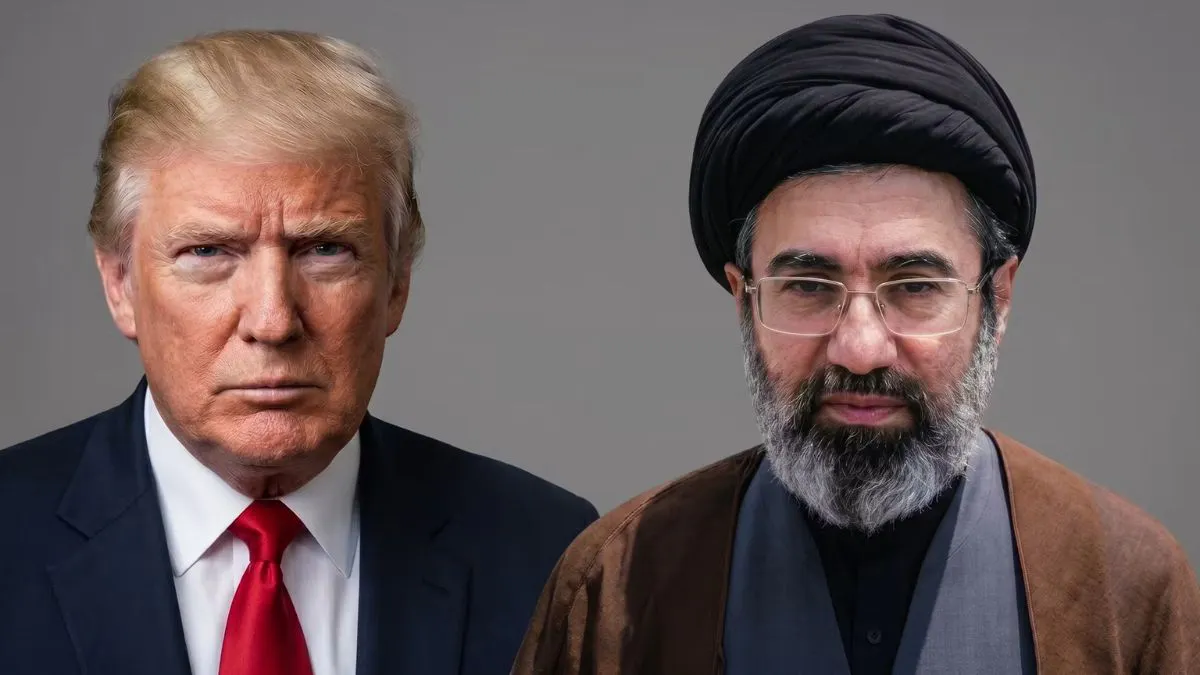
WASHINGTON— The text of the agreement between the United States and Iran has finally been shared with reporters.
Freedom Is Back
In Style
Premium domains for sale
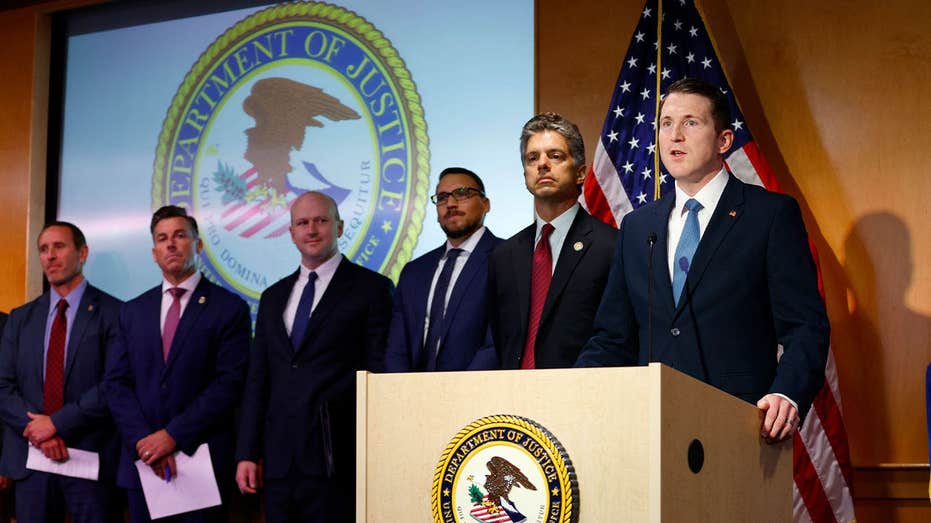
After days of intense scrutiny and debate over the deal, a senior Trump administration official read the “memorandum of understanding between the United States of America and the Islamic Republic of Iran” to reporters on a Wednesday afternoon call.
The text of the memorandum, according to that official, reads thus: “The United States of America and the Islamic Republic of Iran have jointly agreed in good faith on such and such a date on the following.”
Paragraph 1
The United States of America and the Islamic Republic of Iran and their allies in the current war, by signing this MOU, declare the immediate and permanent termination of military operations on all fronts including in Lebanon, and undertake from now on not to initiate any war or any military operation against each other and to refrain from the threat or use of force against each other and ensuring the territorial integrity and sovereignty of Lebanon. The final deal will confirm the permanent termination of the war on all fronts including in Lebanon and other provisions of this paragraph.
Paragraph 2
The United States of America and the Islamic Republic of Iran undertake to respect each other’s sovereignty and territorial integrity and to refrain from interfering in each other’s internal affairs.
Paragraph 3
The United States of America and the Islamic Republic of Iran commit to negotiating and achieving the final deal in maximum 60 days extendable with mutual consent.
Paragraph 4
Immediately upon the signing of this MOU, the United States of America will begin the removal of its naval blockade and any disturbances or impediments against the Islamic Republic of Iran and will fully end the naval blockade within 30 days. During this period, the traffic of vessels will be in proportion to the numbers of pre-war traffic being restored by the Islamic Republic of Iran. The United States of America further undertakes to remove its forces from the proximity of the Islamic Republic of Iran within 30 days after the final deal.
“What we’re saying is that after 30 days, or within 30 days after the final deal—meaning assuming we get to the final deal, we may not—but assuming we get to the final deal, then we will return our force posture in the region to that which existed before the conflict started,” the senior administration official noted. “That’s what that paragraph effectively provides.”
Paragraph 5
Upon the signing of this MOU, the Islamic Republic of Iran will make arrangements using its best efforts for the safe passage of commercial vessels with no charge for 60 days only from the Persian Gulf to the Sea of Oman and vice versa. The traffic of commercial vessels will immediately start and considering the need for removing the technical and military obstacles and demining by the Islamic Republic of Iran will be reinstated within 30 days. The Islamic Republic of Iran will conduct dialogue with the Sultanate of Oman to define the future administration and maritime services of the Strait of Hormuz in discussion with other Persian Gulf littoral states in line with applicable international law and the sovereign rights of coastal states of the Strait of Hormuz.
The senior administration official made particular note that the MOU says “the safe passage of commercial vessels with no charge” for the first 60 days.
“It says that Iran will work not just with Oman, but with the Gulf States to set up a broader agreement, a longer-term agreement on the Strait of Hormuz,” the official explained. “And of course, I’m sure the Iranians will assert their rights as aggressively as they can, but fundamentally toll-free passage of the Strait of Hormuz for 60 days, and that will continue because the Persian Gulf States will never agree to an arrangement that doesn’t permit toll-free access to the Strait of Hormuz for themselves and their industries.”
The senior administration official also emphasized that on Tuesday, Iran did not fire at any vessels in the Strait of Hormuz.
“So fundamentally, even before the formal signing ceremony on Friday, we see Iran actually ceasing its efforts to cut off traffic from the Strait of Hormuz,” the official noted. “This is one of the reasons why Brent crude is hovering around $79 and West Texas crude is even lower.”
Paragraph 6
The United States of America undertakes with regional partners to develop a definitive, mutually agreed plan, which could reach $300 billion for the reconstruction and economic development of the Islamic Republic of Iran. The definitive implementation of this plan will be finalized as part of a final deal within 60 days. All required licenses, waivers, and permissions needed for the relevant financial transactions will be granted by the United States of America.
This paragraph, the senior administration official pointed out, is probably one of the most controversial paragraphs in the deal.
“Note that it doesn’t require us to do anything,” the official said. “Number one, to ever pay a cent of money to the Iranians, to ever contribute money to this reconstruction fund. What it says is that if we get to a final deal and if the Iranians behave, we will permit the sanctions relief that would allow, for example, the Emiratis to build a power plant in Iran.”
“That’s all it says,” he emphasized. “If they do what they have to do, we will permit the investment in the reconstruction of their country, which of course, if they do what they say they’re going to do and they change their behaviors as a country, that would be great for everybody.”
Paragraph 7
The United States of America undertakes to terminate all types of sanctions against Islamic Republic of Iran, including United Nations Security Council resolutions, i.e., IAEA Board of Governors resolutions, and all unilateral US sanctions, primary and secondary, in an agreed-upon schedule as part of the final deal. The Islamic Republic of Iran and the United States of America acknowledge the critical importance of the sanctions termination issue above mentioned and express their intention to immediately address these issues in the negotiations in order to achieve mutual agreement on them.
Paragraph 8
The Islamic Republic of Iran reaffirms that it shall not procure or develop nuclear weapons. The United States of America and the Islamic Republic of Iran have agreed to resolve the disposition of stockpile enriched material pursuant to a mechanism that will be mutually agreed upon in accordance with the schedule mentioned in paragraph seven with a minimum methodology to be downblending on site under the supervision of the IAEA.
The two parties also agreed to discuss the issue of enrichment and other mutually agreed matters related to the Islamic Republic of Iran’s nuclear needs based on a satisfactory framework to be agreed upon in the final deal. Final deal will confirm the provisions of this paragraph. The United States of America and the Islamic Republic of Iran acknowledge the critical importance of the nuclear issues above mentioned and express their intention to immediately address these issues in the negotiations in order to achieve mutual agreement on them.
On this point, the senior administration official emphasized that while the Iranian media has claimed that there will be no mention of nuclear issues in this MOU, the agreement doesn’t just say that they will discuss the nuclear question.
“It sets a minimum standard where at a minimum, the enriched stockpile will be destroyed by downblending,” the official explained. “Of course, that’s the floor, and we will push for more than that, but the fact that they’re conceding to that is a major, major win for the United States of America. They’re saying, ‘We will destroy the enriched stockpile and this is how we’re going to do it, at a minimum.’”
Points seven and eight play off one another, the senior administration official said.
“So when I see the media saying that they’re going to get all their sanctions relief, the sanctions relief in seven is tied to the nuclear settlement in eight, and in fact, we use the exact same language to finalize both of those paragraphs,” the official explained. “We’re saying the sanctions relief and the nuclear issues are connected, and to the extent that you perform on the nuclear questions, you’ll get the sanctions relief.”
Paragraph 9
In the final deal, the United States of America and the Islamic Republic of Iran agree to maintain the status quo. The Islamic Republic of Iran will maintain the current status quo of its nuclear program and the United States of America will not impose any new sanctions and will not deploy additional forces in the region.
Paragraph 10
The United States of America undertakes that immediately upon the signing of this MOU and until the determination of sanctions, US Department of Treasury will issue waivers for the export of Iranian crude oil, petroleum products, and derivatives, and all associated services including banking transactions, insurances, transportation, etc.
The senior administration official here pointed out that when the U.S. was sanctioning Iranian oil, the U.S. was actually giving China a “massive discount on the purchases of petroleum.”
“Regardless of whether we had had efficacy, regardless of whether we lift a single other sanction, the President of the United States and the entire team agreed that it’s absurd to sanction Iranian oil in such a way that they are still allowed to sell that oil, we just give China a big fat discount. We stop that process, and of course, it’s part of the broader agreement.”
Paragraph 11
The United States of America undertakes to make fully available for use the frozen or restricted funds and assets of the Islamic Republic of Iran upon the implementation of this MOU. The United States of America and the Islamic Republic of Iran will mutually agree on the procedures related to the release of these funds during the negotiations. Such funds, whether retained in the original account or transferred, shall be made fully usable for payment to any ultimate beneficiary designed by the Central Bank—excuse me—ultimate beneficiary designated by the Central Bank of the Islamic Republic of Iran. The United States of America undertakes to issue all necessary licenses and authorizations accordingly.
Iran will get access to the restricted funds and assets upon the implementation of this MOU, the senior administration official explained.
“So assuming we reach the agreement and implement the terms of this MOU, assuming we get to a final deal, then they will have access to these assets,” that official noted. “And indeed, what we’ve contemplated is that if they engage in good behavior, for example, they give us the nuclear dust while we’re engaged in this final negotiation, then we will release some frozen assets in response to that.”
The official emphasized a point that he believes will be misreported.
“What Iran wanted was restricted funds and assets of the Islamic Republic of Iran upon the signing of this MOU,” the senior administration official said. “And what they eventually conceded is that they wouldn’t get any money unless they perform good behavior, even though of course it’s their own money, just in frozen assets, which is why we structured it the way that we do. If they implement the MOU, they then get access to some of their frozen assets.”
Paragraph 12
The United States of America and the Islamic Republic of Iran agree that an executive mechanism will be established to monitor the successful implementation of this MOU and the future compliance of the final deal.
Paragraph 13
After signing this MOU and subject to the beginning of the implementation of paragraphs 1, 4, 5, 10, and 11 of this MOU, and the continuing implementation of these measures, the United States of America and the Islamic Republic of Iran will start negotiations regarding the final deal exclusively on the other paragraphs.
Paragraph 14
The final deal will be endorsed by a binding UN Security Council resolution and then there’s the signature page and that is it.
More from this network:
Domains for Sale · GOTPeople.org · TheDSAPlatform · The Truth About Socialism
What's Your Reaction?
 Like
0
Like
0
 Dislike
0
Dislike
0
 Love
0
Love
0
 Funny
0
Funny
0
 Wow
0
Wow
0
 Sad
0
Sad
0
 Angry
0
Angry
0

I am just an average American. My teen years were in the late 70s and I participated in all that that decade offered. Started working young, too young. Then I joined the Army before I graduated High School. I spent 25 years in, mostly in Infantry units. Since then I've worked in information technology positions all at small family owned companies. At this rate I'll never be a tech millionaire. When I was young I rode horses as much as I could. I do believe I should have been a cowboy. I'm getting in the saddle again by taking riding lessons and see where it goes.
Premium domains for sale








Comments (0)