

Rick Santorum: China Remains a Threat But the Cracks Are Showing
Premium domains for sale
Freedom Is Back In Style
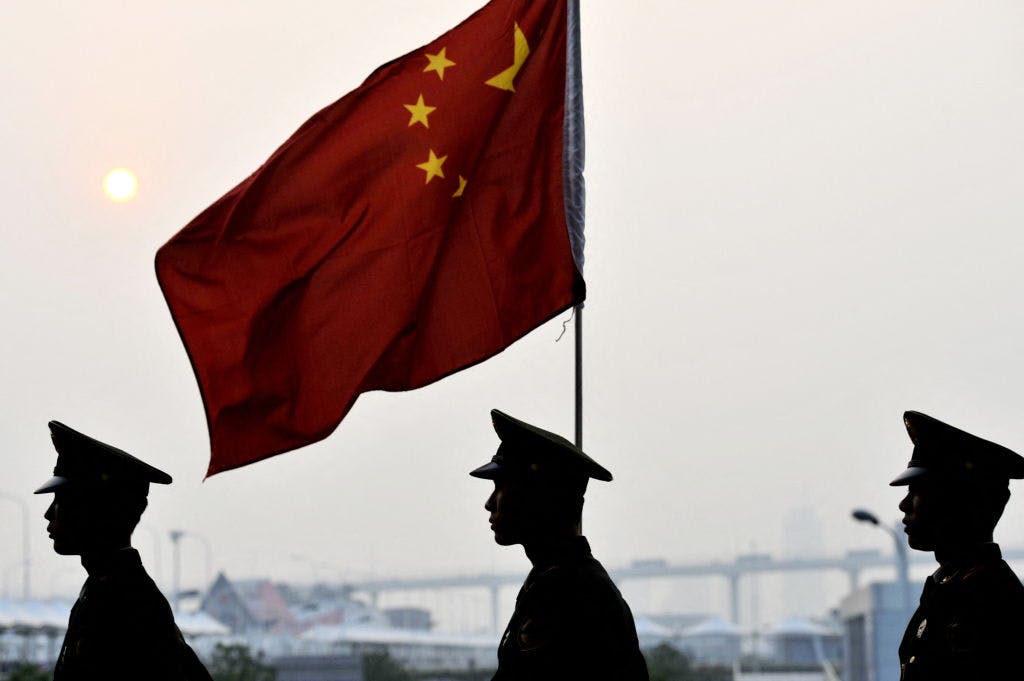
On Wednesday, President Donald Trump thanked China for remaining neutral in the Iran war. This drew pushback from China watchers, and it’s easy to see why.
Freedom Is Back
In Style
Premium domains for sale
China has outwardly stayed on the sidelines of the Iran conflict, but behind the scenes, it’s been working to help the regime survive. They’ve continued to purchase Iranian oil and reportedly even sent Tehran military equipment.
But the president’s graciousness toward China was prudent geopolitics. It was also evidence that Trump knows he’s been successful at blunting the country’s once unstoppable ascendance.
No doubt China remains a serious threat, and there’s much work to be done. But in important ways, Trump’s policy has had an impact.
Take the Chinese economy, where, behind the scenes, red lights are flashing. Chinese consumer demand has lagged for years, slowing the country’s vaunted retail sector. Last month, Chinese retail sales fell year over year for the first time since the COVID pandemic.
This belt-tightening was triggered by the popping of China’s immense real estate bubble, which erased trillions in household wealth, as well as a persistently weak job market. It’s so serious as to be reflected in the upper ranks. Lavish wines and expensive banquets among the Communist Party elite have been banned, an austere show of solidarity with suffering Chinese.
If Chinese consumers aren’t spending as they used to, Beijing will need to rely on foreigners to buy its exports. This is where they’ve run headlong into the Trump playbook. As Shoumitro Chatterjee and Arvind Subramanian note, U.S. “tariffs, bans, and national security restrictions have blunted Chinese import competition by fiat.”
The United States is the most lucrative consumer market in the world, and that market is far more walled off to China than it used to be. It’s also not just the Americans. European Union top diplomat Kaja Kallas recently called European dependence on China a “disease,” signaling a drawback from the EU’s historically softer China policy.
Decades of Chinese economic coercion are finally catching up with Beijing. Take rare earth metals, 90% of which are refined in China, an undeniable advantage in a crucial resource. Not only has the U.S. been bolstering its own rare earths industry — backed by extensive government funding — but the EU is starting to do the same.
The snowball effect of all this — lagging consumer demand, a toxic real estate sector, U.S. and European resistance — has been to take the shine off China’s reputation as a global boomtown. Foreign investment in China, once the lifeblood of the country’s economy, plummeted by 27% last year to its lowest level since 2016.
President Trump’s plan to leverage trade fairness measures against China was once laughed at. Yet almost a decade later, it looks like the Trump strategy is working.
Of course, China still brings other powerful advantages to the table. The country has a formidable tech sector, and many believe it is currently winning the AI race.
America needs to ensure that AI is developing responsibly and in ways that strengthen human flourishing, protect workers, and uphold human dignity. Achieving these goals becomes far harder if the future of artificial intelligence is shaped in Beijing rather than Washington, D.C.
But the United States is pushing back here, too. When President Trump greenlit a merger between U.S. tech companies Hewlett Packard Enterprise (HPE) and Juniper Networks, he reportedly had China at the front of his mind. Specifically, he was thinking of Huawei — the Chinese conglomerate that is banned in the U.S. for national security reasons and dominates China’s domestic AI chip market — a rival America now has the scale to compete against.
The administration has also moved aggressively to accelerate AI infrastructure at home, streamlining approvals for new data centers and the energy projects needed to power them. It’s telling that China has reportedly launched influence campaigns to try to stop data center construction in the United States. Unfortunately, many on the Left and Right have been duped by these misinformation campaigns, which clearly demand the administration’s attention before they get out of control.
While China continues to rely on state-directed industrial policy, the United States is leveraging its private-sector strengths to expand the computing capacity that will help determine the future of artificial intelligence.
The United States remains the globe’s undisputed heavyweight in tech. It leads the way in innovation, attracts the most highly educated talent, and has the strongest venture capital base.
All of which leaves China at a systemic disadvantage. A slowing domestic economy can’t support a wannabe superpower. An increasingly shunned export market can’t make up the difference.
There’s no point in being naïve about China’s role in the Iran war. But given the United States’ fortunes on China lately, it can perhaps be excused.
***
Rick Santorum is co-chair of Bipartisan Policy Center’s Task Force on Paid Family Leave. He served as a United States senator from Pennsylvania from 1995 to 2007.
More from this network:
Domains for Sale · GOTPeople.org · TheDSAPlatform · The Truth About Socialism
What's Your Reaction?
 Like
0
Like
0
 Dislike
0
Dislike
0
 Love
0
Love
0
 Funny
0
Funny
0
 Wow
0
Wow
0
 Sad
0
Sad
0
 Angry
0
Angry
0

I am just an average American. My teen years were in the late 70s and I participated in all that that decade offered. Started working young, too young. Then I joined the Army before I graduated High School. I spent 25 years in, mostly in Infantry units. Since then I've worked in information technology positions all at small family owned companies. At this rate I'll never be a tech millionaire. When I was young I rode horses as much as I could. I do believe I should have been a cowboy. I'm getting in the saddle again by taking riding lessons and see where it goes.
Premium domains for sale
















Comments (0)