

Scott Bessent’s Latest Big Plan Has Wall Street In A Blender
Premium domains for sale
Freedom Is Back In Style
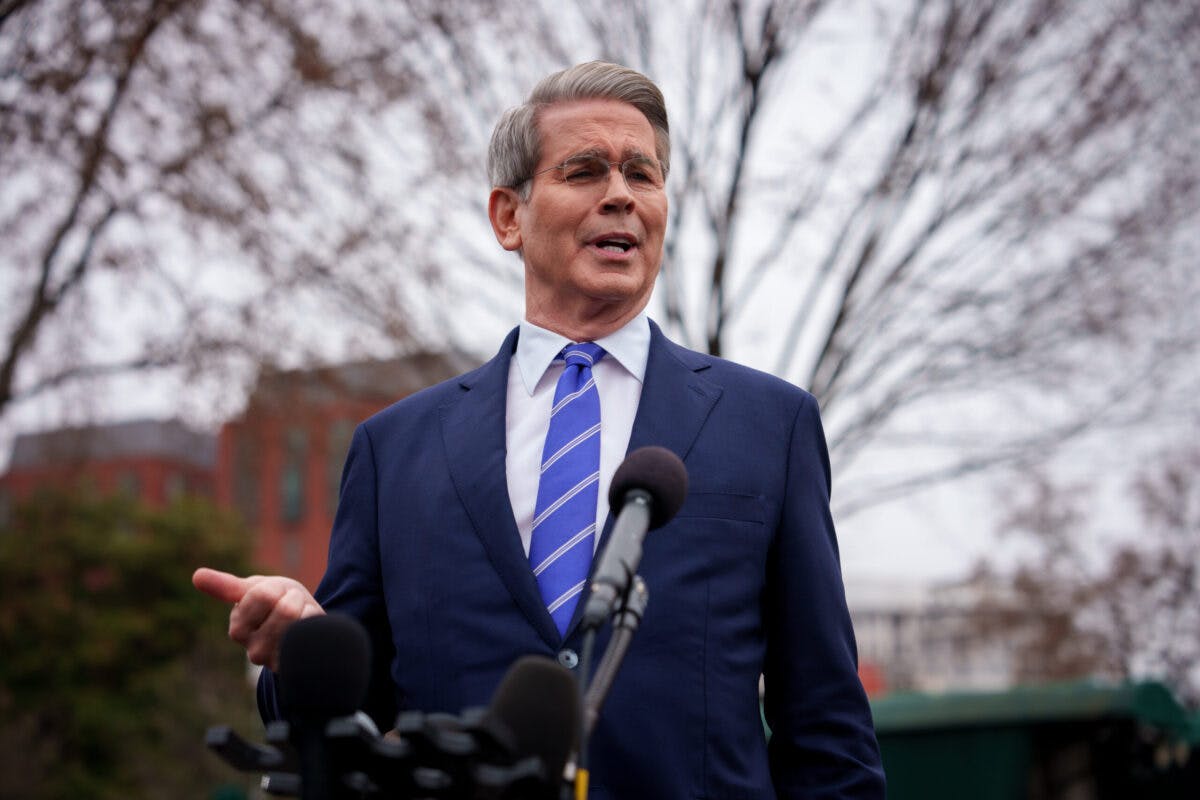
Treasury Secretary Scott Bessent’s plan to expand the government’s purchases of long-term debt is drawing fire from some of Wall Street’s biggest names, including his former boss and mentor, Stanley Druckenmiller.
Freedom Is Back
In Style
Premium domains for sale
“The long-term Treasury yield is the most important price in the world. It is also the only fiscal disciplinarian the U.S. has left,” Druckenmiller wrote, arguing that Washington is attempting to artificially lower the long-term yield instead of fixing the market fundamentals that led to its rise in the first place.
“Every basis point of artificial yield suppression is a subsidy to procrastination,” he added.
The Treasury Department announced last week that it would at least double the size of its liquidity-support buybacks for long-dated securities, increasing the amount from a maximum of $2 billion to at least $4 billion per operation.
“The U.S. Department of the Treasury is increasing, by at least double, the size of liquidity support buyback operations for longer-dated nominal coupon securities,” the department said. The expanded operations will cover securities in the 10-to-20-year and 20-to-30-year sectors.
The change will take effect September 9 and remain in place until November 4, when Treasury is scheduled to provide additional guidance.
Druckenmiller was not the only Wall Street figure to criticize the move. Nohshad Shah, head of fixed-income sales at Citadel Securities, argued that intervention would not provide a durable solution.
“The durable solution is not repeated intervention, but harder choices on fiscal policy and central banks willing to get ahead of inflation…including, if necessary, by hiking rates,” he said.
Shah argued that the high yield is that fiscal and monetary policy should be tighter.
“The bond market’s message is straightforward: fiscal or monetary policy should be tighter,” he said. “Preventing Treasuries from clearing at lower prices does not eliminate that pressure…it merely shifts it elsewhere.”
Lisa Shalett, chief investment officer at Morgan Stanley Wealth Management, called the move a short-term gimmick. In a client note, she said Morgan Stanley views “non-crisis market intervention and financial engineering attempts as short-lived gimmicks.”
LPL Financial’s chief fixed income strategist called Treasury’s move a temporary fix.
“This is a Band-Aid,” the strategist said. “This doesn’t really fix the problem.”
Mike Sanders, head of fixed income at Madison Investments, said he was worried the market would respond.
“My fear is that the market is going to try to fight them on it at a certain point,” Sanders said.
Not all of Wall Street pushed back on the endeavor. Portfolio manager Vincent Ahn said that “Bessent seems willing to use balance-sheet tools more aggressively when the ultralong end starts deteriorating.”
Investors initially reacted positively to the announcement, with both the S&P 500 and Nasdaq trading higher following the news.
The Treasury Department said the move reflects its desire “to provide greater support in longer-dated nominal sectors where there is consistent strong sponsorship from market participants, as evidenced by the significant volume of high-quality offers Treasury routinely receives in longer-dated buyback operations.”
More from this network:
Domains for Sale · GOTPeople.org · TheDSAPlatform · The Truth About Socialism
What's Your Reaction?
 Like
0
Like
0
 Dislike
0
Dislike
0
 Love
0
Love
0
 Funny
0
Funny
0
 Wow
0
Wow
0
 Sad
0
Sad
0
 Angry
0
Angry
0

I am just an average American. My teen years were in the late 70s and I participated in all that that decade offered. Started working young, too young. Then I joined the Army before I graduated High School. I spent 25 years in, mostly in Infantry units. Since then I've worked in information technology positions all at small family owned companies. At this rate I'll never be a tech millionaire. When I was young I rode horses as much as I could. I do believe I should have been a cowboy. I'm getting in the saddle again by taking riding lessons and see where it goes.
Premium domains for sale


















Comments (0)