

Slaughter Gets Separation
Premium domains for sale
Freedom Is Back In Style
On Monday, the Supreme Court hewed closely to the Constitution’s important organizing principle in a 6-3 ruling in Trump v. Slaughter. The separation of powers is the foundational protection of individual liberties, and it has just been strengthened.
Freedom Is Back
In Style
Premium domains for sale
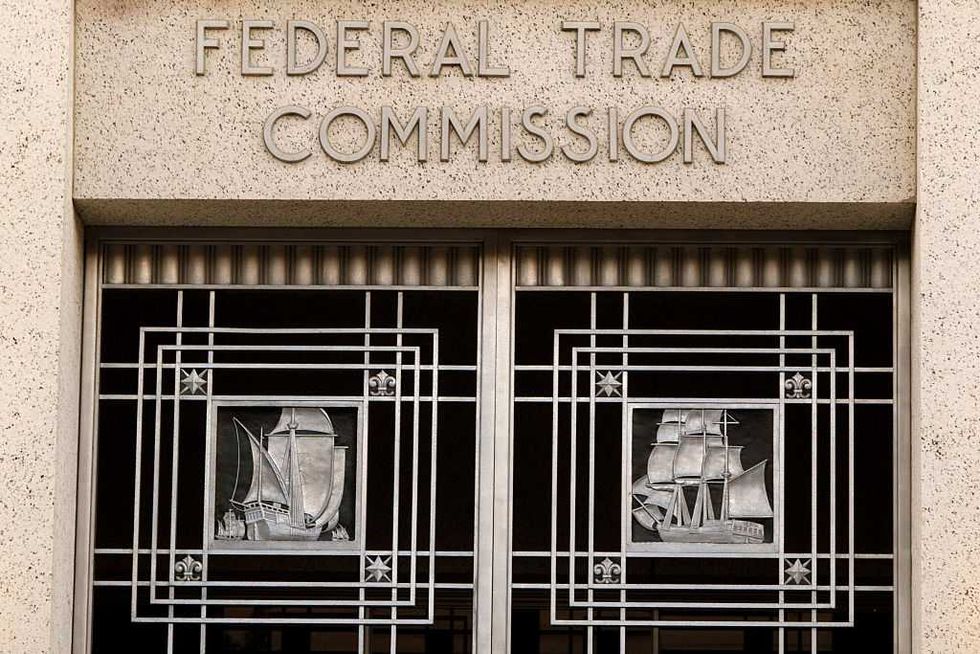
At issue was the question of whether the president may remove the head of an independent agency without cause. The case had been brought by Rebecca Slaughter, whom President Trump had removed from the Federal Trade Commission (FTC).
The ruling for presidential authority to remove appointees is a win for democratic accountability and a return to antecedents set more than 200 years ago.
The very first Congress, meeting in 1789, addressed the question definitively. One group of lawmakers favored Senate involvement in the removal power, as it is involved in other appointments and confirmations. A second group thought removals should be left to Congress to decide because it is Congress that creates many of the departments and agencies.
However, the prevailing group, led by James Madison, argued that only the president could exercise the removal power because it was necessary to fulfill his duty to faithfully execute the law.
Madison’s view became the common interpretation of the Constitution — and was reflected in the writings and actions of each of the first seven presidents. But it was President John Adams who set the precedent in May 1800. Three years earlier, he had inherited Washington’s cabinet, including prominent members at the Departments of War, Treasury, and State who actively sabotaged his major diplomatic and political initiatives.
In his final year of office, he reached a boiling point and invited Secretary of State Timothy Pickering to resign at a time of his choosing. Pickering declined the gracious offer from Adams and, within the hour, was told he was “hereby discharged from any further Service as Secretary of State.” Even politicians who had favored congressional involvement during the debates of 1789 and who supported Pickering did not challenge Adams’s authority to dismiss the secretary of state.
Much current commentary is necessarily focused on the FTC and the mercurial behavior of President Trump. However, it is crucial to see beyond partisan framing to understand the design and purposes of our government.
Congress created the FTC in 1914, ignoring the objections of President Woodrow Wilson and his progressive ally Louis Brandeis. Though they supported the agency’s creation, they thought it could be too independent of presidential objectives. Two decades later, President Franklin Roosevelt sought to consolidate control over the powerful business regulator. But the Supreme Court held in Humphrey’s Executor (1935) that Roosevelt could not remove a commissioner without cause, thereby reversing executive power.
Indeed, the very notion of independence for regulatory agencies is tied to the concept of an independent judiciary. By holding regulators at arm’s length from political actors who are subject to democratic accountability, the regulators would — the argument goes — be free to make sound judgments without fear of reprisal. If regulators were limited to adjudication, the idea might carry more weight.
However, today’s federal regulators make policy, interpret federal statutes and their own rule-makings, and too often adjudicate disputes between the agencies and the public. Dozens of regulatory agencies have an armed police force to enforce their regulations. Regulatory power is a state unto itself.
Humphrey’s became the focal point of a constitutional conflict that remained unresolved for 91 years. Legal scholarship in the 1980s helped build the case for reexamining the removal power. The question returned to the high court in a 2010 case, Free Enterprise Fund v. Public Company Accounting Oversight Board. That case, brought by my colleagues at the Competitive Enterprise Institute, successfully challenged the structure of an agency that insulated regulators from presidential removal. Members of the Public Company Accounting Oversight Board could be removed only by a vote of the Securities and Exchange Commission for “good cause.” The Court found this insulation from presidential prerogatives unconstitutional.
Free Enterprise Fund cracked the door to reinterpreting the constitutional anomaly of independent regulatory agencies. It did not take long for another case to chip away further at Humphrey’s Executor. In the 2020 case Seila Law v. Consumer Financial Protection Bureau, the Court found that for agencies led by a single director, Congress may not condition the power to remove the agency head by requiring reasons of “inefficiency, neglect of duty, or malfeasance.” The “for cause” limitation was eliminated for a narrow category of agencies led by a single director.
Chief Justice Roberts wrote for the majority in Free Enterprise Fund, Seila Law, and again this week in Trump v. Slaughter. In doing so, he redeemed the logic of the American Founding and vindicated the Constitution. As a result, the safeguards inherent to the separation of powers are once again applied to the myriad departments, agencies, bureaus, boards, and commissions that populate the executive branch.
Independence from popularly elected oversight is a recipe for bad government at best and tyranny at worst. Dividing power among the branches of government necessarily protects against abuse. We are all better off with Humphrey’s overturned.
***
Kent Lassman is president of the Competitive Enterprise Institute.
More from this network:
Domains for Sale · GOTPeople.org · TheDSAPlatform · The Truth About Socialism
What's Your Reaction?
 Like
0
Like
0
 Dislike
0
Dislike
0
 Love
0
Love
0
 Funny
0
Funny
0
 Wow
0
Wow
0
 Sad
0
Sad
0
 Angry
0
Angry
0

I am just an average American. My teen years were in the late 70s and I participated in all that that decade offered. Started working young, too young. Then I joined the Army before I graduated High School. I spent 25 years in, mostly in Infantry units. Since then I've worked in information technology positions all at small family owned companies. At this rate I'll never be a tech millionaire. When I was young I rode horses as much as I could. I do believe I should have been a cowboy. I'm getting in the saddle again by taking riding lessons and see where it goes.
Premium domains for sale














Comments (0)