

Socialism Is Surging Across America. Here’s What’s Driving It.
Premium domains for sale
Freedom Is Back In Style
Summary
Freedom Is Back
In Style
Premium domains for sale
- DSA chapters have grown from 21 in 2013 to 204 today, an increase of more than 870%.
- Socialists are organizing locally, including beyond traditionally Democrat strongholds.
- Younger Americans’ economic concerns are creating an opening for socialism.
Socialist candidates are running for election this year across the United States, some with the outright endorsement of Democratic Socialists of America and others who prefer to avoid any association with the group.
At both the federal level, for the U.S. House and Senate, and locally in cities and states, socialists appear to be popping up everywhere.
A new report from State Policy Network explains why. The DSA, a 501(c)(4) social welfare organization, is now active in 48 states and the District of Columbia.
Across the United States, the number of DSA chapters has increased more than 870% since 2013, growing from 21 chapters then to 204 today, according to SPN’s report.
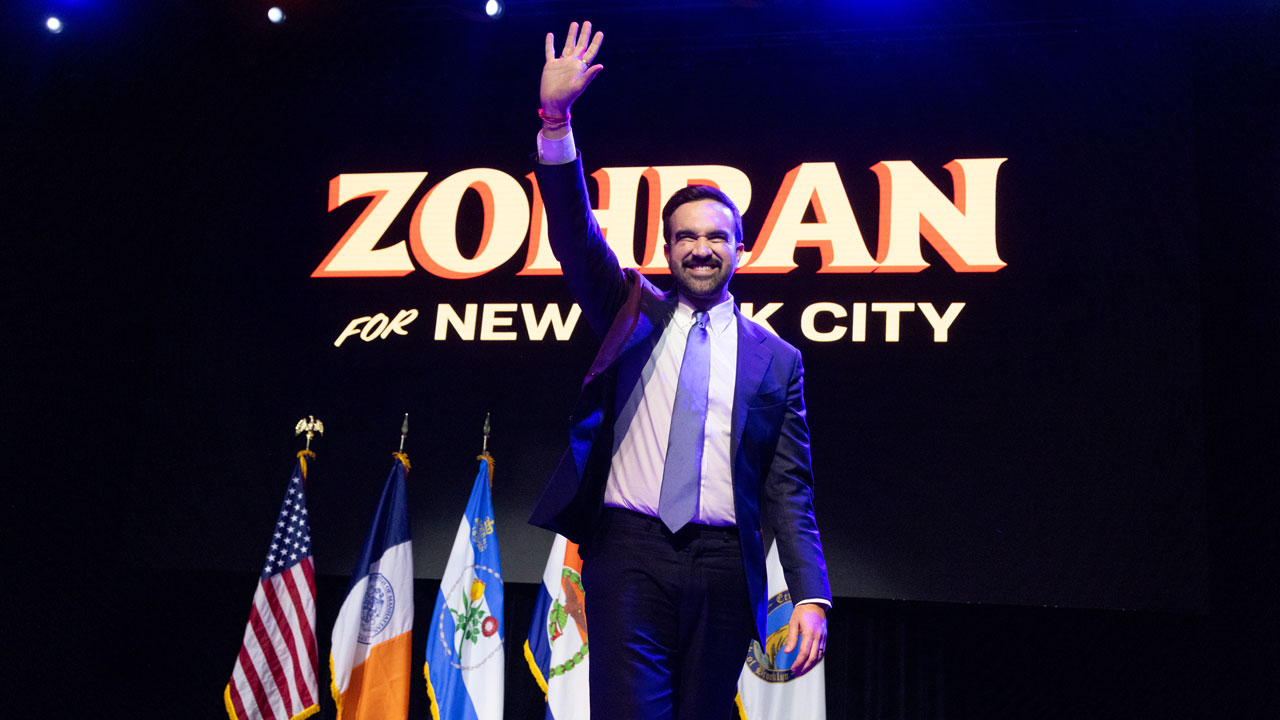
It’s no coincidence that socialist candidates have either won elections in America’s biggest cities, such as Mayor Zohran Mamdani in New York, or appear likely to do so elsewhere, namely Nithya Raman in Los Angeles and Janeese Lewis George in Washington, D.C.
What could be more surprising is their presence in Republican-leaning states such as Florida and Kansas. At the local level, the DSA has built chapters designed to incubate a farm team that challenges establishment Democrats.
“The DSA has been laying this groundwork and organizing at the local and state level for a long time, for many, many years,” said Brooke Medina, vice president of communications for SPN.
She joined me on this week’s episode of “Midterm Report” to explain how the DSA first emerged in 1982 and its rapid growth since 2013.
“They have decided that the best way to be more effective electorally is to not just stand alone as their own party, but really to build from within the Democratic Party,” Medina said. “They have co-opted the Democratic Party’s infrastructure.”
From College Campuses to Red States
The DSA’s growth isn’t confined to New York, California, and other reliably Democrat states.
Medina said it includes states that typically vote for Republican candidates for president. Florida, in fact, has the second-highest number of DSA chapters after New York, according to SPN’s report.
The organizing often begins in college communities.
“We see at the local level, they primarily emanate from these college campuses and college towns and then begin to spread as those college students graduate,” Medina said.
She identified two periods of particularly significant growth: Donald Trump’s election in 2016 and again in 2024. During the Biden years, she said, the number of groups experienced a “slight recession.”
Increasingly, candidates aren’t shying away from the socialist label, which even a few years ago would have been considered politically toxic. This year, for example, DSA-endorsed candidates have scored victories in more than a dozen Democrat primaries.
“It really does depend on the electorate in that area,” Medina said. “But largely it seems like increasingly these candidates are very comfortable wearing the DSA label or openly acknowledging that they are socialist.”
Why Socialism Appeals to Young Americans
One of the most dramatic changes since the DSA’s founding involves its membership.
According to Medina, the average DSA member was 68 years old in 2013. By 2017 and afterward, the average age had fallen to 33.
She believes the appeal goes beyond politics as younger Americans seek a sense of community at a time when many complain of feeling isolated.
“There is this community aspect of the DSA that I don’t want to take for granted as part of the fuel to their growth,” Medina said. She pointed to “growing alienation,” fractured families, and a broader “inward collapse of community” as factors that make such organizations attractive.
Then there’s the issue dominating politics in 2026: affordability.
Younger Americans, Medina said, “feel like they’ve got a very bleak outlook.”
She cautioned conservatives not to dismiss those concerns even when they disagree with socialist prescriptions.
“There is this sense or a vibe that things are not very affordable, particularly for those 35 and under who are trying to just launch,” Medina said. “There is a sentiment there … and they’re taking that sentiment to the ballot box.”
Socialists vs. the Free Market
For Dr. Charles Steele, director of the Center for Commerce and Freedom at Hillsdale College and an associate professor of economics, the DSA’s promises overlook a fundamental problem with socialism.
Steele said the DSA envisions a society in which government plays the central role in providing necessities such as transportation, health care, food, and housing. The consequence, he argued, is greater dependence on government and less freedom.
The economic problem, he explained, comes down to incentives and information.
Under socialism, government planners make decisions about production without encountering the same market test faced by entrepreneurs.
“An entrepreneur needs to service the needs of consumers,” Steele said. “If he doesn’t or she doesn’t, they won’t make profit.”
Prices and profits, he said, provide information about whether businesses are creating something consumers value. Losses likewise signal when resources could be better deployed elsewhere.
“Government has no such price signal to tell it we’ve taken valuable things and made something less valuable,” Steele said. “And so that can be sustained and go on and on and on.”
Competing Answers on Affordability
That distinction becomes particularly significant when socialist candidates appeal to voters frustrated by the high costs of housing and health care.
Medina contrasted rent-control proposals with increasing the housing supply by reforming regulations.
“We don’t need more rent control that actually reduces the housing supply and drives up rents for other people,” she said. “But we need more housing supply. That means we need real reforms in terms of housing regulation.”
She also pointed to certificate-of-need laws in health care, which she said restrict the supply of some medical equipment, products, and services. She argued that reducing regulation and increasing supply offer a better answer to affordability than expanding government control as socialists would like to do.
Steele also singled out health care as a place where, in his view, greater government involvement would make the problem worse.
When I asked him about Medicare for All, a popular policy of socialist candidates, Steele argued instead for moving toward “a freer market system” in health care. He said the current system provides patients with little information about prices and few incentives to control costs, as he experienced firsthand.
The $65,000-to-$1,000 Example
Steele pointed to America’s space program as an example of what can happen when greater competition enters a government-dominated system.
Under the space shuttle model, he said, it cost approximately $65,000 to put one kilogram into low-Earth orbit. Under a more market-oriented contracting model in which entrepreneurs competed for business, he said, that figure has fallen to about $1,000.
“Entrepreneurs began competing and trying to find ways to hold cost down while delivering quality,” Steele said.
“That’s the power of the free market and entrepreneurship,” he added.
Is the American Dream Still Possible?
Steele believes defeating socialism requires something more than an economics lesson.
Socialists, he said, have succeeded in offering voters a vision of a different future. Defenders of capitalism need to make an affirmative case of their own.
“Really, it’s more important to have a vision of what the future could be that is positive,” Steele said. “Capitalists, people like me, ought to be talking about, look what we could actually build if we have a free market system, a freer market system.”
That could be particularly important for younger Americans who question whether opportunities available to earlier generations remain within their reach.
Asked whether the American dream is still possible, Steele didn’t hesitate.
“It is, it is,” he said. “This is more mindset than anything else.”
His advice to young Americans is to reject the idea that they are powerless over their future.
“You need to have the idea that I’m going to be self-responsible and I’m going to, it might be hard, but I’m going to work from the ground up and I’m going to find a way to succeed,” Steele said. “And it will happen.”
For Medina, the immediate question is whether the DSA’s extraordinary organizational growth translates into lasting electoral power.
She called 2026 a “canary year” and said the 2028 elections will provide another indication of the movement’s staying power, with 2030 potentially proving even more consequential at the state and local levels because of the census, redistricting, and a new slate of gubernatorial races.
For now, however, one trend is difficult to ignore: An organization that counted only 21 chapters in 2013 now boasts of 204, and the political movement it represents is attempting to turn that infrastructure into electoral power.
More from this network:
Domains for Sale · GOTPeople.org · TheDSAPlatform · The Truth About Socialism
What's Your Reaction?
 Like
0
Like
0
 Dislike
0
Dislike
0
 Love
0
Love
0
 Funny
0
Funny
0
 Wow
0
Wow
0
 Sad
0
Sad
0
 Angry
0
Angry
0

I am just an average American. My teen years were in the late 70s and I participated in all that that decade offered. Started working young, too young. Then I joined the Army before I graduated High School. I spent 25 years in, mostly in Infantry units. Since then I've worked in information technology positions all at small family owned companies. At this rate I'll never be a tech millionaire. When I was young I rode horses as much as I could. I do believe I should have been a cowboy. I'm getting in the saddle again by taking riding lessons and see where it goes.
Premium domains for sale

















Comments (0)