

Stellantis’ China gamble could reshape America’s auto industry forever
Premium domains for sale
Freedom Is Back In Style
Chinese cars are a security risk.
Freedom Is Back
In Style
Premium domains for sale
That's the message Washington has been sending the American consumer: Cheaper vehicles aren't worth exposing sensitive data to theft. Hence the massive tariffs aimed at China.
The difference is that Stellantis is now openly telling investors that these partnerships are central to its long-term strategy.
But while America was focused on keeping brands like BYD and NIO out of local dealerships, the global auto industry quietly found another way in.
And Stellantis just made that strategy official.
Ties that bind
The parent company of Jeep, Ram, Dodge, Chrysler, and Fiat has embraced deeper partnerships with Chinese automakers and suppliers as part of its global restructuring effort. New CEO Antonio Filosa is betting the company's future on partnerships, software integration, shared manufacturing, AI systems, and Chinese EV technology.
That should concern every American consumer, every UAW worker, every supplier, and every policymaker. The issue is no longer simply about cars built in China. It's about China becoming embedded inside the future of the American auto industry itself.
Stellantis recently announced a roughly $1.17 billion partnership with China's Dongfeng Group to build new-energy vehicles at a Wuhan manufacturing plant beginning in 2027. The agreement includes future Peugeot and Jeep models for China and other global markets.
But that's only part of the story.
FaST and furious
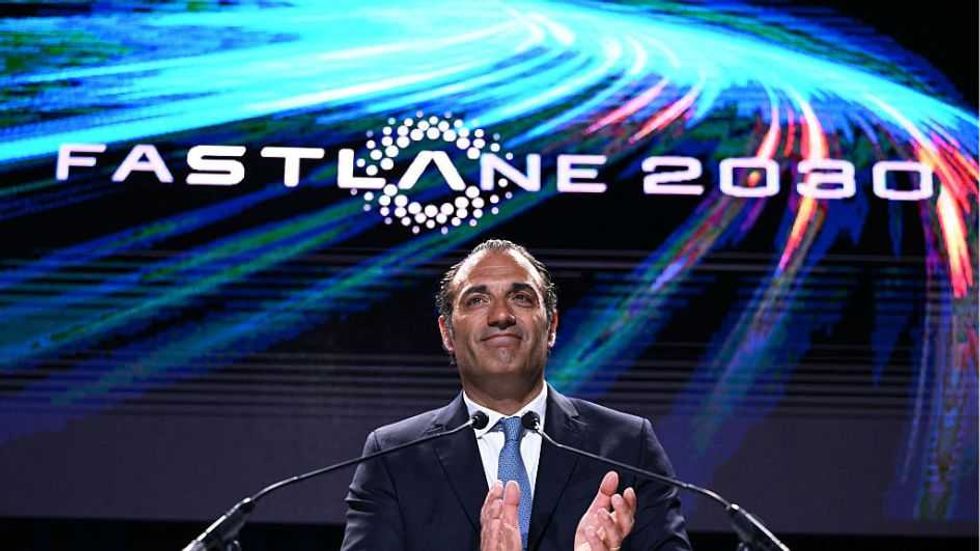
At its recent Investor Day presentation, Stellantis unveiled its "FaSTLAne 2030" strategy, a $70 billion restructuring plan featuring 60 new models, expanded AI integration, autonomous-driving development, and manufacturing partnerships stretching across China, Europe, India, and North America.
The message from Filosa was unmistakable: Partnerships will be "embedded" in Stellantis' future strategy.
That should have set off alarms in Washington.
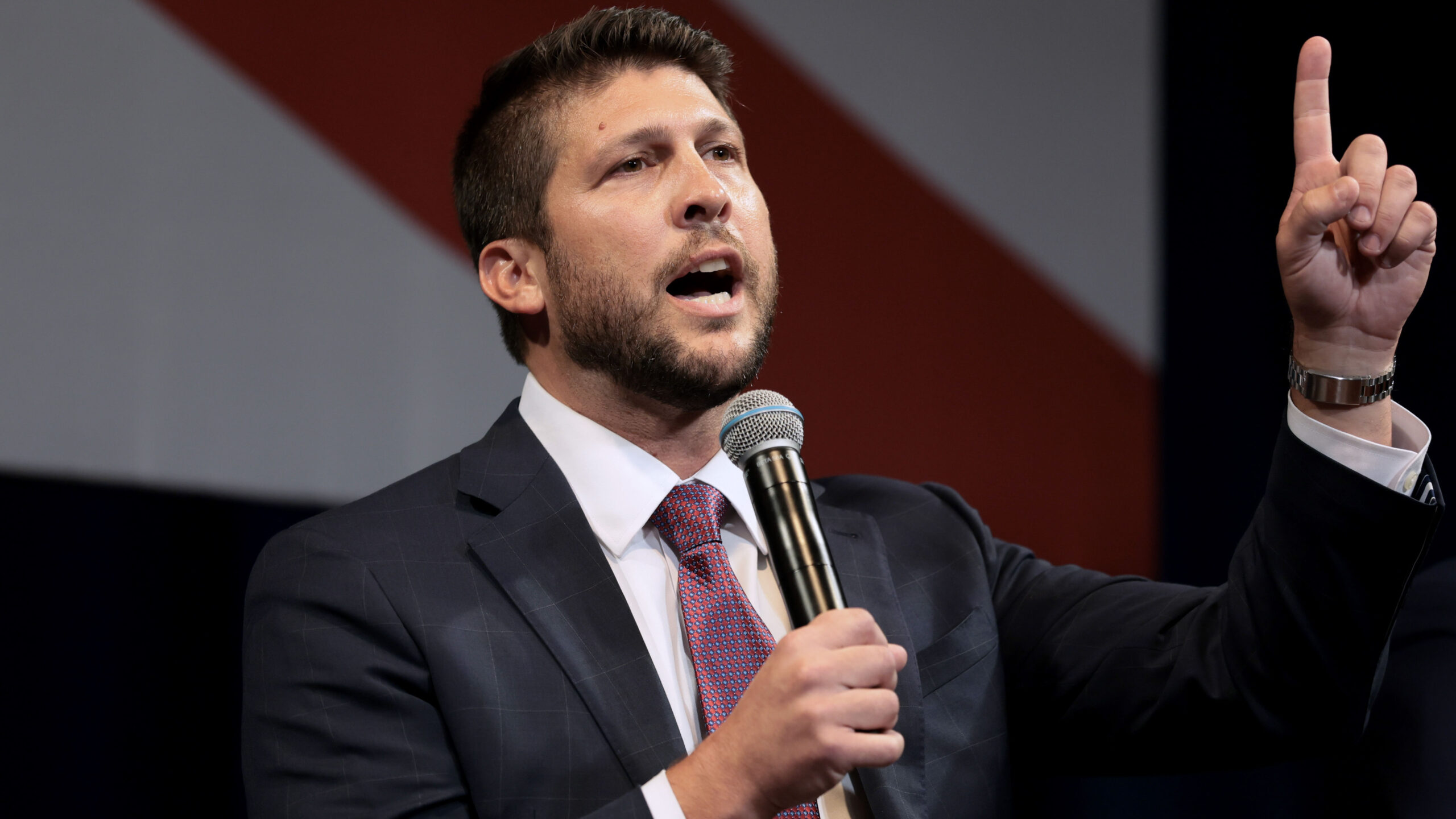
Ohio Sen. Bernie Moreno (R) has been leading the effort to block Chinese vehicles and components from gaining a foothold in the United States because of concerns over technology and supply-chain dependence. Yet while lawmakers debate tariffs, one of America's best-known automakers is openly moving deeper into partnerships with China.
For years, Americans were told tariffs would stop China from gaining influence over the U.S. auto market. But tariffs mainly target finished vehicles imported directly from China. They do little to prevent American or European automakers from incorporating Chinese-developed batteries, software, electronics, and EV platforms into vehicles sold under Western brands.
Beneath the badge
Consumers may soon be driving vehicles wearing Jeep, Dodge, Chrysler, or Ram badges while much of the underlying technology comes from Chinese partnerships: batteries, semiconductors, AI systems, autonomous-driving technology, and connected-car software.
To control these is to control the modern automotive supply chain. China already dominates large portions of that ecosystem, and many legacy automakers increasingly appear to believe they cannot compete globally in EVs without Chinese involvement.
For the UAW and the industrial Midwest, the implications are enormous.
For decades, organized labor fought outsourcing to lower-cost countries. But the shift toward electric vehicles creates a different challenge. EVs generally require fewer moving parts than traditional internal-combustion vehicles, reducing demand for engines, transmissions, and many of the suppliers that support them. If battery production, electronics, and software also migrate overseas, the economic consequences could ripple through the entire manufacturing base.
America's automotive economy extends far beyond assembly plants. It includes steel suppliers, logistics companies, plastics manufacturers, tool-and-die shops, engineering firms, rail networks, repair facilities, dealerships, and thousands of small businesses. When supply chains move, entire local economies move with them.
RELATED: America's salvage yards are on fire — and drivers are the ones getting burned
 Andy Cross/Getty Images
If you can't beat 'em ...
Stellantis' own strategy reflects that trend.
By the end of the decade, the company wants half its global production running on just three platforms. Its new STLA One architecture will support more than 30 models while integrating advanced software, steer-by-wire systems, AI capabilities, and connected cockpit technologies.
At the same time, Stellantis plans to cut more than 800,000 units of manufacturing capacity in Europe while aggressively restructuring operations around efficiency and lower costs.
Even more revealing is its expanding relationship with Leapmotor, the Chinese EV company in which Stellantis already owns a controlling stake through a joint venture. What began as a distribution agreement has expanded into manufacturing cooperation and joint sourcing designed to improve "cost competitiveness."
Rolling computers
The auto industry has seen this pattern before.
Detroit once dominated global manufacturing before outsourcing and offshoring reshaped the landscape. Today's version isn't just about where vehicles are assembled. Modern cars are rolling computers connected to cellular networks, cloud services, cameras, microphones, GPS systems, and over-the-air software updates.
That is why national security concerns now collide directly with automotive policy.
The Biden administration imposed 100% tariffs on Chinese EV imports and proposed restrictions on connected vehicle technology because of concerns over data collection and infrastructure security. Those concerns are legitimate. Modern vehicles collect extraordinary amounts of information, including location data, driving behavior, communications, and other personal information.
Now, imagine foreign-developed software integrated into millions of connected vehicles operating across the United States.
That concern helps explain why Moreno's proposal to block Chinese vehicles and components represents a major escalation in the debate over America's automotive future.
His message is straightforward: Chinese companies should not gain a strategic foothold inside the U.S. auto industry.
China syndrome
President Trump spent years warning about unfair Chinese trade practices and the hollowing out of American manufacturing. His tariffs forced companies to rethink supply chains and brought China's influence into the political spotlight.
Yet despite those efforts, many automakers continued moving deeper into China's EV ecosystem because executives saw lower costs, faster development, and access to advanced battery technology.
Stellantis is hardly alone. Ford has partnered with CATL. Volkswagen expanded its ties with Xpeng. General Motors continues to rely on Chinese-linked battery supply chains, and Tesla maintains an enormous manufacturing footprint in China.
The difference is that Stellantis is now openly telling investors that these partnerships are central to its long-term strategy.
If America loses control of automotive batteries, semiconductors, software platforms, AI systems, and electronics manufacturing, the consequences could extend far beyond the auto business. This remains one of the country's largest manufacturing sectors and one of its biggest sources of middle-class industrial employment.
Consumers were promised that the EV transition would spark a manufacturing renaissance. Instead, America risks becoming increasingly dependent on foreign-controlled supply chains for many of the most important technologies inside next-generation vehicles.
The next generation of cars may still wear familiar American badges while relying heavily on Chinese-developed batteries, software, and technology underneath the sheet metal.
That's the issue Washington is finally beginning to confront.
The real battle is no longer about where vehicles are assembled. It's about who controls the technology inside them, who owns the supply chains behind them, and whether America still intends to build the next generation of vehicles itself.
More from this network:
Domains for Sale · GOTPeople.org · TheDSAPlatform · The Truth About Socialism
What's Your Reaction?
 Like
0
Like
0
 Dislike
0
Dislike
0
 Love
0
Love
0
 Funny
0
Funny
0
 Wow
0
Wow
0
 Sad
0
Sad
0
 Angry
0
Angry
0

I am just an average American. My teen years were in the late 70s and I participated in all that that decade offered. Started working young, too young. Then I joined the Army before I graduated High School. I spent 25 years in, mostly in Infantry units. Since then I've worked in information technology positions all at small family owned companies. At this rate I'll never be a tech millionaire. When I was young I rode horses as much as I could. I do believe I should have been a cowboy. I'm getting in the saddle again by taking riding lessons and see where it goes.
Premium domains for sale





















Comments (0)