

Strong Fathers Are Crucial for Society to Thrive and the Government Doesn’t Know It
Premium domains for sale
Freedom Is Back In Style
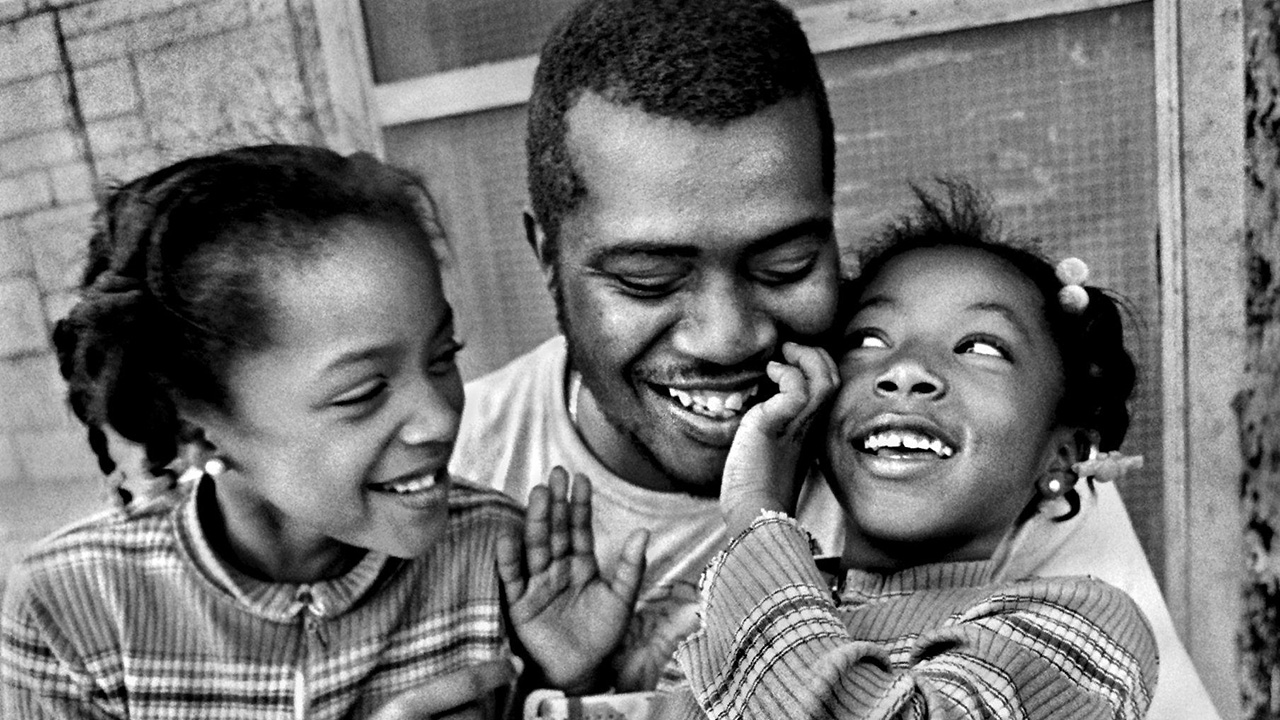
Government programs that claim to support families actually cut fathers out of the picture—and that results in broken families and higher poverty rates, according to Delano Squires.
Freedom Is Back
In Style
Premium domains for sale
The Heritage Foundation hosted the director of the Richard and Helen DeVos Center on Tuesday to lead a panel discussion titled “Invisible Men: How Guaranteed Income Programs for New Moms Diminish Dads,” based on Squires’ latest book.
Squires and three other speakers addressed how welfare programs incentivize single-mother homes and how the black community, in particular, has suffered from a lack of attention to the importance of fathers.
“Fathers are not, by definition, an attachment,” Anthony B. Bradley of the Acton Institute said. “They are crucial to the thriving of children. And if we want healthy families, healthy communities, and healthy societies, we have a duty to invest in fathers.”
Most physical and behavioral issues are the result of absent fathers, according to Bradley. Fatherless children have a higher likelihood of juvenile delinquency, drug addiction, cancer, diabetes, and even an untimely onset of puberty.
Martin Brown, former assistant secretary of health and human resources in Virginia, said that he discovered while working in welfare that his state’s social policies “limited the ability of the dad to even be in their home.”
“When you look at social policy, either the child or the mom is the recipient and not the family,” Brown said. “And so, we change the model from the child being the recipient of the government’s protection, or the mom being the recipient of the government’s largess, to the family unit, and by changing that goal, you’re going to change the outcomes, and so we focus on that as well.”
When a married couple files jointly, their tax breaks should increase rather than decrease, according to James Jackson, CEO of Rooted in Healing. The IRS should not financially incentivize single motherhood and having children outside of marriage.
“We shouldn’t just throw money at distress in the community,” Jackson said. “We should throw money in areas where we’re promoting good, where we’re promoting things like marriage, we’re promoting things like strong families.”
But government policy won’t be enough to promote long-lasting marriages and good fathers. People have to see good marriages so that they desire to emulate them and have an example to follow.
Bradley suggested that black families thrived the most in what he referred to as “’The Cosby Show’ era” because television programs such as “The Jeffersons” and “Good Times” celebrated family life and demonstrated both the difficulties and the joys of marriage.
When author Joy Jones worked as a substitute elementary school teacher in Washington, D.C., in 2006, several boys said that when they grew up, they wanted to be fathers, according to Squires. But when Jones offered to bring in couples who could talk about marriage and having children, the boys were “unenthused.”
“One told her plainly, ‘We’re not interested in the part about marriage, only about how to be good fathers,’” Squires said. “Another boy explained their stance with five words and jaw-dropping candor: ‘Marriage is for white people.’”
In Washington, D.C., 77% of black children are born to unmarried parents, whereas 93% of white children are born to married parents, according to Squires. But it’s not just the black community that needs a better understanding of marriage. It’s the whole country.
People today think of marriage as a capstone and a crowning achievement of adulthood, which is the opposite of what it should be, according to Bradley.
“It’s the beginning of a good life. It’s not that you live a good life and then get married,” Bradley said. “You actually use marriage to ground and shape and structure a life that is characterized by flourishing. And I want all children, regardless of their income level, to see that as an aspiration above career and above the acquisition of stuff.”
Social media, film, and music will help promote fatherhood and marriage. But ultimately, the responsibility to raise future fathers falls on families rather than on welfare programs and pop culture.
“We need to actually disperse the work and put these young men and young women in homes with people,” Bradley said. “Let them come over for dinner, take them on vacation with you, let them see your family in action.”
More from this network:
Domains for Sale · GOTPeople.org · TheDSAPlatform · The Truth About Socialism
Originally Published at Daily Wire, Daily Signal, The Blaze, or Fox News
What's Your Reaction?
 Like
0
Like
0
 Dislike
0
Dislike
0
 Love
0
Love
0
 Funny
0
Funny
0
 Wow
0
Wow
0
 Sad
0
Sad
0
 Angry
0
Angry
0

I am just an average American. My teen years were in the late 70s and I participated in all that that decade offered. Started working young, too young. Then I joined the Army before I graduated High School. I spent 25 years in, mostly in Infantry units. Since then I've worked in information technology positions all at small family owned companies. At this rate I'll never be a tech millionaire. When I was young I rode horses as much as I could. I do believe I should have been a cowboy. I'm getting in the saddle again by taking riding lessons and see where it goes.
Premium domains for sale



















Comments (0)