

Supreme Court Fist Pumps for the First Amendment
Premium domains for sale
Freedom Is Back In Style
Today, the Supreme Court ruled unanimously that First Choice Women’s Resource Center, a religious nonprofit that provides counseling and resources to pregnant women in New Jersey, had established a present injury to its First Amendment associational rights to confer standing to challenge a subpoena from the state to disclose private donor information. First Choice does not provide abortions or refer clients to others for abortions. This ruling is a victory for First Choice and other organizations targeted by the Left.
Freedom Is Back
In Style
Premium domains for sale
How We Got Here
After the U.S. Supreme Court’s ruling in Dobbs v. Jackson Women’s Health Organization, which overturned Roe v. Wade, the newly inaugurated New Jersey attorney general, Matthew Platkin, launched what his state coined as a “reproductive enforcement initiative.” This initiative issued scathing consumer alert, warning about pregnancy centers that deterred women from seeking abortion.
In November of 2023, Platkin issued a broad subpoena to First Choice, purportedly based on a patina of authority to protect consumers in New Jersey to “discover” if the clinic had “allegedly deceived donors and potential clients with misleading language on its website.” These “misleading claims” allegedly pertained to licensing requirements for health care professionals, and “faulty medical advice.”
Tellingly, the subpoena not only requested internal communications but also sensitive donor information, which included names, addresses, phone numbers, and employer history.
In December 2023, the Alliance Defending Freedom once more stepped into the breach on behalf of First Choice and challenged the subpoena in the U.S. District Court of New Jersey, arguing that the center’s rights to free speech and association had impeded their First Amendment rights to free speech and free association. The trial judge denied the center’s request for a temporary restraining order and preliminary injunction on a jurisdictional basis. The judge claimed the claim was not “ripe” for federal judiciary and, because the alleged harm “rests upon contingent future events” the claim was deemed insufficient for the forum.
In a December 2024 per curiam opinion, The Third Circuit also dismissed the center’s claim, echoing the lower court’s ripeness argument. One month later, Alliance Defending Freedom requested the Supreme Court have the final word, and by June the petition was granted.
Oral argument was held on Dec. 2, 2025. Alliance Defending Freedom attorney Erin Hawley claimed that the courts below had erred in overlooking the immediate threat posed by the subpoena’s chilling effect. Not only was the threat immediate, Hawley argued, but it resulted in tangible harm in the form of litigation costs, potential donor loss, and harassment.
The respondent’s position was presented by Sundeep Iyer, arguing on behalf of Matthew Platkin, the attorney general of New Jersey.
Iyer told the Court that the subpoena has no legal force unless a state court enforces it. Further, Iyer contended that allowing pre-enforcement federal challenges gave the federal government ample opportunity to hamper investigations and would flood federal courts with countless claims.
Common Sense Prevails
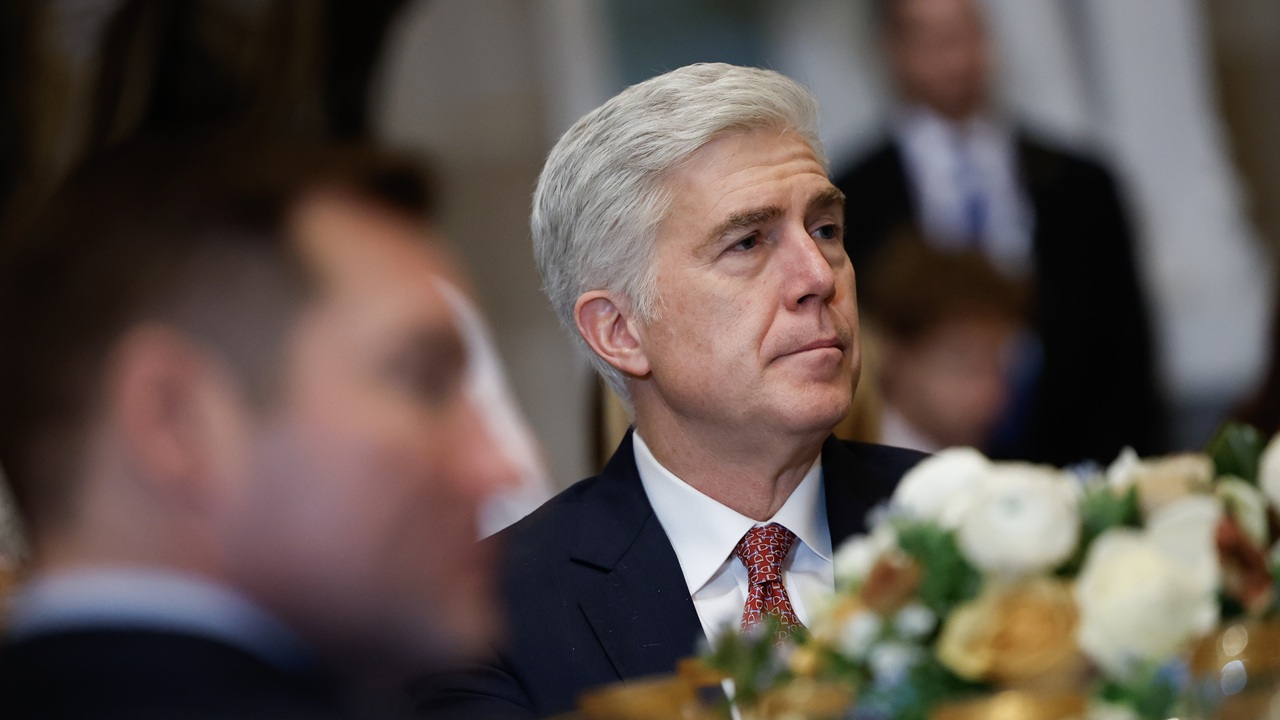
In a unanimous opinion by Justice Neil Gorsuch, the Court held that First Choice had established a present injury to its First Amendment associational rights sufficient to confer Article III standing, reversed the judgment of the Third Circuit, and remanded the case for further proceedings consistent with their opinion.
In journeyman fashion, the Court explained that Article III standing requires three elements (injury-in-fact, causation, and redressability) and noted that this case centered on the “injury-in-fact” element, which requires “an injury that is concrete, particularized, and actual or imminent.”
The Court held that the subpoena had caused First Choice to suffer “an ongoing injury to its First Amendment rights.”
Citing NAACP v. Alabama ex rel. Patterson, the Court noted that it has long held that “compelled disclosure of affiliation with groups engaged in advocacy many constitute as effective a restraint on freedom of association.” That 1958 case involved the then-attorney general of Alabama’s attempts to force the NAACP into giving the AG their records and papers containing the names and addresses of all Alabama members and agents of the NAACP.
The Supreme Court ruled unanimously that “immunity from state scrutiny of [NAACP] membership lists is here so related to the right of [NAACP’s] members to pursue their lawful private interests privately and to associate freely with other in doing so as to come within the protection of the Fourteenth Amendment.”
Here, the Court batted away New Jersey’s justification for the subpoena easily, noting that it didn’t matter if the subpoenas were not “self-executing, nor did it matter that they allowed First Choice to solicit funds through one specific website without disclosing the identities of those who donated through that website, and it didn’t matter that the AG promised to keep confidential the documents produced by First Choice.
Citing Shelton v. Tucker, the Court noted that “demands for private donor information burden First Amendment rights ‘even if there is no disclosure to the general public.’”
The fact that this holding was unanimous and there were no concurrences evinces how emphatic the Court is in protecting associational rights under the First Amendment. This holding is the victory for the First Amendment and a slap at any government actor who attempts to disgorge private donor information from lawful organizations under the fig leaf of “consumer protection” or any other guise of “transparency.”
More from this network:
Domains for Sale · GOTPeople.org · TheDSAPlatform · The Truth About Socialism
What's Your Reaction?
 Like
0
Like
0
 Dislike
0
Dislike
0
 Love
0
Love
0
 Funny
0
Funny
0
 Wow
0
Wow
0
 Sad
0
Sad
0
 Angry
0
Angry
0

I am just an average American. My teen years were in the late 70s and I participated in all that that decade offered. Started working young, too young. Then I joined the Army before I graduated High School. I spent 25 years in, mostly in Infantry units. Since then I've worked in information technology positions all at small family owned companies. At this rate I'll never be a tech millionaire. When I was young I rode horses as much as I could. I do believe I should have been a cowboy. I'm getting in the saddle again by taking riding lessons and see where it goes.
Premium domains for sale


















Comments (0)