

Supreme Court Ruling In WWII-Era Oil Dispute Drives Major Win For American Energy
Premium domains for sale
Freedom Is Back In Style
The U.S. Supreme Court on Friday handed energy companies a significant procedural victory, ruling that Chevron may move a long-running Louisiana environmental lawsuit from state to federal court and, in doing so, broadened the scope of a key federal jurisdiction statute.
Freedom Is Back
In Style
Premium domains for sale
In a 7–1 decision in Chevron USA Inc. v. Plaquemines Parish, the Court held that companies acting under federal authority may remove cases to federal court if the claims are meaningfully connected to their federal duties—even if the government did not directly control the specific conduct at issue. Justice Clarence Thomas wrote the majority opinion.
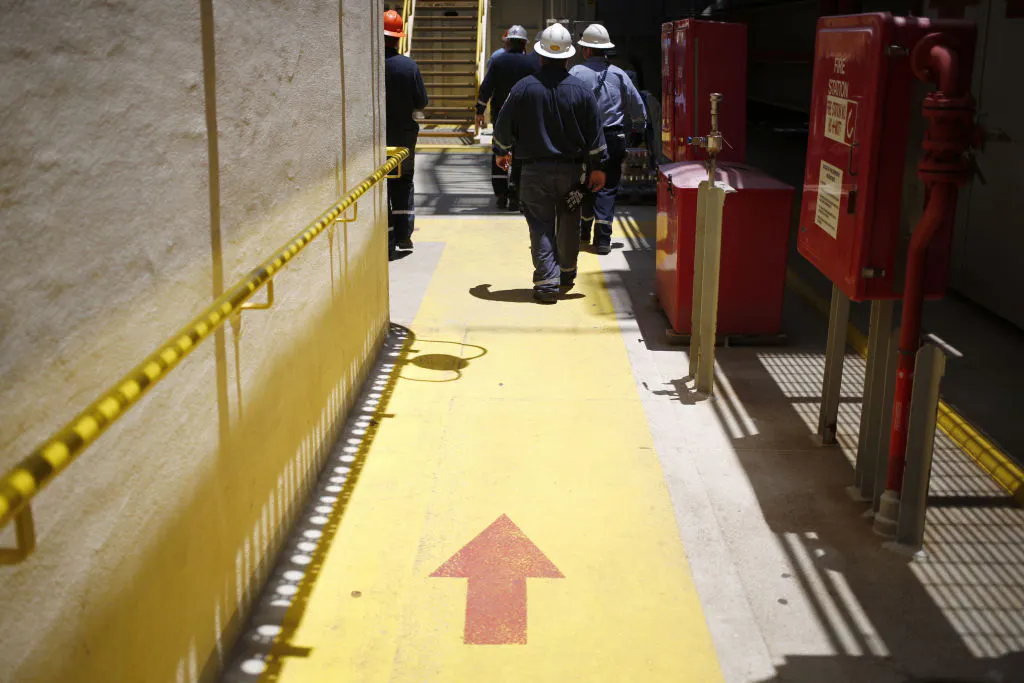
The dispute originated in 2013, when Louisiana parishes sued several oil companies, alleging that historic production activities—specifically those during World War II—damaged the state’s coastline. The parishes cited the use of earthen pits, vertical drilling, and the dredging of canals as violations of state law. Chevron sought to “remove” the case to federal court, arguing that during the war, it acted as a federal contractor producing high-octane aviation gasoline (“avgas”) for the U.S. military. Since the crude oil produced in Louisiana was the essential “feedstock” for that gas, Chevron claimed the lawsuit “related to” its federal duties.
The core legal question centered on whether a lawsuit challenging raw material production “relates to” a federal contract to refine those materials into a military product. The Fifth Circuit had previously ruled against Chevron, suggesting the government had not specifically directed the methods of oil extraction.
Justice Thomas, however, rejected this narrow interpretation. He emphasized that the 2011 congressional amendments to the statute replaced a strict “causal nexus” test with a much broader standard.
As Thomas noted: “The phrase ‘relating to’ sweeps broadly. It means ‘to stand in some relation; to have bearing or concern; to pertain; refer; to bring into association with or connection with.'”
While Thomas acknowledged that the connection cannot be “tenuous, remote, or peripheral”—famously quipping that “ordinary readers would not understand the statement that someone is ‘related to Joe’ to refer to ‘a mutual tie to Adam and Eve'”—he found that Chevron’s wartime activities were deeply intertwined with federal mandates.
The Court highlighted the “all-hands-on-deck” nature of the WWII effort, where the federal government pressured companies to maximize production “day and night.” Because the specific Louisiana crude was a “preferential” grade for avgas, the extraction methods used were not independent business choices, but were driven by the need to satisfy military demand. Thomas wrote, “In this all-hands-on-deck, wartime context, Chevron needed to produce more crude oil as quickly as possible to facilitate more avgas refining, including its own. … This suit implicates acts by Chevron that are closely connected to the performance of its federal duties.”
This ruling is widely seen as a win for energy companies because it lowers the threshold for removing cases to federal court. By allowing indirect but meaningful connections to suffice, the decision strengthens a key procedural tool that can shape where—and potentially how—major environmental and climate lawsuits are litigated.
More from this network:
Domains for Sale · GOTPeople.org · TheDSAPlatform · The Truth About Socialism
What's Your Reaction?
 Like
0
Like
0
 Dislike
0
Dislike
0
 Love
0
Love
0
 Funny
0
Funny
0
 Wow
0
Wow
0
 Sad
0
Sad
0
 Angry
0
Angry
0

I am just an average American. My teen years were in the late 70s and I participated in all that that decade offered. Started working young, too young. Then I joined the Army before I graduated High School. I spent 25 years in, mostly in Infantry units. Since then I've worked in information technology positions all at small family owned companies. At this rate I'll never be a tech millionaire. When I was young I rode horses as much as I could. I do believe I should have been a cowboy. I'm getting in the saddle again by taking riding lessons and see where it goes.
Premium domains for sale
















Comments (0)