

Supreme Court Says 14th Amendment Guarantees Birthright Citizenship to Children of Illegal Aliens and Tourists
Premium domains for sale
Freedom Is Back In Style
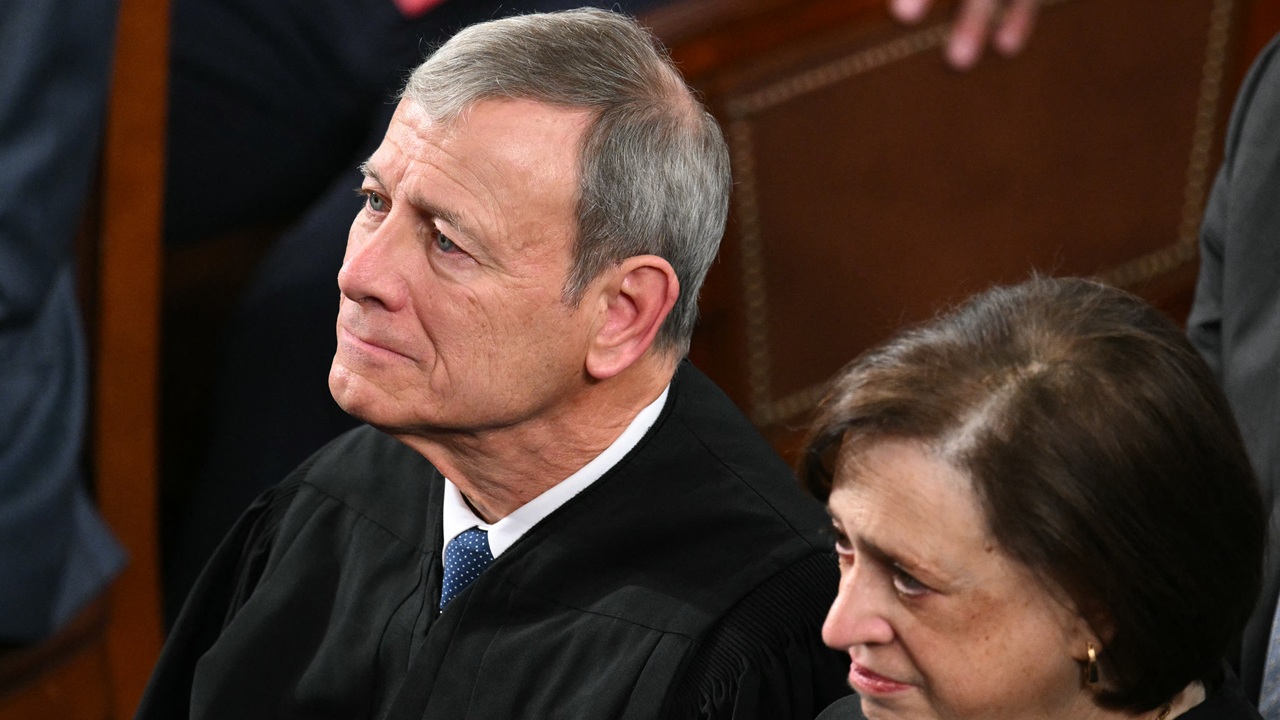
In Trump v. Barbara, Chief Justice John Roberts wrote for the majority of justices that the citizenship clause of the 14th Amendment requires all children born within the United States to automatically qualify as citizens at birth.
Freedom Is Back
In Style
Premium domains for sale
The 14th Amendment provides, in part, that “[a]ll persons born or naturalized in the United States, and subject to the jurisdiction thereof,” are citizens of both the United States and the State in which they reside.
This amendment, passed in the aftermath of the Civil War, was primarily designed to make sure that recently freed slaves and their children would appropriately become full citizens of the United States and to overturn the Supreme Court’s infamous Dred Scott decision that held the contrary.
The constitutional arguments in the case turned on the meaning of the phrase “and subject to the jurisdiction thereof.”
The Trump administration argued, with historical examples to support its position, that the phrase had a specific meaning that would have been understood by those who ratified that language to exclude from automatic citizenship the children of those who were not part of the U.S. political community: children of ambassadors, children of short-term visitors, and others.
That’s because these individuals and their children were still “subject to the jurisdiction” of a different country.
Congress later codified similar language in the Immigration and Nationality Act of 1952, which provides that “a person born in the United States, and subject to the jurisdiction thereof” is a national and citizen of the United States.
In January 2025, President Donald Trump issued Executive Order No. 14160, ordering executive branch officials to prospectively refuse to provide benefits available to citizens to the children of certain illegal aliens and those temporarily in the country.
In the case that made its way to the U.S. Supreme Court, three plaintiff families filed suit in the U.S. District Court for the District of New Hampshire, claiming that the executive order was unconstitutional. That court ruled against the Trump administration. While the case was pending before the 1st U.S. Circuit Court of Appeals, the Supreme Court granted certiorari before judgment and agreed to hear the case.
Justices Clarence Thomas, Samuel Alito, and Neil Gorsuch all dissented from the court’s decision.
Alito had particularly pointed words in his dissent, where he said: “This is one of the most important decisions in the history of the Court, and in my judgment, the Court has made a serious mistake.”
He continued:
“As interpreted by the Court today, the Fourteenth Amendment confers citizenship on virtually everyone who happens to be born in this country, including the children of ‘birth tourists,’ women who come here solely for the purpose of giving birth to a child and then promptly returning home. Careful analysis of the text of the Fourteenth Amendment and the process that led to its adoption shows that it does not degrade the concept of United States citizenship in this way. Instead, the Fourteenth Amendment confers citizenship on only those children who, at birth, ow allegiance solely to this country.”
Sadly, a majority of the other justices did not see it this way.
While Justice Brett Kavanaugh agreed with the result in the case, making the outcome a 6-3 decision, he disagreed with the majority’s reasoning. In fact, he rejected the majority’s holding that the 14th Amendment required birthright citizenship. But he believed the president’s executive order violated the Immigration and Nationality Act’s statutory language. This means that the constitutional holding was decided by only one vote in a 5-4 decision.
It’s unfortunate that the majority of justices read requirements into the text of the 14th Amendment that do not exist. Hopefully, a future court or action by We the People can correct this misinterpretation of the Constitution via a constitutional amendment.
More from this network:
Domains for Sale · GOTPeople.org · TheDSAPlatform · The Truth About Socialism
What's Your Reaction?
 Like
0
Like
0
 Dislike
0
Dislike
0
 Love
0
Love
0
 Funny
0
Funny
0
 Wow
0
Wow
0
 Sad
0
Sad
0
 Angry
0
Angry
0

I am just an average American. My teen years were in the late 70s and I participated in all that that decade offered. Started working young, too young. Then I joined the Army before I graduated High School. I spent 25 years in, mostly in Infantry units. Since then I've worked in information technology positions all at small family owned companies. At this rate I'll never be a tech millionaire. When I was young I rode horses as much as I could. I do believe I should have been a cowboy. I'm getting in the saddle again by taking riding lessons and see where it goes.
Premium domains for sale













Comments (0)