

Terminating TPS: The US Conference of Catholic Bishops Weighs In
Premium domains for sale
Freedom Is Back In Style
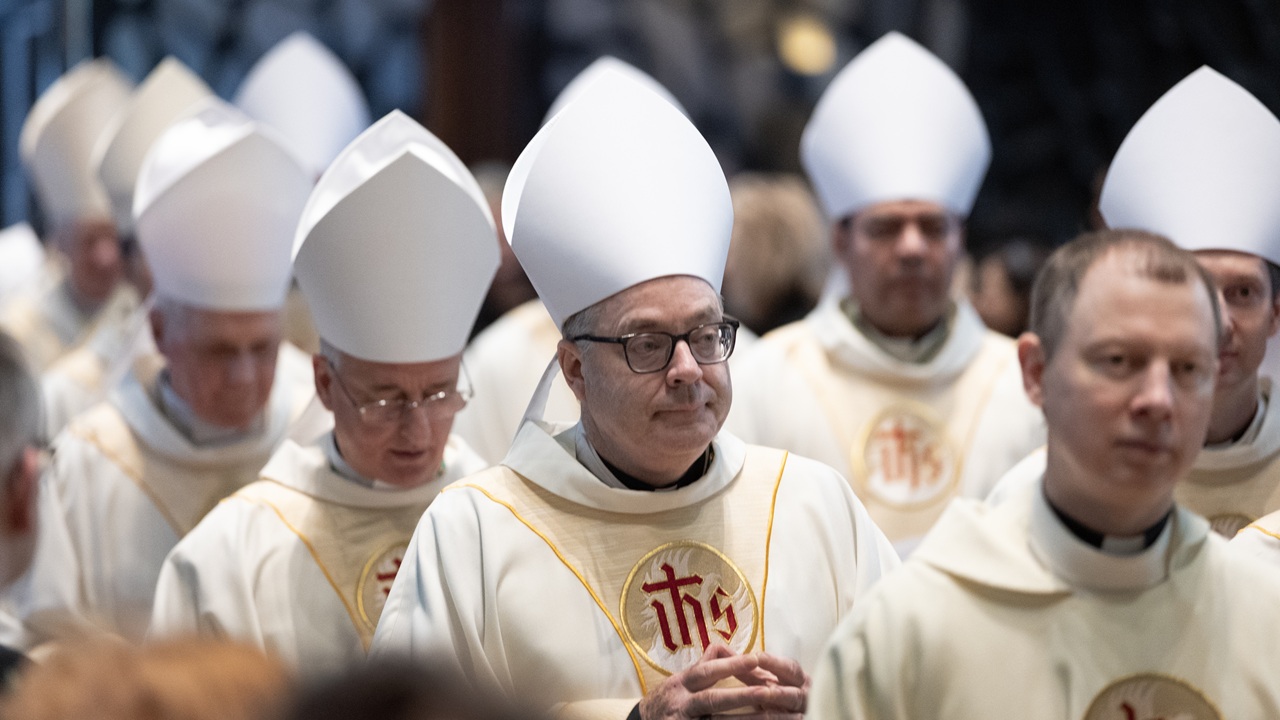
Following the Supreme Court’s 6-3 decision in Mullin v. Doe last week, which upheld the Trump administration’s authority to terminate Temporary Protected Status designations for over 350,000 individuals from Haiti and Syria, the U.S. Conference of Catholic Bishops has issued several statements supporting the continuation of TPS.
Freedom Is Back
In Style
Premium domains for sale
Bishops Brendan J. Cahill and A. Elias Zaidan wrote: “There is simply no realistic opportunity for the safe and orderly return of people to Haiti at this time.”
They acknowledged that TPS is, by law, temporary, while arguing that Congress should provide permanent legal status for long-term TPS holders: “We do not dispute that TPS is intended to be ‘temporary’ … which is why we have reaffirmed … the need for Congress to create viable opportunities for longtime residents with TPS … to request a more durable legal status.”
“Revoking the legal status of hundreds of thousands of people residing in our country creates a moral crisis when returning to their country of origin is not a safe or reasonable option.”
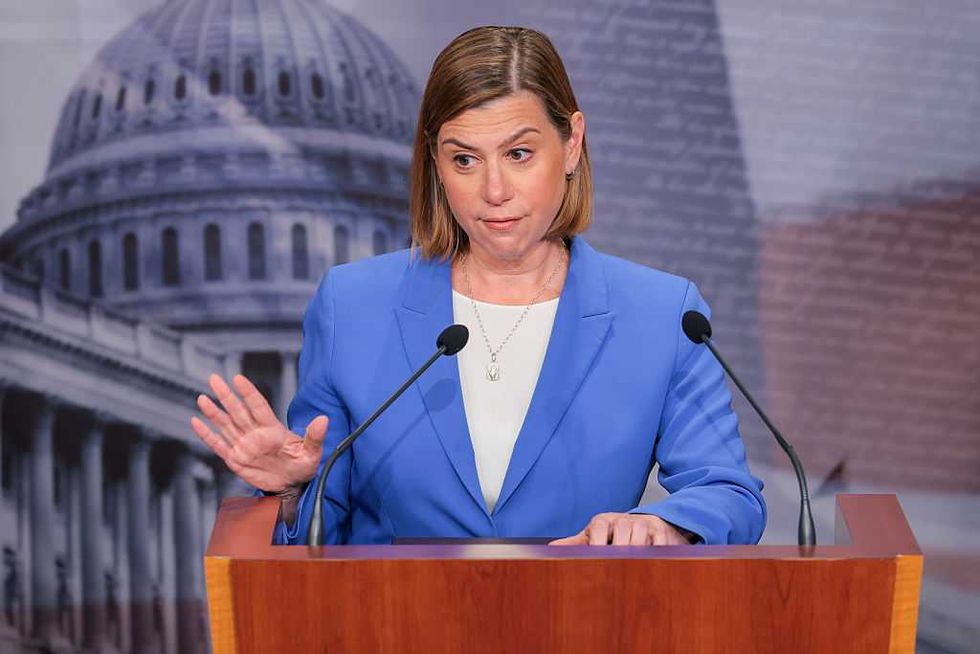
Rep. Seth Moulton, D-Mass., on Monday introduced the TPS Relief Act, legislation that would allow federal courts to review TPS termination decisions, directly overturning the Supreme Court’s ruling in Mullin v. Doe.
Let’s now look at the facts:
After consulting with the secretary of state, the secretary of homeland security may designate a foreign country for TPS due to conditions in the country that temporarily prevent the country’s nationals from returning safely, namely ongoing armed conflict, a natural disaster, or other extraordinary and temporary conditions. Once designated, U.S. Citizenship and Immigration Services may grant TPS to eligible nationals of the designated country who are already in the U.S. Because these functions involve foreign policy, country conditions, and immigration, the authority to designate and terminate TPS for a country properly resides in the executive branch.
Haiti was first designated for TPS in 2010 due to a magnitude 7.0 earthquake. The Obama administration extended and expanded Haiti TPS to 2017. In May 2017, the Trump administration extended TPS for only six months and expressly warned that Haiti may not warrant further extension. In November 2017, the administration announced its termination of Haiti TPS. The Left, of course, sued, even though the Immigration and Nationality Act clearly states that there is no judicial review of the secretary’s determination to designate, extend, or terminate TPS. Ongoing litigation kept TPS protections in place throughout the remainder of the first Trump administration.
In May 2021, the Biden administration then “redesignated” Haiti for TPS, for which there is no authority in the Immigration and Nationality Act. President Joe Biden’s Department of Homeland Security cited many broad reasons for Haiti, which, unfortunately, have been neither extraordinary nor temporary, including security concerns, social unrest, poverty, lack of basic resources, and human rights abuses.
DHS Secretary Alejandro Mayorkas made subsequent TPS extensions and “redesignations,” which expanded eligibility to many newer arrivals. As Citizenship and Immigration Services explains on its TPS webpage, the benefit is for those already in the U.S. when a disaster occurs. Thus, Mayorkas was not authorized to redesignate and expand the Haitian TPS population.
Biden’s open border was known across the world. Many Haitians who were safely resettled in other countries, such as Chile and Brazil, exploited Biden’s open border to come to the U.S. As was regularly documented, they ditched their resettlement country identification upon crossing the U.S. border to avoid being sent back to their safe resettlement country. Instead, they applied for asylum and/or TPS, claiming they could not be returned to Haiti for fear of persecution or the numerous reasons Biden’s DHS cited in its 2021 redesignation.
In February 2025, the second Trump administration sought to vacate the Biden July 2024 redesignation and then announced termination of Haiti TPS in July 2025. Again, the Left sued the Trump administration to keep TPS in place and won a stay from the U.S. District Court for D.C., again in violation of clear statutory nonjudicial review language.
Last week, the Supreme Court ruled that nonreviewability of a TPS termination means it is nonreviewable. So, what happens now that some Haitians have had TPS for up to 16 years? DHS will begin or resume their removal proceedings.
Some may be eligible for another immigration benefit and can pursue that before an immigration judge. As for those Haitians who ditched their resettlement documents at our border to hide their preexisting safe resettlement in another country while pursuing protection here, they can also be charged with fraud as an additional ground for removal if DHS has a record of the document or other evidence of resettlement. Any Haitian not eligible for an immigration benefit does not have to return to Haiti, but he must depart the U.S.
Like so many alien populations, the U.S. has been beyond generous with allowing Haitian TPS holders to stay and work here—to a fault. Because our many immigration benefits are expanded and exploited, Americans have understandably grown weary of unending demands that all aliens here should get to stay permanently—that no one should be deported. Such demands, unfortunately, erase goodwill.
“Temporary” means temporary. Anyone granted this protection should be grateful for America’s generosity and use this time to prepare for departure within the deadline. Those who do so can retain the ability to lawfully return, and our beloved nation will be ready to welcome them back.
More from this network:
Domains for Sale · GOTPeople.org · TheDSAPlatform · The Truth About Socialism
What's Your Reaction?
 Like
0
Like
0
 Dislike
0
Dislike
0
 Love
0
Love
0
 Funny
0
Funny
0
 Wow
0
Wow
0
 Sad
0
Sad
0
 Angry
0
Angry
0

I am just an average American. My teen years were in the late 70s and I participated in all that that decade offered. Started working young, too young. Then I joined the Army before I graduated High School. I spent 25 years in, mostly in Infantry units. Since then I've worked in information technology positions all at small family owned companies. At this rate I'll never be a tech millionaire. When I was young I rode horses as much as I could. I do believe I should have been a cowboy. I'm getting in the saddle again by taking riding lessons and see where it goes.
Premium domains for sale















Comments (0)