

Texas Students Can Handle the Bible
Premium domains for sale
Freedom Is Back In Style
Texans, hide your kids—or else they’ll be forced to hear that “love is patient, love is kind.”
Freedom Is Back
In Style
Premium domains for sale
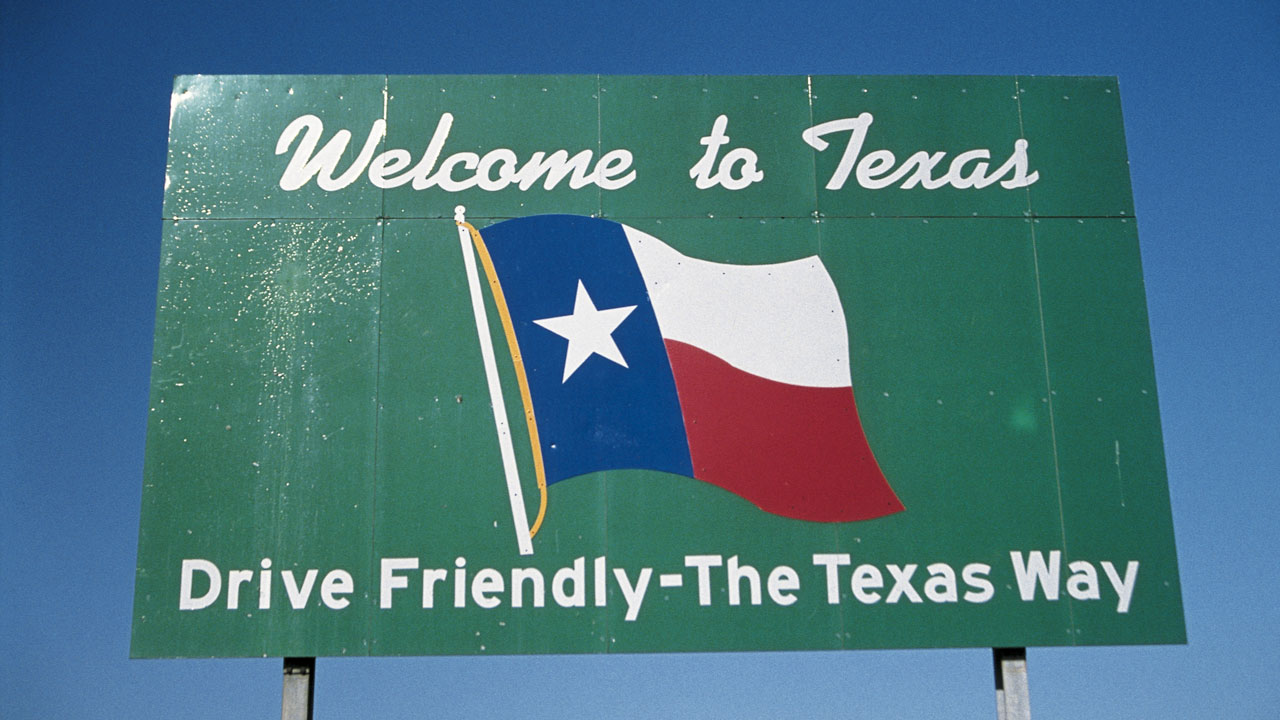
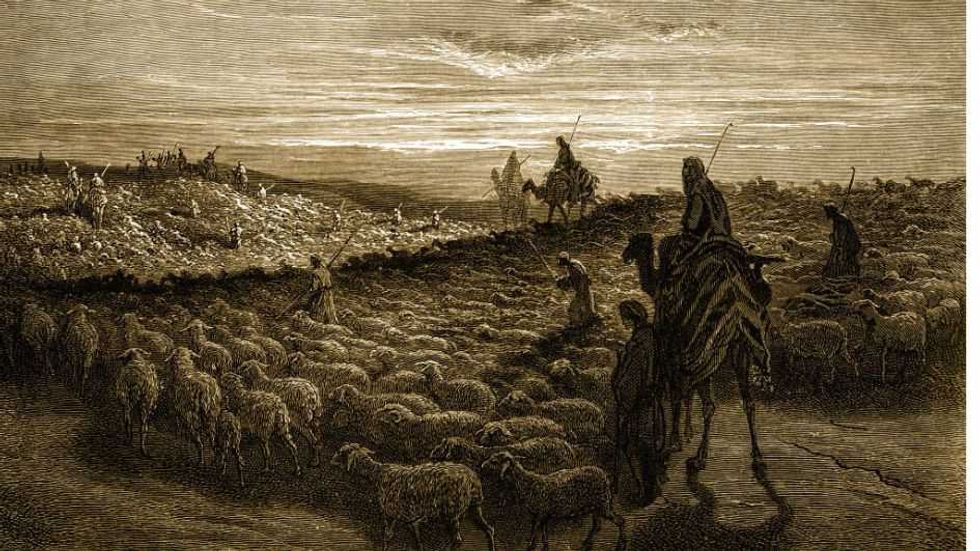
Yes, the radicals on the Texas State Board of Education have decided that public school students in the Lone Star State should become just a little familiar with the work that arguably influenced American history and Western literature more than any other.
How dare they.
On Friday, the state education board approved a new list of mandated readings for students. The list, which was passed with a 9-5 vote and included classic works as well as the Bible, will start to be implemented in 2030.
“We’re going to stop watering down American history. We’re going to teach the truth. Our nation was founded as a Christian nation, and Texas is a Christian state,” said board member Brandon Hall, a Republican and a pastor, according to CNN. Two-thirds of Texans are Christian, and about 6% practice other religions, including Islam, Hinduism, and Buddhism, according to Pew Research Center.
Besides the oh-so-controversial 13th Chapter of First Corinthians, students will also be expected to read the Beatitudes, Psalm 23, the Parable of the Prodigal Son, two chapters from Exodus, and several chapters from the Book of Job, according to a draft circulated before the vote.
Fourth graders will have to wrestle with Luke 14:7-11, where Jesus recommends people not start by sitting in the highest-status seat. (Perhaps the school cafeteria social scenes will never be the same.) Sixth graders, in an era where adolescent mental health seems more fragile than ever, will have to cope with Matthew 6:25-34, which pushes the radical message that God will take care of people and worrying is unnecessary.
Yet, of course, there is still outrage from the expected quarters. “A mandatory public school reading list should never function as a Bible lesson,” said Annie Laurie Gaylor, co-president of the Freedom From Religion Foundation, in a statement. “Texas is telling millions of children that one religion deserves the government’s seal of approval, while everyone else is an afterthought.”
Never mind, apparently, that American history is dominated by figures highly influenced by Christianity, from the Founding Fathers to Martin Luther King Jr. You simply can’t understand our nation’s history without some grasp of Christianity—but you can grasp our nation’s history without an understanding of Islam or atheism or Hinduism.
Gaylor’s view is also an outlier in Texas. A 2024 Texas Public Policy Foundation poll found that 64% of Texans approved of putting religious stories into the public school curriculum.
Of course, reading the Bible doesn’t mean that public school students have to assent to Christianity. In high school, when I was homeschooled and using a Catholic Great Books program, I read portions of the Quran. I was reading to try to understand where Muslims came from and how this book had shaped their history, not because I believed the Quran. Atheists, Muslims, Hindus, etc., can do the same when it comes to reading the Bible in Texas.
Ultimately, reading the Bible will help give Texas students a deeper understanding of the ideas that form the foundation of our culture. As Julie Pickren, a Republican on the education board, told The Texas Tribune, the readings will give “important insight into the moral and philosophical traditions that have shaped Western civilization.”
A draft of the readings included classics such as William Shakespeare’s “Hamlet,” Jane Austen’s “Pride and Prejudice,” Anne Frank’s “Diary of a Young Girl,” and C.S. Lewis’ “The Lion, the Witch, and the Wardrobe.”
“A classical approach to education, one that emphasizes the careful study of primary historical documents, plays a vital role in developing strong critical thinking skills in students,” Pickren added.
“When students engage directly with original writings, speeches, sermons, and foundational texts, they can evaluate ideas and develop a deeper understanding of the principles that have shaped the USA and Texas.”
Preach it.
In the TikTok era, where students are far more likely to spend hours watching inane reels than poring over a tome that changed the course of history, it’s critical that students be forced in school to actually engage with ideas. And by ideas, I don’t mean some emotional rant in a 30-second video, but a reasoned argument that has resonated for decades or centuries or millennia.
Students should read the Bible—and the Founding Fathers, and Shakespeare, and Plato, and so many of the thinkers that profoundly affected the course of Western civilization. Some young Americans may still decide to reject the values of their ancestors. But at least it will be done after actually having some understanding of those values and ideas’ origins, not just seeing a few social media posts talking up socialism or atheism and arguing against straw men.
Thankfully, Texas isn’t the only state to realize students need to engage more deeply with the works that influenced America. “Utah students will be required to analyze specific Bible passages referenced or ‘alluded to’ in U.S. historical documents,” in the future, thanks to legislation passed earlier this year, reported The Salt Lake Tribune.
“Oftentimes, where Texas goes, other states will follow, right? So, this is a pretty substantial move that I could imagine other states picking up and moving forward with as a possibility,” Antero Garcia, a Stanford University professor and the president of the National Council of Teachers of English, told ABC News.
Hopefully, more states and districts will follow—and provide future voters with a better understanding of the history of the country they live in.
More from this network:
Domains for Sale · GOTPeople.org · TheDSAPlatform · The Truth About Socialism
What's Your Reaction?
 Like
0
Like
0
 Dislike
0
Dislike
0
 Love
0
Love
0
 Funny
0
Funny
0
 Wow
0
Wow
0
 Sad
0
Sad
0
 Angry
0
Angry
0

I am just an average American. My teen years were in the late 70s and I participated in all that that decade offered. Started working young, too young. Then I joined the Army before I graduated High School. I spent 25 years in, mostly in Infantry units. Since then I've worked in information technology positions all at small family owned companies. At this rate I'll never be a tech millionaire. When I was young I rode horses as much as I could. I do believe I should have been a cowboy. I'm getting in the saddle again by taking riding lessons and see where it goes.
Premium domains for sale








Comments (0)