

The Anti-Hero Era May Have Finally Gone Too Far
Premium domains for sale
Freedom Is Back In Style
This article is part of Upstream, The Daily Wire’s new home for culture and lifestyle. Real human insight and human stories — from our featured writers to you.
Freedom Is Back
In Style
Premium domains for sale
***
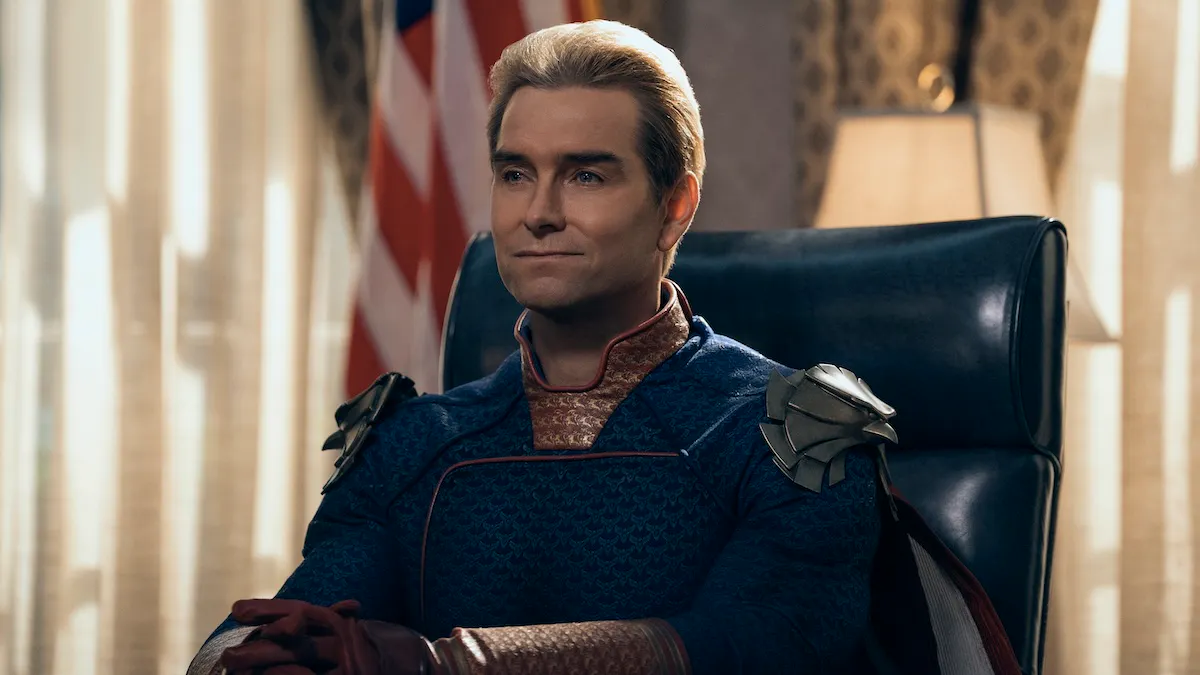
Even if you’ve never seen “The Boys,” you’ve probably come across the face of Anthony Starr as Homelander, an evil parody of Superman. He gave us one last meme this past week as Amazon’s superhero series reached its conclusion after five seasons. In the climactic confrontation between the antihero Billy Butcher and Homelander, Homelander is stripped of his powers, exposed as a fraud on live television, and forced to grovel on his knees for his life — a plea that is not granted.
After his gruesome demise, is righteous order restored to the land? No. In a subsequent scene, the antihero Billy Butcher is murdered by another cynical comrade who once fought side by side with Billy in their rebellion. Fans of the show complained about its unsatisfactory ending, but this sense of emptiness and the nagging feeling of despair that linger even after the story has ended are actually the most appropriate feelings for the postmodern ideology on which this series was built.
“The Boys” is a textbook “deconstruct the superhero myth” trope, and it is far from being new or edgy. Arguably, the original and greatest of superhero-deconstruction stories was Alan Moore’s “Watchmen” comic book series, which debuted in 1986. In that same year, Frank Miller’s “The Dark Knight Returns” portrayed Superman as a dopey stooge for an evil President Ronald Reagan. The original source material for “The Boys” series was a comic book series that debuted in 2006.
All of these stories are motivated by the same core ethos of postmodern thought: the suspicion of power. Power corrupts, institutions lie, and every grand story you’ve been told about what’s “good and evil” is just propaganda written by the “oppressor” — this has been the “anti-story” of pop-culture postmodernism over the past 40 years. In this anti-story, there are no true virtuous heroes. The new “hero” is the anti-hero who exposes the lies, rages against the machine, and takes down the powerful.
The pitch is seductive because it isn’t entirely wrong. Power can, and often does, corrupt. Institutions regularly betray our trust. The heroes you once thought were Superman — whether it was a teacher, parent, pastor, or politician — can have moral failures. There really are Homelanders out there.
But here’s where “The Boys,” and the worldview it dramatizes, runs out of road.
What do you do after you expose Homelander? Now what?
Who leads the rebuilding efforts after the ruin? Who flies into the burning building tomorrow? Who do the kids on the playground want to be when they grow up? The show has no answer because the worldview underneath it has no answer.
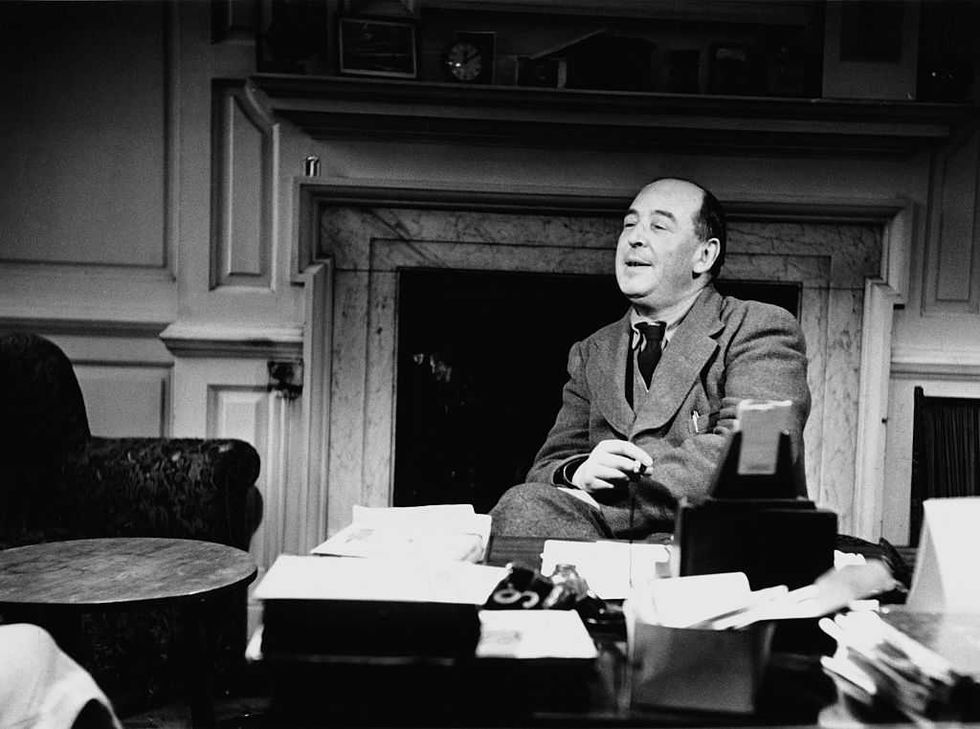
Long before postmodernism moved into the pop culture mainstream, C.S. Lewis understood that the ideologies of deconstruction — whether Marxist, postmodern, or what many might call “wokism” today — ultimately fail. Lewis argued that we can only know a crooked line because we’ve seen a straight line, and being stuck trying to “see through” everything forever without ever seeing to something better was only a form of blindness.
Deconstruction, treated as the only noble act, can never have a satisfactory ending. Why? Because it only knows that it should be against something; it is always in rebellion, always trying to expose and tear down. If you believe hierarchies are inherently oppressive, your rebellion never ends. There can never be an end like J.R.R. Tolkien’s “The Return of the King,” where a just and righteous king restores order to the land. You never get that original “Star Wars” trilogy moment when darkness is dispelled and the light redeems a fallen republic.
The award-winning writer David Foster Wallace was well acquainted with the “patricidal” nature of the postmodern anti-story. He called living in this state of perpetual cynicism and deconstruction being stuck as a “third-world rebel.” The “third-world rebel” is permanently in opposition, permanently tearing down, and permanently incapable of building.
We’ve been stuck in this cultural anti-story for 40 years, and it is why so many people in our cultural moment feel exhausted without being able to name why. They’ve been handed an anti-story to live in that has only a critical mode. It can spot the lie in every institution, the power play behind every story, the manipulation in every appeal to virtue — and then it stands there in the rubble with nothing to offer. No next steps to a positive reconstruction. No vision of the good worth aspiring toward.
The good news is that something has begun to shift in our culture. People are tired of the endless cynicism and the perpetual rebellion sold to them as “progress.” Hopefully, “The Boys” finale is the last we see of the “deconstruct the superhero myth” genre for a long time. We’re ready for positive reconstruction and cultural renewal.
But to get there, we have to be willing to take the risk of hope and faith again. We need to recover and retell stories of virtuous heroes, sacrificial saviors, and ordinary men and women who walk the path of light. We need more than just a Homelander to rail against; we need a Superman to aspire to.
***
Paul Anleitner is a cultural theologian whose work focuses on the role of culture and story in our quest for meaning. He is the author of “Based on a True Story: Vibe Shifts, the End of Deconstruction, and the Reboot of Meaning.”
More from this network:
Domains for Sale · GOTPeople.org · TheDSAPlatform · The Truth About Socialism
What's Your Reaction?
 Like
0
Like
0
 Dislike
0
Dislike
0
 Love
0
Love
0
 Funny
0
Funny
0
 Wow
0
Wow
0
 Sad
0
Sad
0
 Angry
0
Angry
0

I am just an average American. My teen years were in the late 70s and I participated in all that that decade offered. Started working young, too young. Then I joined the Army before I graduated High School. I spent 25 years in, mostly in Infantry units. Since then I've worked in information technology positions all at small family owned companies. At this rate I'll never be a tech millionaire. When I was young I rode horses as much as I could. I do believe I should have been a cowboy. I'm getting in the saddle again by taking riding lessons and see where it goes.
Premium domains for sale













Comments (0)