

The European Commission wants your free speech. Elon Musk is in the way.
Premium domains for sale
Freedom Is Back In Style
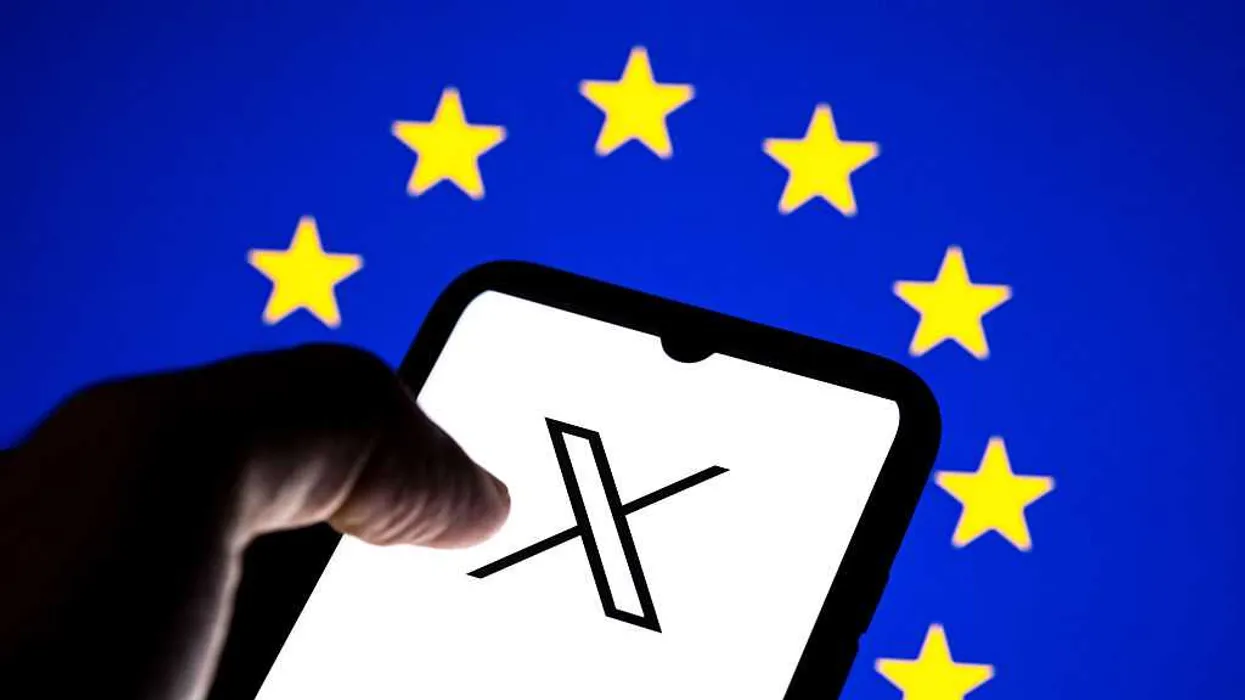
Late last month, Elon Musk’s X.com launched a landmark legal challenge against a $140 million fine issued by the European Commission last December under the Digital Services Act, an EU censorship law. The case was filed at the General Court of the EU, which hears high-stakes challenges to EU regulatory and enforcement actions.
Freedom Is Back
In Style
Premium domains for sale
Freedom Is Back
In Style
Premium domains for sale
The commission claims the fine, the first to be issued under the DSA, was for alleged transparency and procedural breaches, which X denies. But the real reason the company was targeted is clear: X is a free-speech platform, and Elon Musk refuses to implement online censorship in the EU and around the world.
This case is the first-ever challenge to Europe’s bid to become a global censor. The outcome matters deeply for the free-speech rights of billions of people around the world.
This case, which ADF International proudly supports, underscores the grave threat the DSA poses to free speech. The law, which took effect in 2024, requires “very large online platforms” — such as X, Meta, and Google — that operate in or are accessible from the EU and have more than 45 million monthly users to remove so-called illegal content.
“Illegal content” takes its meaning from a host of speech-restrictive laws across EU countries, including Germany’s ban on insulting a politician. The law also requires platforms to “mitigate” so-called “systemic risks,” such as “negative effects” on “civic discourse,” “electoral processes,” and “gender-based violence.”
Codes of conduct have also been added to the legislation regarding “disinformation,” “hate speech,” and guidelines on electoral processes and the protection of minors, resulting in 153 pages of additional regulations that were never voted on. Platforms face massive fines of up to 6% of global annual turnover for noncompliance with the DSA and can even be suspended in the EU.
The vague terms used in the legislation and codes of conduct are extremely broad and lack precise legal definitions, meaning they are ideal tools for the commission to censor disfavored views. And the commission’s reach extends far beyond Europe.
A recent report from the House Judiciary Committee showed that Big Tech platforms face immense pressure from the commission to set their global content moderation rules to censorial DSA standards. This means the EU law is censoring speech not just in Europe, but also in the United States and around the whole world.
The case of Finnish parliamentarian Päivi Räsänen demonstrates what DSA censorship will look like in practice. After six years of criminal prosecution, Päivi is awaiting a verdict from the Supreme Court of Finland for tweeting a Bible verse. She was prosecuted under the “War Crimes and Crimes against Humanity” section of Finland’s criminal code. Under the DSA, censorial laws like this will become the global baseline.
Since Elon Musk bought Twitter (now X) and turned it into a free-speech platform, Brussels has been clear about its hostility toward the platform. Former European Commissioner Thierry Breton issued a stark warning in 2023, stating: “You can run but you can’t hide. … Fighting disinformation will be legal obligation under #DSA. … Our teams will be ready for enforcement.” Former commission Vice President for Values and Transparency Vera Jourová added: “Twitter has attracted a lot of attention, and its actions and compliance with EU law will be scrutinized vigorously and urgently.”
RELATED: Out of order: Courts shouldn’t rule based on ‘trust us’ science
 Nadzeya Haroshka/Getty Images
It’s clear why the commission gave X.com the first-ever DSA fine last December. It was sending a message to all Big Tech platforms about what will happen to platforms that refuse to accept censorship.
That is what makes X.com’s legal challenge so important — the company is fighting for the right of citizens around the world to freely express their views online. In this case, the social media giant is challenging the centralized powers given to the commission by the DSA, which it argues violate its right to due process and are contrary to the rule of law.
The commission is able to set the rules for content moderation, set up the infrastructure, launch investigations, and issue penalties under the DSA, all with no meaningful oversight. If this is allowed to stand, the EU will have the unchallenged ability to police the global public square, with dire consequences for online free speech.
Now the court has an opportunity to hold the commission to account. An oral hearing is expected in the case, potentially by the end of 2026, and the subsequent ruling will affect how all Big Tech platforms are moderated by the DSA. X.com is arguing for the fine to be withdrawn, and if the basis for the fine is found not to be compliant with other EU laws, specific provisions in the legislation could be annulled.
This case is the first-ever challenge of the commission’s bid to become a global censor. The outcome matters deeply for the free-speech rights of billions of people around the world.
Editor’s note: This article was originally published by RealClearPolitics and made available via RealClearWire.
What's Your Reaction?
 Like
0
Like
0
 Dislike
0
Dislike
0
 Love
0
Love
0
 Funny
0
Funny
0
 Wow
0
Wow
0
 Sad
0
Sad
0
 Angry
0
Angry
0

I am just an average American. My teen years were in the late 70s and I participated in all that that decade offered. Started working young, too young. Then I joined the Army before I graduated High School. I spent 25 years in, mostly in Infantry units. Since then I've worked in information technology positions all at small family owned companies. At this rate I'll never be a tech millionaire. When I was young I rode horses as much as I could. I do believe I should have been a cowboy. I'm getting in the saddle again by taking riding lessons and see where it goes.
Premium domains for sale











Comments (0)