

The Hidden Tax On Your Energy Bill That No One Voted For
Premium domains for sale
Freedom Is Back In Style
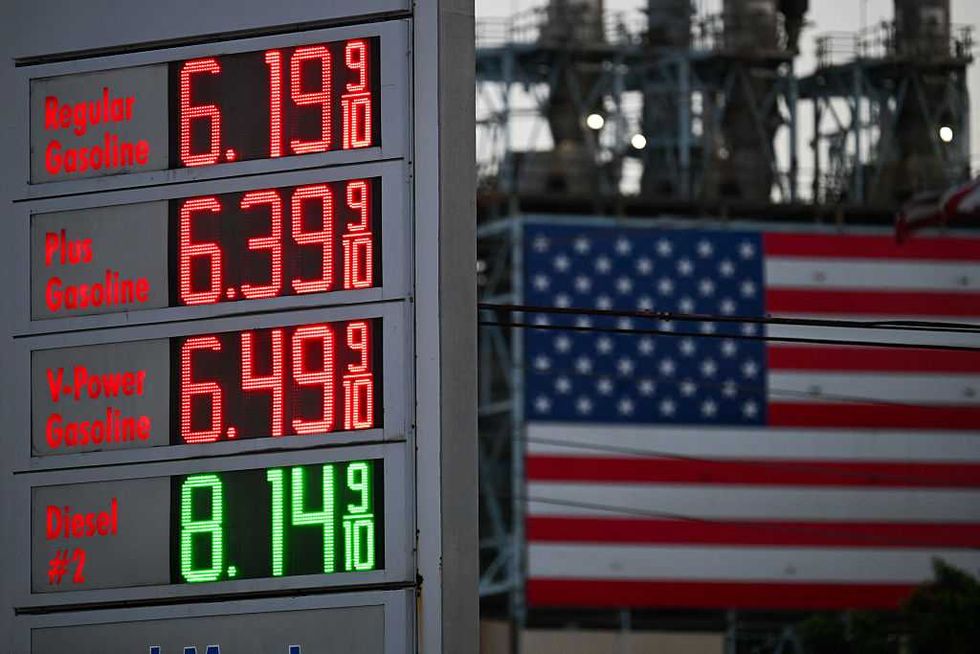
What happens to your electric bill when a county jury decides how much American energy companies owe for the weather? That was the question before the Supreme Court on October 5 in Suncor Energy v. Board of County Commissioners of Boulder County, and the justices’ questions during oral arguments showed just how far the consequences could extend beyond Suncor and ExxonMobil. The price tag ultimately could reach your pump and power bill.
Freedom Is Back
In Style
Premium domains for sale
Boulder County sued the two companies in 2018, seeking damages under Colorado tort law for local costs it blames on global climate change. That sounds narrow. It is not. The Justice Department, in an unusual unsolicited brief urging the Court to side with the companies, put the stakes plainly: “Can one city wield one State’s law to dictate how the rest of the world must address a global problem with global effects? The Constitution supplies the answer: Absolutely not.” The brief noted Boulder’s is one of roughly 60 similar suits filed by cities, counties, and states nationwide, all effectively on hold awaiting this ruling.
The dollar figures involved are not small. New York’s Climate Superfund Act, before a federal judge struck it down this past September, sought $75 billion from energy producers. Multnomah County, Oregon, is seeking more than $51 billion in a single suit. Add up even a handful of the roughly 60 pending cases and you are talking about hundreds of billions of dollars in potential liability, and that money does not come out of a shareholder’s pocket. It gets priced into the product, the same way any cost of doing business does. When a company defends against dozens of lawsuits in dozens of courtrooms for years, that legal exposure becomes a line item, and companies pass it to customers long before any jury reaches a verdict.
That concern was not hypothetical to the justices on Monday. Justice Brett Kavanaugh pressed Boulder’s lawyer on what happens if these lawsuits multiply, suggesting that enough of them could bankrupt defendants and noting that any manufacturer, any business, could face similar liability theories. He later asked whether the Court’s longstanding concern about judges making ad hoc climate policy should apply just as much to a six-person state jury in Boulder.
Here is what should worry people who have never set foot near a drilling rig: natural gas generates roughly 40% of all electricity in this country, more than any other fuel source, according to the federal government’s own Energy Information Administration. A liability regime built to punish oil and gas producers does not stay confined to gasoline. It runs straight through the fuel that keeps the lights on in Ohio, Georgia, Arizona, and everywhere else, regardless of how any of those states voted in the last election.
Many people also miss a national security angle. Former Attorney General Bill Barr has pointed out that this liability theory only reaches investor-owned American companies. State-owned oil producers in China and Russia are functionally untouchable in a Colorado courtroom. So the practical effect of a plaintiff’s win is not less oil and gas production worldwide; it is the same production shifted toward less transparent, state-controlled competitors who answer to no shareholders, no American courts, and often looser environmental standards than the companies being sued. Americans would pay more for energy and get, if anything, a dirtier global supply chain in return.
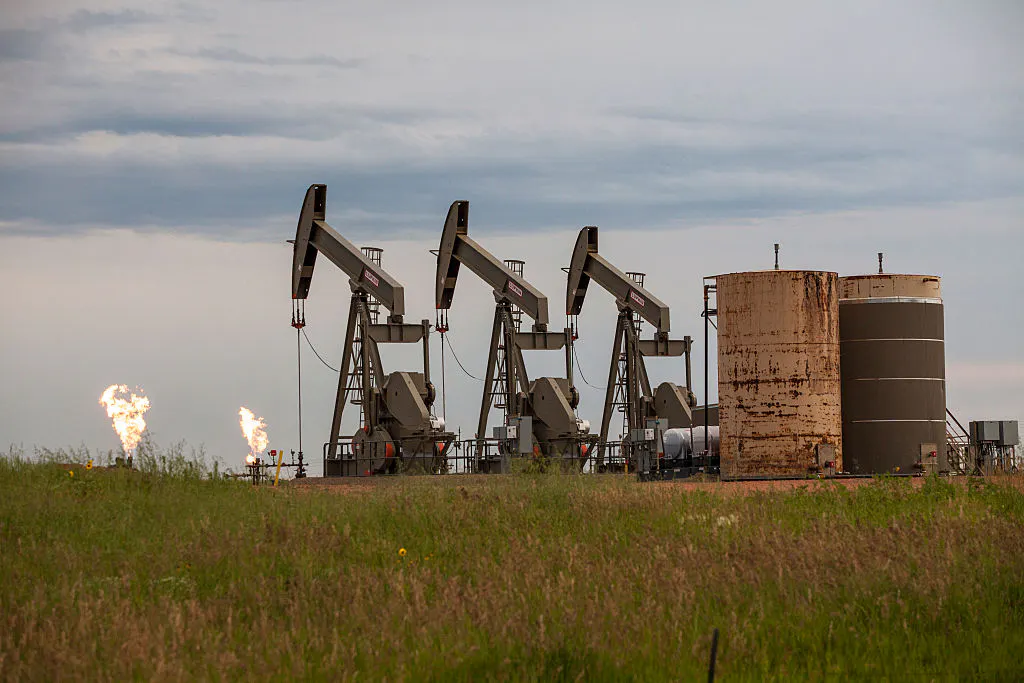
Then there are the jobs. The oil and natural gas industry supports 10.6 million jobs nationwide and contributes roughly $2.1 trillion to the American economy, spread across Texas, Pennsylvania, Wyoming, New Mexico, Louisiana, and North Dakota, among others. Litigation risk hits hardest exactly where investment decisions get made first: the drilling programs, pipeline projects, and LNG terminals that take a decade to plan and pay for. Communities like Midland and Odessa, Texas, or Williston, North Dakota, do not have a diversified economy to fall back on if that capital goes elsewhere. When investment slows, the roughneck, the pipeline welder, and the diner that serves them feel it first, not the plaintiffs’ law firms collecting a contingency fee.
Which brings up a detail worth knowing before you assume this is only about environmental stewardship: many of the plaintiff governments have their own budget problems. Boulder itself needs to cut $13.2 million from its 2027 budget. Washington, D.C. faces a $1.5 billion revenue shortfall. San Francisco is staring at a $936 million two-year deficit, and Baltimore, $64.4 million. Climate liability lawsuits have become an attractive, off-budget way for cash-strapped city halls to go looking for someone else’s money, and energy consumers everywhere are the ones being asked to cover the gap.
None of this requires anyone to take a side in the broader climate debate. It only requires recognizing that a damages verdict is a cost, and costs get paid by somebody. Justice Kavanaugh put the problem plainly Monday when he asked whether decisions of this magnitude should be left to a six-person state jury in Boulder. The Supreme Court now has to answer that question. Americans who fill a gas tank or pay a power bill should not be left financing national climate policy imposed piecemeal by juries in counties they have never visited through lawsuits they never knew existed.
***
Jason Isaac is founder and CEO of American Energy Institute and a former Texas state representative.
More from this network:
Domains for Sale · GOTPeople.org · TheDSAPlatform · The Truth About Socialism
What's Your Reaction?
 Like
0
Like
0
 Dislike
0
Dislike
0
 Love
0
Love
0
 Funny
0
Funny
0
 Wow
0
Wow
0
 Sad
0
Sad
0
 Angry
0
Angry
0

I am just an average American. My teen years were in the late 70s and I participated in all that that decade offered. Started working young, too young. Then I joined the Army before I graduated High School. I spent 25 years in, mostly in Infantry units. Since then I've worked in information technology positions all at small family owned companies. At this rate I'll never be a tech millionaire. When I was young I rode horses as much as I could. I do believe I should have been a cowboy. I'm getting in the saddle again by taking riding lessons and see where it goes.
Premium domains for sale













Comments (0)