

The Horror Movie That Takes Aim At Christianity

Premium domains for sale
Freedom Is Back In Style
A frightening monster in theaters this summer doesn’t hide in a closet (but it just might force you to). It takes the form of the person you love most and comes for you precisely because you love him.
Freedom Is Back
In Style
Premium domains for sale
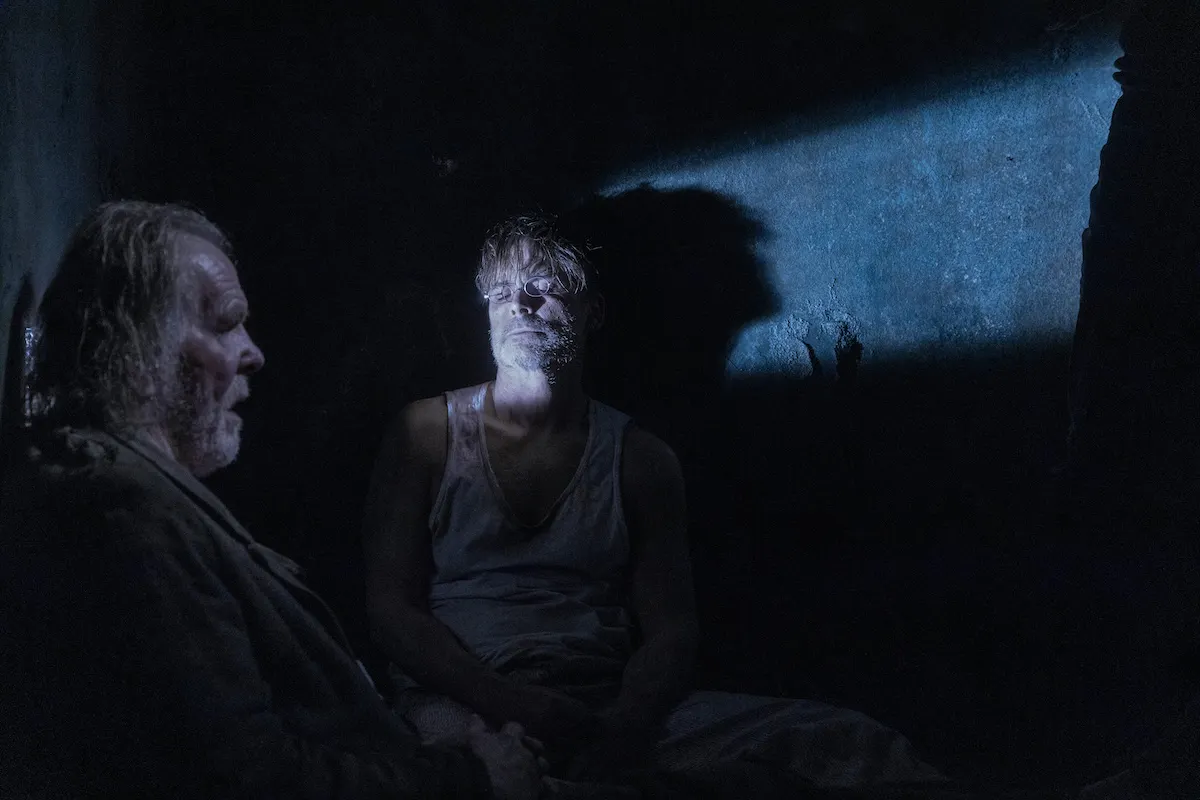
That’s the conceit behind “Leviticus,” the Australian horror film that has arrived in American cinemas to mostly critical praise. It’s set in a remote, Christian town so fundamentalist that it smacks of caricature. When a romantic relationship between two young men is discovered, the community subjects them to a deliverance ritual meant to burn their desire away. But the rite instead summons a presence that appears to each boy as the other, hunting him whenever his longing stirs.
Cleverly, “Leviticus” depicts an inverse exorcism: Conversion therapy is not shown as removing a harmful spirit, but as introducing a spirit of fear and shame that results in death. Making the indictment broader than conversion therapy, director Adrian Chiarella says the monster stands for homophobia “in all its shades.” Considering the film’s title, Chiarella indicts the entire biblical ethic that sex belongs only within the marriage of one man and one woman as deadly.
Ironically, the film’s caricature is self-indicting as it mirrors overgeneralizations happening in law and culture. This past March, in Chiles v. Salazar, the Supreme Court ruled eight to one, with only Justice Ketanji Brown Jackson dissenting, that Colorado had overreached by forbidding a licensed counselor from even talking with willing clients about unwanted same-sex attraction.
By lumping such counseling with real past abuses — like electric shock therapy, lobotomies, and fringe deliverance rituals — Colorado’s law likely violates the First Amendment. Speech, Justice Neil Gorsuch reasoned, does not forfeit constitutional protection simply because someone calls it therapy. The court did not bless coercion; it directed the lower courts to scrutinize whether Colorado’s ban could inhibit such speech. The point is that overgeneralization, while sometimes rhetorically powerful, ultimately crumbles when thoughtfully critiqued.
Past invasive and coercive practices, whether secular or religious in motivation, are wrong and harmful. Where Christians have traded the gospel of hope and wholeness for fear, shame, and control, they have inflicted real wounds that no theological cleverness can explain away. “Leviticus” camps there but never asks whether such practices are counterfeits of biblical ethics.
In a pivotal scene, the religiously zealous mother of one of the young men tells him, “We need fear. It’s how we survive.” True, fear is a God-given survival mechanism, but enthroning it is un-Christian because it reduces human beings to instinct-driven animals. The gospel message instead enthrones love. “Perfect love casts out fear,” the apostle John writes, “because fear has to do with punishment” (1 John 4:18). God’s love, displayed at the cross, where Jesus bears the punishment we deserve, removes fear and frees us to love God and pursue holiness out of gratitude. Chiarella thinks he has exposed Christianity’s bigotry. But he’s actually exposed a distorted view of both human nature and the biblical sexual ethic.
The horror in “Leviticus” works only if we grant that a person is defined simply by his desires, so that fencing off a desire erases the self. Straining to condemn homophobia in all its shades, the film flattens the very people it means to defend into one-dimensional beings. The biblical account moves the other way, insisting that human beings bear God’s image and that our longings, however powerful, never amount to the whole of who and what we are.
Scripture calls us to be sexually moral, indicting heterosexual excesses as seriously as any other. Writer Matt Moore understands this far better than Chiarella. He has spoken openly for years about his own same-sex attraction and about his stumbles along the way.
In younger years, Moore writes, he “wasn’t worried about being sexually moral.” He simply wanted to be “normal.” What he found was not an easy fix but something sturdier: honesty about his struggle, a forgiving community, and the same winding and uneven path of moral and spiritual formation every one of us is walking. None of that is cinematic, of course. It is slow and messy. It is the unglamorous work of a life being remade, which is the truest story the movies rarely tell.
Consider, too, the figure the film enlists to embody Christian belief: a shadowy “Deliverance Healer” muttering incantations over a crackpot rite. By calling the film “Leviticus,” Chiarella suggests that such a practice is biblical. Yet no church most Christians would recognize runs on shamans and spells. Chiarella’s straw man is actually a backhanded compliment. Genuine Christianity is too sturdy to attack head-on, so the film substitutes a flimsier version the audience can safely reject. What’s kept off screen is the true meaning behind what Leviticus and other parts of the Bible actually teach about sexuality.
The Bible’s sexual ethic is not a set of dusty prohibitions from men who found homosexuality icky and then baptized their bigotry. It is not arbitrarily prohibitive; it is protective. Every human being is made in God’s image (Genesis 1:27), and sex between a man and a woman is the natural means by which sacred human life is created. Because the product of sexuality is sacred, the process must be sacred too. Without boundaries, the process becomes common, even trivial. As pornography proliferates, humans become objects of gratification. Biblical boundaries, therefore, make sense not only naturally, but morally.
Biblical marriage between one man and one woman is a portrait of unity in diversity in that a man and a woman, unmistakably distinct, become one. The Hebrew carries the idea beautifully. A married man and woman “become one flesh” (Genesis 2:24). The word one is “echad,” which means “unified.” It’s the same word Israel is commanded to confess over God: “Hear, O Israel: the LORD our God, the LORD is one (echad)” (Deuteronomy 6:4).
From a Christian perspective, the unity of diversity between husband and wife echoes the triune God’s unity of diversity. And that echo beckons us to a destination. The New Testament closes with a wedding in which God binds himself forever to a wayward humanity he has cleansed and made lovely, the pattern every human marriage quietly rehearses (Revelation 19). Same-sex sexuality loses that male-female echo by substituting the sacred diversity for uniformity. To protect us from that, the Bible shelters sex under holy wings.
By the critics’ own accounts, “Leviticus” gives its characters no resolution; it ends in unbroken dread. Christianity proclaims the opposite: God’s gracious love protects human sacredness, removes the dread of condemnation, and calls us toward sexual wholeness. Like the inverse exorcism at its center, “Leviticus” gives us the photo negative of true Christianity. We’re better off with the authentic picture.
***
Abdu Murray is a speaker, author, and attorney who specializes in addressing issues where religious faith and emerging cultural trends intersect. Since founding Embrace the Truth in 2004, he has spent decades analyzing how the major religious and non-religious thought traditions have attempted to address cultural issues.
This article is part of Upstream, The Daily Wire’s new home for culture and lifestyle. Real human insight and human stories — from our featured writers to you.
More from this network:
Domains for Sale · GOTPeople.org · TheDSAPlatform · The Truth About Socialism
What's Your Reaction?
 Like
0
Like
0
 Dislike
0
Dislike
0
 Love
0
Love
0
 Funny
0
Funny
0
 Wow
0
Wow
0
 Sad
0
Sad
0
 Angry
0
Angry
0

I am just an average American. My teen years were in the late 70s and I participated in all that that decade offered. Started working young, too young. Then I joined the Army before I graduated High School. I spent 25 years in, mostly in Infantry units. Since then I've worked in information technology positions all at small family owned companies. At this rate I'll never be a tech millionaire. When I was young I rode horses as much as I could. I do believe I should have been a cowboy. I'm getting in the saddle again by taking riding lessons and see where it goes.
Premium domains for sale





















Comments (0)