

The Makings Of Americans
Premium domains for sale
Freedom Is Back In Style
As America approaches its 250th birthday on July 4, a debate is growing about what it means to be an American.
Freedom Is Back
In Style
Premium domains for sale
Supreme Court Justice Neil Gorsuch waded into the conversation last month by asserting in an interview that America is “a creedal nation.” According to Gorsuch, “what unites us is not a religion, it’s not a race, it’s a belief” in the ideals of the Declaration of Independence.
For some, those remarks were fighting words.
On social media, Gorsuch was quickly denounced as “a traitor” who was spouting “nonsense” and “claptrap.”
Critics of America as a creedal nation like to think of themselves as the vanguard of a popular new movement, especially among conservative Christians. But a newly released survey of 2,500 Americans conducted by Discovery Institute undercuts that claim.
Respondents were asked, “in your view, for someone to truly be an American, which attributes should they have?”
Six in 10 said that to truly be an American, someone should embrace “the ideas expressed by the Declaration of Independence” and “the form of government created by the Constitution.” Seven in 10 said that to be a true American, one “should agree with the freedoms protected by the Bill of Rights.”
By contrast, only 3.2% of respondents said people “should be descended from an ancestor from Britain or Europe” to truly be an American, and only 16.8% thought that true Americans needed to “agree with Christianity.”
With minor variations, these overall results hold across all major demographics, including political ideology.
For example, 97% of self-identified Christian conservatives reject British/European ancestry as a requirement to be a true American, and 69% of Christian conservatives reject the idea that someone needs to agree with Christianity in order to be a true American.
These results reflect how deeply ingrained the creedal nation idea remains in the American psyche.
Some claim the idea of America as a creedal nation was invented by post-World War II liberals. But America’s Founders proclaimed limited government, unalienable rights, equality under God, and the consent of the governed because they believed these were universal truths. Accordingly, from the early years of the republic, they held up those principles as applicable to all people everywhere.
Catholic Charles Carroll was the last surviving signer of the Declaration of Independence. Reflecting on the Declaration’s 50th anniversary in 1826, he recommended: “to the present and future generations the principles of that important document, as the best earthly inheritance their ancestors could bequeath to them; and pray[ed] that the civil and religious liberties they have secured to my country may be perpetuated to remotest posterity, and extended to the whole family of man.”
By 1921, the uniqueness of America as a creedal nation was so apparent to others around the world that Englishman G.K. Chesterton declared, “America is the only nation in the world that is founded on a creed. That creed is set forth with dogmatic and even theological lucidity in the Declaration of Independence.”
Contrary to some critics, being a creedal nation does not require America to allow unlimited immigration. In fact, America’s founding principles provide a principled reason for keeping out all those who do not support its creed — and for making sure native-born Americans are taught America’s creed as well.
That said, the more thoughtful critics of the “creedal nation” idea are correct to insist that culture matters as well as creed. Here, they have a legitimate gripe with Justice Gorsuch, who seemed overly dismissive of culture, remarking, “Our nation is not founded on a religion. It’s not based on a common culture even, or heritage.”
In truth, creeds develop from — and are sustained by — culture. That includes religion.
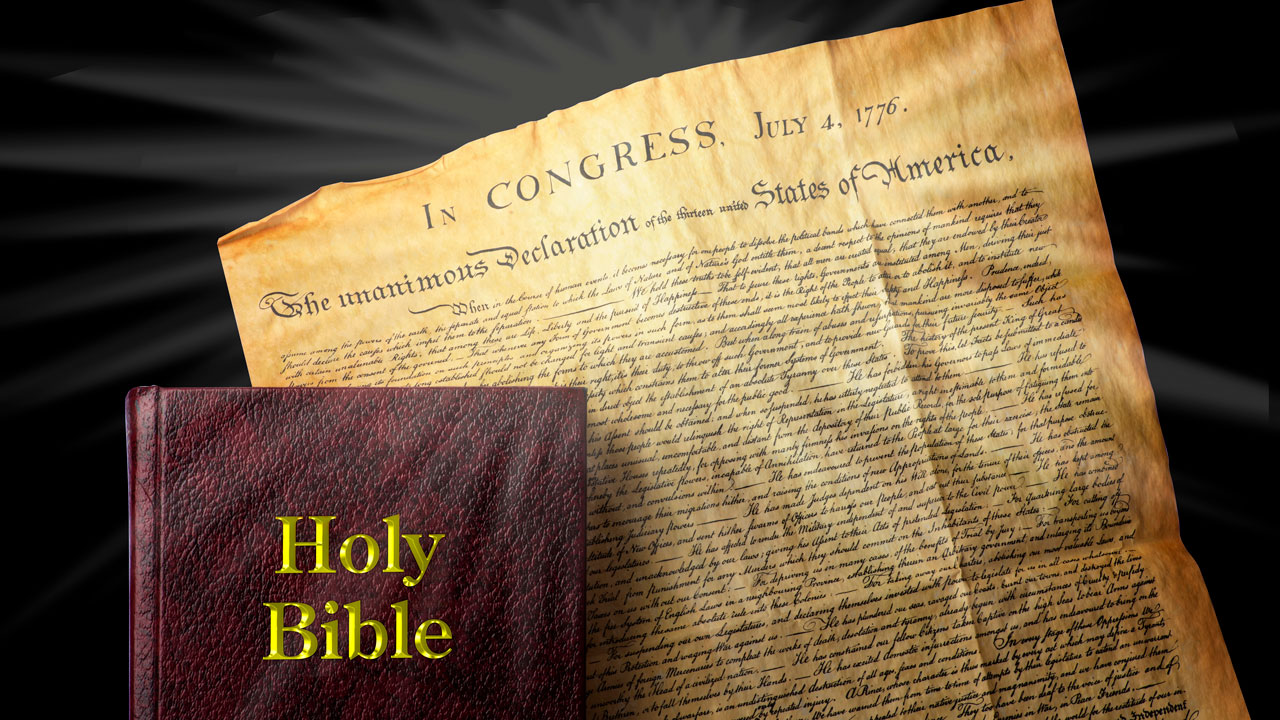
The idea that all humans are created equal, for example, grew out of the Bible. This fact was widely recognized by America’s founders, regardless of their own faith convictions.
Physician Benjamin Rush was a signer of the Declaration of Independence and a devout Christian. He argued that the Bible was the book “above all others” that “favors … equality among mankind.” Pamphleteer Thomas Paine was a deist who rejected the Bible as supernatural revelation, but on this point he agreed with Rush. Paine traced the idea of human equality back to “the Mosaic account of the creation.”
Americans are right to be concerned about culture. But instead of repudiating our founding creed or suggesting its truths are limited to people of a certain race or religion, we should be working to rebuild the institutions needed to support that creed.
***
John G. West is the author of Endowed by Our Creator (DI Press, 2026) and vice president of the Discovery Institute. He is also the Distinguished Scholar of American Government and Christian Civic Engagement at Cornerstone University.
More from this network:
Domains for Sale · GOTPeople.org · TheDSAPlatform · The Truth About Socialism
Originally Published at Daily Wire, Daily Signal, The Blaze, or Fox News
What's Your Reaction?
 Like
0
Like
0
 Dislike
0
Dislike
0
 Love
0
Love
0
 Funny
0
Funny
0
 Wow
0
Wow
0
 Sad
0
Sad
0
 Angry
0
Angry
0

I am just an average American. My teen years were in the late 70s and I participated in all that that decade offered. Started working young, too young. Then I joined the Army before I graduated High School. I spent 25 years in, mostly in Infantry units. Since then I've worked in information technology positions all at small family owned companies. At this rate I'll never be a tech millionaire. When I was young I rode horses as much as I could. I do believe I should have been a cowboy. I'm getting in the saddle again by taking riding lessons and see where it goes.
Premium domains for sale












Comments (0)