

The NYT Has Some Real Problems With These Eight Americans
Premium domains for sale
Freedom Is Back In Style
This is republished with permission from the author. The original, “The New Radical Chic,” at Racket News can be found here.
Freedom Is Back
In Style
Premium domains for sale
***
In 1986 the New York Times celebrated the 100th year of the Statue of Liberty with a series of paeans to its hometown heroine-of-steel, who’d stood at the harbor and welcomed so many of the city’s immigrant families.
“Miss Liberty … represents tolerance and acceptance, a generosity of spirit, the America that lives in the words of Walt Whitman and William Saroyan, the films of Frank Capra, the music of Aaron Copland,” the paper wrote. “And when … a nation falls short of the ideals she represents, she towers in silent reproach.”
Forty years later the same Times, ahead of a new national milestone, is running a series of features called AMERICA AT 250. One of the latest is “These 8 Americans Shaped History. We Just Don’t Agree on How.”
What eight Americans would you put on a list of history-shapers?
From Elvis to Muhammad Ali to Michael Jackson to Barack Obama, the most famous people on earth for the last seventy-plus years have almost all been Americans, but being known isn’t everything. If the question is who shaped world history, one could make cases for Edison, Ford, Whitney, Salk, Disney, Deere, Gates, Jobs, Rockefeller, Colt, or the Wright Brothers; you might think of shadow villains like Dulles or Lansdale, or activists like Samuel Gompers, Betty Friedan, Susan B. Anthony, or Martin Luther King, Jr. It would be hard to write a modern history book without sections on Washington, Jefferson, Lincoln, Eisenhower, and both Roosevelts.
Which eight did the Times choose? Let’s dig in:
History-shaper #1
The Minuteman, number one on the list, is described as both overhyped (Concord “was in fact slow to turn to the Patriot cause”) and the inspiration for the modern “right-wing militia movement”; next is Charles Curtis, vice president to Herbert Hoover, whose partially Native roots made him the first person of color in that office, though “he advanced polices that have aged poorly in the eyes of many Native Americans”; then John Brown, for whom historian David Reynolds in 2009 sought a pardon in a Times piece called “Freedom’s Martyr,” but “the pardon never came”; and Booker T. Washington, at whom “white women threw flowers at his feet,” for assimilationist speeches which have re-assumed relevance in light of “recent Supreme Court decisions gutting the Voting Rights Act and affirmative action.”
Next up was Madam C.J. Walker, “whose products revolutionized Black hair care”; then came “Birth of a Nation” director D.W. Griffith, whose art may have dimmed, but what remains “is the hate”; Phyllis Schlafly, tradwife icon, important because “anti-feminists hold powerful roles in Washington” again; and Ruth Bader Ginsburg, whose decision not to retire during Obama’s presidency “has put an asterisk on her legacy.”
The American film director who shaped history
If you’re confused by the phenomenon of people who were jingoistic in the eighties, nineties, and 2000s suddenly deciding not only that America sucks but that it’s always sucked, you’re not alone. It’s dizzying.
“If there is anyone out there who still doubts that America is a place where all things are possible; who still wonders if the dream of our founders is alive in our time; who still questions the power of our democracy, tonight is your answer,” said Obama after election in 2008. But last week, on the apparently maudlin occasion of unveiling his $900 million electric razor of a presidential library, he made headlines by saying the founders fell “terribly short of the Declaration’s promise.”
In the runup to a 250th birthday to be held with Donald Trump in the White House, anti-American chic is everywhere, as if the same history that was cheered for preceding Obama must be knocked for also preceding Trump. A Unitarian church in Nantucket is canceling its Fourth of July celebration in protest of a recent Supreme Court decision, the Seattle Times is writing about locals having “mixed feelings” about cheering Team USA with Trump in office (before fans went bonkers and sang a John Denver song during the game), and USA Today denounced our “hateful and greedy” nation. It’s all in keeping with the rhetorical own goal known as Trump wraps himself in the flag/Trump supporters view themselves as patriots/Therefore America sucks.
Bill Maher just ran a long routine on how the faulty syllogism reinforces the idea that Trump is America when he’s just its employee. It concedes his point, when the message should be, “no one side gets to own being psyched about America”:
The problem is that the set of people driving the weirdest and most extreme new versions of American history — a tiny slice of the population that happens to dominate media and academia — isn’t at all “psyched” about America. They’re this generation’s version of the high society goofballs trapped in psychosexual fantasies about getting spankings from an angry underclass that Tom Wolfe wrote about fifty-six years ago, in Radical Chic and Mau-Mauing the Flak Catchers.
Wolfe’s excoriating snapshot grew out of a 1970 New York Magazine article about New York socialites who attended a party for Black Panthers at the home of Leonard Bernstein. Literarily, Wolfe in a savage mood was a thing to behold:
Mmmmmmmmmmmmmmmm. These are nice. Little Roquefort cheese morsels rolled in crushed nuts. Very tasty. Very subtle … Wonder what the Black Panthers eat here on the hors d’oeuvre trail? Do the Panthers like little Roquefort cheese morsels wrapped in crushed nuts this way, and asparagus tips in mayonnaise dabs, and meatballs petites au Coq Hardi, all of which are at this very moment being offered to them on gadrooned silver platters by maids in black uniforms with hand-ironed white aprons …
Radical Chic’s most unseemly observation was the overtly sexual fascination of Bernstein’s celebrity crowd (who included Jean vanden Heuvel, Cheray Duchin, Gail Lumet, and New York Times society editor Charlotte Curtis) with the oft-arrested figures eating from these hors d’oeuvre plates. The “idea” of the Panthers ran “through Lenny’s home like a rogue hormone,” wrote Wolfe, with famous directors, news anchors, and musicians feeling “as if one’s nerve endings were on red alert.” The Panthers in tight pants and leather were no “civil rights Negroes wearing gray suits three sizes too big.”
They were “real men,” just “beautiful,” and the Panther women were so lithe, and did it without spending thirty minutes every morning applying eye liner, occipital rim brush, mascara, and Eterna Creme. The discomfort of being around “real” people, in “real” trouble, of not knowing what words to use in conversation (should I say black or negro?), such were the “delicious little agonies of Radical Chic.” What’s wrong with a little after-dinner masochism?
Party attendees gushed as Don Cox, Panther Field Marshal, demanded “an education system that exposes the true nature of this decadent society,” along with “all black men who are in jail to be set free,” and no peace as long as “society is racist and engages in systematic oppression.” Incidentally, the Panthers didn’t say “bail” anymore, they said “ransom” (the modern equivalent, effortlessly absorbed by media, has been to replace “arrest” with “kidnap”). Radical Chic parties ended with appeals for donations to defense funds and other causes, along with denunciations of black churches who closed their kitchens to The Movement because black preachers were descended from the ones who met slaves on the docks along with “the cat with the whip and the gun.”
Wolfe’s take on what he was watching had to sting. When Vogue launched a column that featured recipes like “Sweet Potato Pone” that described “the cult of Soul Food” as a “form of Black self-awareness” and “to a lesser degree, white sympathy for the Black drive to self-reliance,” he saw Nostalgie de la boue, or “Nostalgia of the mud,” a habit of new European aristocrats looking to flaunt their cultural superiority over the middle classes. “London socialites during the Regency adopted the flamboyant capes and wild driving styles of the coach drivers,” as well as the “see-through, jutting-nipple fashions of the tavern girls.” This was “the gauche thrill of taking on certain styles of the lower orders.”
I don’t think it has to be as completely condescending as all that, but NPR stations are still cranking out Soul Food features and even Sweet Corn Pone recipes, and Juneteenth was full of scenes of white politicians doing their best to connect with the food. Florida congressional candidate Elijah Manley humorously accused Debbie Wasserman-Schultz of skipping the collard greens at one Juneteenth celebration.
Wolfe ultimately saw two ideas in contradiction. There was the sincere sympathy most felt with the victims of racism and other forms of oppression, which when these parties began was still very real. There was also a second track in the minds of these rich New Yorkers, “just as sincere as the first, and just as deep,” that believed in the absolute necessity of maintaining servants and “seeming trivialities” like a second home for the weekends.
The author’s premise was that the Radical Chic project couldn’t survive if those two ideas ever collided. This is exactly what happened in the world of Leonard Bernstein, who was suddenly hounded by other rich New Yorkers when news of his party reached the Times. The first account, by the aforementioned Charlotte Curtis, was friendly. Titled “Black Panther Philosophy Is Debated at the Bernsteins,” Curtis quoted Bernstein as saying, “I dig it,” correctly noted he was “wearing Black Watch tartan slacks, a turtle neck shirt and a blue blazer,” and quoted his wife Felicia as saying, “They’ve been treated very inhumanely.”
The problem came the day after, when the Times ran a house editorial called “False Note on Black Panthers.” The paper blasted the party as an “affront to the majority of black Americans,” thanks to the Panthers’ “confusion of Mao‐Marxist ideology and Fascist para‐militarism.” The editors also mocked Bernstein and his guests for indulging in “guilt‐relieving fun spiked with social consciousness,” adding a vicious description of the gathering as “elegant slumming.”
Things got worse when Bernstein began to be mocked as the “David Susskind of American music,” and found himself enmeshed in long-developing disputes between black and Jewish activists. This was especially true after it was discovered that one of his guests had apparently written a poem that began, “Jew-land, on a summer afternoon; really, couldn’t kill the Jews too soon …”
The climax of Wolfe’s story came when Bernstein was described being booed by a succession of “Fools, boors, philistines, Birchers, B’Nai Brithers,” all because of that Times story, and now:
Stretching out before him in New York, was a great starched white-throated audience of secret candy-store bigots, greengrocer Moshe Dayans with patches over both eyes …
This was really the first description of deplorables: the uncouth “candy-store bigots” between the cities who booed Leonard Bernstein for the crime of trying to be “with it.” Wolfe nailed that people like Bernstein blamed middle-class boobs for not understanding his desire to put an arm around political groups committed to the overthrow of his own class. It was their fault the union was impossible, not his.
The original Radical Chic disappeared for the very good reason that it was embarrassing for millionaires in brownstones with Chilean servants to pal around with Maoist revolutionaries, and a bad idea to mock middle class burghers for their incrementalist ambitions while romanticizing bank robberies and bombings. No doubt screenwriter Paddy Chayevsky had parties like Bernstein’s in mind when he had New York nitwits create the “Mao-Tse Tung Hour,” featuring real terrorist acts, as part of the primetime lineup in the movie “Network”:
Now Radical Chic is back and bigger than ever.
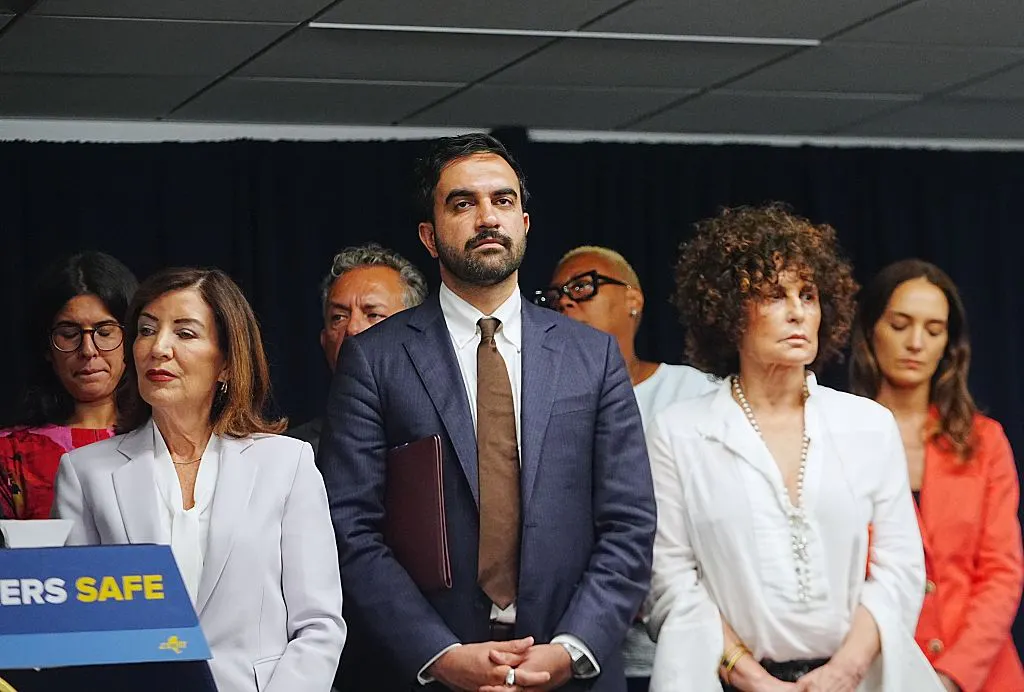
Once again, the leading mouthpieces for America Sucks are its biggest beneficiaries, and after a brief period of discomfort, we’re seeing wealthy blue-leaning urbanites embrace undisguised socialist revolutionaries again. Bernie Sanders, the modern-day incarnation of the frumpy old civil rights leader in the ill-fitting gray suit, has been supplanted by a sexier new slate of politicians like Zohran Mamdani and Darializa Chevalier, who are selling a snazzier, updated version of revolutionary élan. Their views are even goofier than the ones espoused by Wolfe’s sixties radicals, but the same beautiful people are lapping them up.
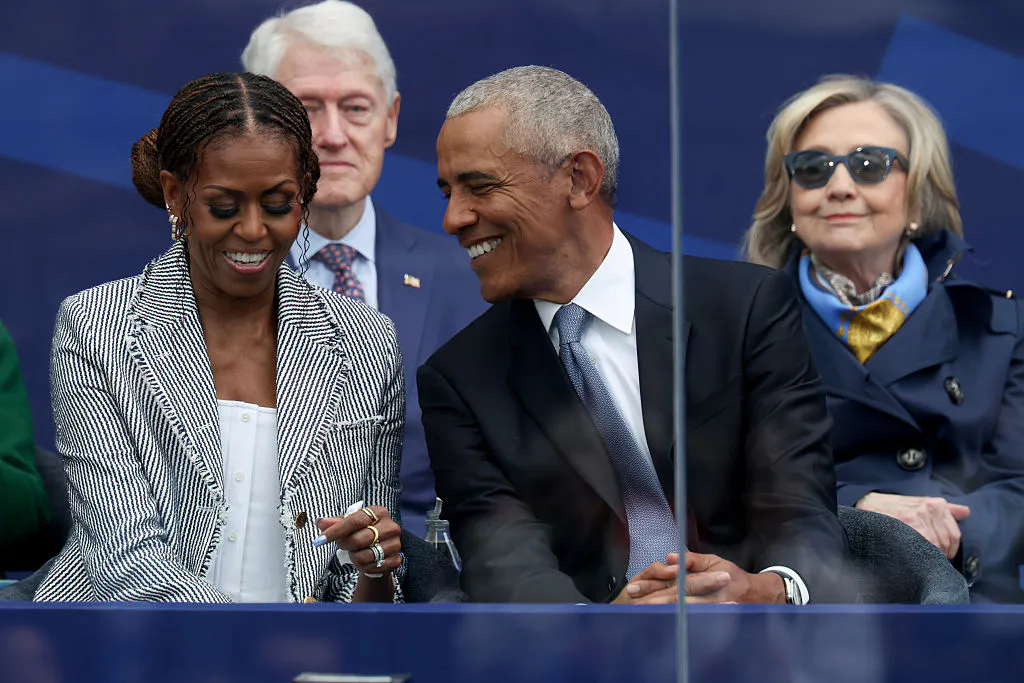
This of course has gone over terribly with almost everyone in between, leading to intense resentments. The divide is probably symbolized best by fabulously wealthy Michelle Obama’s complaints about what a raw deal she’s had (e.g. saying that black female beauty was “so powerful,” it was “owed respect”), followed by vicious takes like wrestler Josh Hokit’s pronouncement that “Michelle Obama is a man” at Trump’s gleefully gauche UFC bash. Hotkit has rightfully taken a lot of flak for his comments, but people whose biggest problems are which mansion to summer in and which multimillion-dollar book advance to accept should probably also dial down the whining about how hard they’ve had it, and how badly they’ve been treated by this country. That’s also a bitter insult.
The Times editors who put together the history-shapers list (and another, similar list of “Six Sentences that Shaped American History”) are saying something simple. Since American history up to now has been a lie, the only people who matter are either those whose contributions were overlooked, like the black hair entrepreneur Madam Walker, or those whose efforts led us ineluctably to Trump, like Griffith. Everything has to lead to Trump.
Even seven years ago, when a bizarre Times staff meeting was recorded and leaked to Slate, then-editor Dean Baquet all but admitted that the paper was going to shift to heavy examinations on race because it got caught “flat footed” after Special Counsel Robert Mueller’s report failed to deliver. Baquet said “our readers who want Donald Trump to go away” needed “a different story.” His solution was to cover race “in a thoughtful way,” through efforts like the 1619 Project, as a way of raising questions about Trump’s racial rhetoric.
If that’s what these lists are about, and the Times editors and audience were simply making a tactical calculation about how to slather Trumpism in the most ick before midterms, I could almost understand. But if you read Wolfe’s book, or any other examination of bored aristocrats dabbling in extremism (like Dostoyevsky’s “Demons”), you know it’s always really about them. The current dour Year Zeroism fits a generation of people self-obsessed enough to think the world didn’t exist until they were born to correctly interpret it. The only possible heroes are the people currently battling Trump by reaching valiantly into the past to paint the country as a cesspool of hatred whose lower classes need suppression, teeming as they are with neo-Klansmen longing to restore a D.W. Griffith version of history.
Even people like me who are at best tepidly patriotic have no place in the new Radical Chic. It doesn’t even permit seeing America as a mixed bag. That means no peeking at Normandy, the moon landing, even “West Side Story.” Of course the sour mood has a lot to do with Trump, but even the biggest Trump haters should let themselves see more than a Surgeon General’s warning about slavery when they look back. Haven’t we already learned that being fashionably miserable doesn’t work?
***
Matt Taibbi is a journalist, New York Times bestselling author, and creator of Racket News on Substack.
More from this network:
Domains for Sale · GOTPeople.org · TheDSAPlatform · The Truth About Socialism
What's Your Reaction?
 Like
0
Like
0
 Dislike
0
Dislike
0
 Love
0
Love
0
 Funny
0
Funny
0
 Wow
0
Wow
0
 Sad
0
Sad
0
 Angry
0
Angry
0

I am just an average American. My teen years were in the late 70s and I participated in all that that decade offered. Started working young, too young. Then I joined the Army before I graduated High School. I spent 25 years in, mostly in Infantry units. Since then I've worked in information technology positions all at small family owned companies. At this rate I'll never be a tech millionaire. When I was young I rode horses as much as I could. I do believe I should have been a cowboy. I'm getting in the saddle again by taking riding lessons and see where it goes.
Premium domains for sale




















Comments (0)