

This Could Have Been A Text: The De-Evolution Of Conversation
Premium domains for sale
Freedom Is Back In Style
Creators of science fiction often correctly outline the contours of the future, if not exactly nailing down the specifics. Unisex jumpsuits, for example, have never taken off. People still mostly make babies the old-fashioned way, rather than as Aldous Huxley envisioned in “Brave New World.” George Orwell came very close with “1984,” a work of dystopian fiction that too many view as a guidebook rather than a cautionary tale. Kurt Vonnegut, in both novels and short stories, was especially prescient. In “Player Piano,” published in 1952, he foresaw a future in which college football players became paid professionals.
Freedom Is Back
In Style
Premium domains for sale
He also predicted the extent to which technology would hinder humanity rather than delivering promised improvements. As with many who delve into those themes, the future he envisioned was characterized more by sloth and loneliness rather than the jovial hedonistic endeavors of the jumpsuit-wearing characters in “Logan’s Run.” One such story, 1951’s “The Euphio Question,” saw a salesman take an invention that should have been hurled off a mountain because of its civilization-destroying capabilities and instead seek to monetize it, creating a world of pure happiness and very little human interaction.
The euphio was a device that amplified radio signals from space, with one location providing listeners with a form of digital soma, to hearken back to Huxley, that left them in a state of bliss for as long as the device was broadcasting. Only power outages roused the listeners from their stupor, one in which they didn’t much eat, speak, love, or even live. Phones may not be of the same strength as the euphio, but they are changing the way we communicate, and not in a way that makes life better.
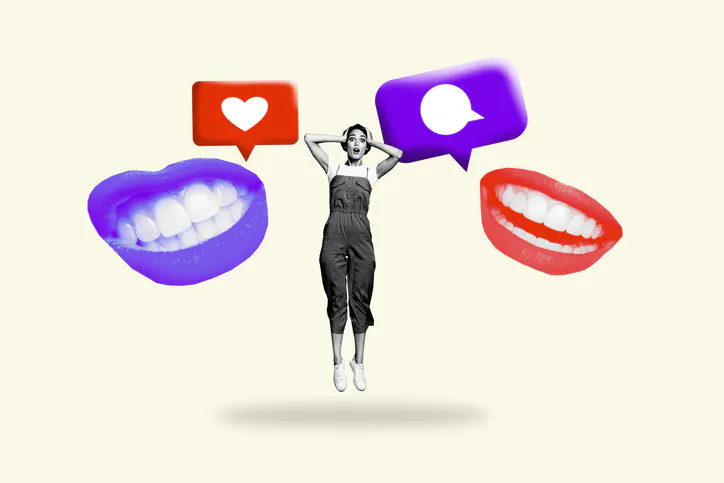
They’ve affected dating, pushed people into online echo chambers rather than dealing with people who might think differently, and turned many office jobs into 24/7 positions. Reliance on smartphones has also reduced the number of words we speak per day.
The change isn’t huge, yet. The decline is roughly 300 words, or about 3 minutes per day. It’s more pronounced with Gen Z, though, which suggests the trend could accelerate. They are the digital natives, the generation that grew up with smartphones rather than remembering the days of being off the grid on a random Friday. They are also the generation that bore the brunt of COVID policies, left alone in their rooms on Zooms rather than in the classroom.
And while they’re not listening to a euphio, the ubiquity of earbuds does mean they’re often tuned out from the world around them. Granted, I’m an old man yelling at the clouds. I’m not with it. I used to be, but now what I’m with isn’t it. What is it isn’t necessarily weird and scary, though I’m not really sure what’s going on with trends in teen boy hairstyles, which look as though they’re drawing on “Golden Girls” for inspiration.
At the same time, Gen Z can be weird and scared to talk to people. My kids have at times implored me to not start a discussion with acquaintances in the grocery store. The smartphone — which replaced the dumb phone, which replaced the landline, which replaced letters and telegraphs — brought us full circle from an invention that allowed us to talk to people in real time into one that allows us to write digital letters. We’ve even gotten apps that simulate the experience of communicating in a bygone era, with pigeons and lost mail, so perhaps the fear of the next one is a little unfounded.
In any case, the rise of asynchronous communication and fewer words is not something to celebrate nor accept as inevitable. For starters, the written word, of which I’m a big fan, isn’t as rich as spoken communication. It loses the vocal cues, the body language, the tells that let the listener know they’re hearing a joke and not a serious statement. Spoken language better reveals when a speaker is unsure, which was something lost in remote learning. The student who types “yes” in response to a teacher who wants to know if he understands the material conveys a hard “yes.” The student who verbally replies, with an uptick in pitch at the end of the word, lets the teacher know that, no, he does not understand.
It also invites more conflict as it’s all too easy for the reader to put his own spin on the text. Key and Peele gave a great example of how that can play out in this NSFW sketch. Peele was being chill, but Key took his texts as hostile. Back in real life, the word “ok” is loaded with possible interpretations, many of them negative. In the early 2020s, “kk” became the softer way to say “ok,” to let the reader know that it was not a frustrated “ok” delivered with animus. Now, us old folks, not being with it, still use it, while Gen Z has switched to “okok.”
On the positive side, speaking less and reading more might be a useful corrective, since Gen Z isn’t doing so well when it comes to reading. But with voice to text and text to voice, it might not matter, though it’s odd that so many now communicate via voice, but with a robot middleman. And don’t get me started on the inefficiencies of trying to make plans, as Key and Peele were doing, over text.
At least they were planning to hang out, which is another part of the trend towards fewer words. People don’t spend as much time together. We aren’t talking to our neighbors. We use technology at the wrong time. There’s a reason “this meeting could’ve been an email” resonates. As Dave Barry once wrote, “If you had to identify, in one word, the reason why the human race has not achieved, and never will achieve, its full potential, that word would be ‘meetings.’” That is, bloviating about how the ask will impact key stakeholders is a time when fewer words, perhaps even zero, is the ideal.
We may not be wasting away on the ground while cosmic frequencies lull us into complacency. Three fewer minutes of talking per day may not be that big of a deal. But as the world gets older and smaller, we cannot count on technology to keep civilization afloat. That’s up to citizens to do. And the way to do it is to have true communication of the type that conveys every angle and nuance as intended by the speaker. Gen Z, we’re counting on you here. You can keep staring, but eventually, the abyss is going to stare back.
***
Rich Cromwell is a writer living in Northwest Arkansas. He produces the Cookin’ Up a Story podcast, which you can listen to here. You can also follow him on X: @rcromwell4
More from this network:
Domains for Sale · GOTPeople.org · TheDSAPlatform · The Truth About Socialism
What's Your Reaction?
 Like
0
Like
0
 Dislike
0
Dislike
0
 Love
0
Love
0
 Funny
0
Funny
0
 Wow
0
Wow
0
 Sad
0
Sad
0
 Angry
0
Angry
0

I am just an average American. My teen years were in the late 70s and I participated in all that that decade offered. Started working young, too young. Then I joined the Army before I graduated High School. I spent 25 years in, mostly in Infantry units. Since then I've worked in information technology positions all at small family owned companies. At this rate I'll never be a tech millionaire. When I was young I rode horses as much as I could. I do believe I should have been a cowboy. I'm getting in the saddle again by taking riding lessons and see where it goes.
Premium domains for sale














Comments (0)