

Victor Davis Hanson: What Tucker Carlson Gets Wrong About Hiroshima
Premium domains for sale
Freedom Is Back In Style
Editor’s note: This is a lightly edited transcript of “Victor Davis Hanson: In His Own Words” from Daily Signal senior contributor Victor Davis Hanson. Subscribe to Victor Davis Hanson’s own YouTube channel to watch past episodes.
Freedom Is Back
In Style
Premium domains for sale
Jack Fowler: Well, Victor, you wrote and talked about Hiroshima, and I don’t want to say the virtues of it because that’s what you’re being accused of.
Victor Davis Hanson: No, I never said the virtue.
Fowler: But why it made sense, why this was the right thing for America to do at the time. And now Tucker Carlson, it was a flippant line, but in one of his recent episodes, took you on as sort of implying, amongst other comments there, that you and others were genuflecting before, nuclear bombing in its—Christian, it was evil, etc. And please respond to that.
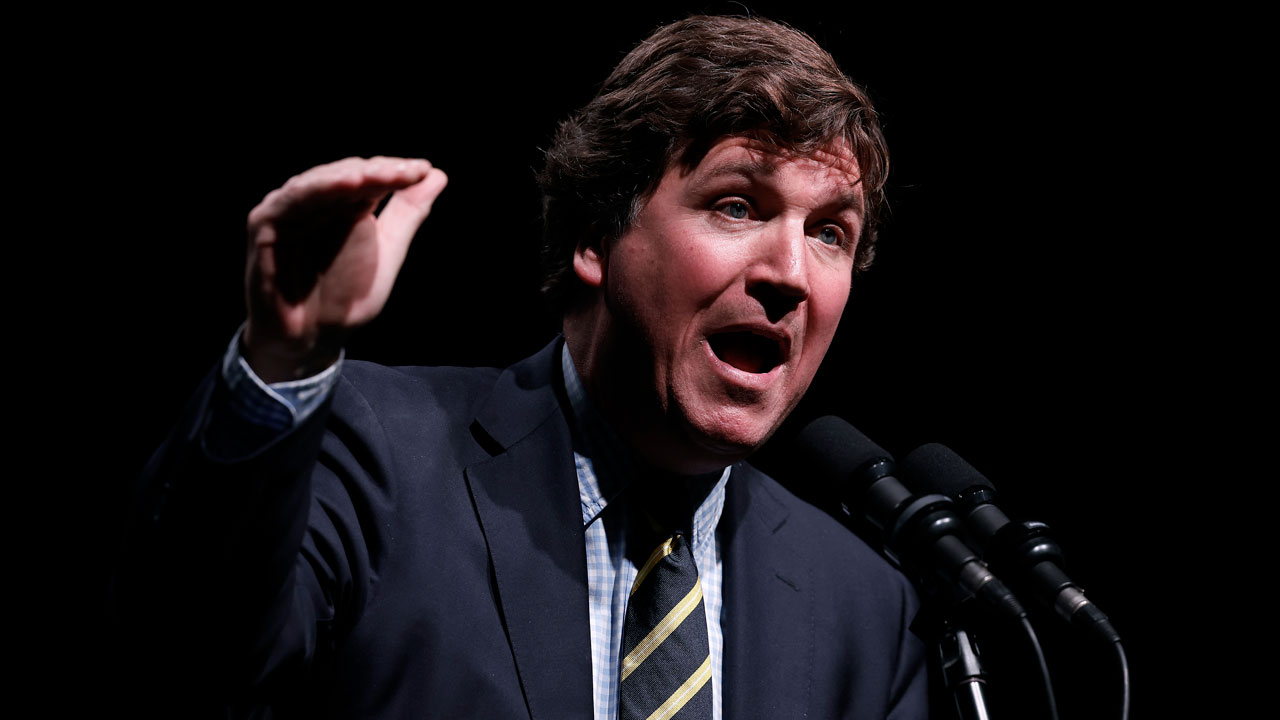
Hanson: If I wasn’t a podcaster, I would have sued him for libel, but I don’t believe in suing people for libel. But he said that, quote, “Victor Hanson’s talking about the glories of atomic,” you know, “nuclear weapons.” I wish he would produce that quote. I dare him.
I challenge you, Tucker. I want you to say Victor Hanson said that nuclear weapons are either glorious or the glory—there’s glories, and I did not say that.
I did two things. I wrote a column and on a short podcast, Victor Hanson for the Daily Signal, the shorter version, “In His Own Words.” I made three arguments, and that was on the anniversary of the two atomic blasts.
I said, number one, the left-wing criticism that we only did it to frighten the Russians is demonstrably false, and it didn’t frighten the Russians because they were already working on the bomb and had numerous espionage agents in New Mexico in the Manhattan Project besides the Rosenbergs, well before them.
And they would indeed detonate a bomb almost four years to the day of Hiroshima, just four years and two or three what, in August of 1949.
Second, I said, nor did we just drop it to say we have to justify the $2 billion to $3 billion expense of the Manhattan Project. That was the most expensive project along with the B-29 project.
We did not do that. It might have been a collateral, advantage, but we did not do that to scare the Russians, as I said. We did not do it because we hated Japanese. They were yellow people. We wanted to kill as many of them. We did it for one primary reason, Tucker, as I made clear. We had invaded Okinawa on April 1, 1945.
We thought that after Iwo Jima and Tarawa and Peleliu that it would be easy. We had a crack Sixth Marine Division that was trained entirely for jungle, for island-hopping warfare. And Okinawa turned out to be the worst island campaign of the entire war. We lost 12,000 dead, 19 ships, 30-something damaged, including my namesake was killed there, Victor Hanson, on Okinawa on May 19 on Sugar Loaf Hill.
And people looked at the size of the Okinawa force, Japanese and impressed Okinawans, and the 50,000 dead, wounded and missing and extrapolated those casualty figures for Japan, where there was some 20 million civilians that could be armed, but at least seven million people in the military. And there were 5,000 to 8,000 kamikaze planes, which were like a cruise missile.
And they, the Navy couldn’t stop it. And we had mined the harbors of Japan and we had bombed 50%.
And by the way, Tucker, the incendiary raids killed far more people than did the two atomic blasts.
So, the decision was made once that the bomb was viable to use it to shock the Japanese into surrender and therefore to avoid a November 1945 and April 1946, two different invasions of the two islands of Japan.
It would have cost a million casualties. The second thing was the Japanese army was fighting nonstop in China and in occupied Asia.
And if you do the math of how many people we think they killed, 16 million. They were killing about 15,000 people a day, and they would not stop. Of all the armies, Tucker, in World War II, for the losses that they suffered and the number of people they killed, they were the most efficient killing machine.
And they treated prisoners no different, much worse than even the Germans did. Not in terms of quantity, but they were barbaric in the treatment of prisoners.
So the idea was you’ve got to stop this killing machine because the war has been over since May 9 and 10 in Europe. There was another consideration.
We had about 10,000 idle B-24s, B-17s, B-26s, B-25s, and another 2,000 B-29s in the European theater and a couple of thousand heavy Lancaster. They almost had the bomb load of a 20,000-pound B-29.
OK. So the idea under [Gen. Curtis] LeMay was to bring Lancasters and some heavy bombers from Europe, take the newly acquired on roughly June 18, declared secure Okinawa.
It was only 900 miles from most of the targets and cut down the travel time from the Marianas with it. The 2,000 B-29s in the Marianas would keep bombing, but he thought he could assemble 2,000 to 3,000 more bombers, and with 5,000 bombers bomb every single day with DuPont napalm.
And that would have made the atomic bombs look like—
As far as the theory, well, we didn’t give the Japanese [time to surrender]—they would have surrendered—they didn’t.
They tried to, after the first bomb, they tried to have a coup. They tried—the military government tried to stop the emperor from addressing the people even after Nagasaki.
And, well, why didn’t we drop one in Tokyo Bay? Because we only had one sure one that would—we could have before Christmas, and another one was in development. Well, why did we drop the uranium bomb in the—We didn’t even know if the uranium bomb would work. It was very different. We never made another one like it.
We made the parts for it, but we never dropped another one like Little Boy. It was so dangerous, and once you, you had to connect it in flight, and once you did, if the Enola Gay had, if it had crashed, the bomb would have gone off anywhere. It could have gone off on the runway where a lot of B-29s didn’t make it over the cliff, and especially in Tinian.
So all of the things he said were not true. What I said was it was an evil weapon that good people … I think I said in the column, it was an evil, bad thing that good people use to prevent bad people from doing greater harm. It stopped a World War III in whatever we think about Armageddon, and it was a terrible thing with its sword of Damocles hanging over all our heads.
Had we not done that, the Soviet Union would have had a monopoly on the bomb, and that government under [Joseph] Stalin had killed 20 million people of its own through the great famines, the trials, all of it.
In addition, China had gone communist in the early—had gone nuclear. So then you had the two greatest mass murderers really in history, Joseph Stalin and Mao Zedong, with nuclear weapons.
And if we didn’t have them, I guarantee you they would have used them to leverage us and taken over Western Europe and most of Asia. Was it a good thing that nuclear weapons were developed? No. Albert Einstein was a pacifist, and he wrote a letter to FDR and said, “The Germans are working on this type of fission, and it’s very, very dangerous. And like it or not, we’re going to … ”
It was very much like the AI argument. If we don’t do it, China’s gonna do it, and we’d rather have the world in the hands of a consensual, transparent society than the communist Chinese.
And then he said other things, though, and this is a larger commentary. You know, he said …
And we mentioned it. He had a guest who was an artist, not a scientist, not a mathematician, not a physicist, a potter, but also painter, I suppose. And they were talking and Tucker and he said that algebra was worthless. And the potter, at one point, claiming that he could make kilns and all sorts of things without algebraic equations.
Well, the science of … Yes, I just had an overhang in my house for my carport, and the people were brilliant, and they didn’t make out algebraic equations. But I can tell you that the trusses that they used, and the knowledge that they were taught was based on people who knew the stress loads of a four-by-eight versus a four-by-10 versus a two-by-four—you name it.
So originally, you have to have variables, and those variables were not created solely by the Jews. They were created in the Arab world, who probably inherited from Iranian Phoenicians, who probably had some input from Greeks, especially in Alexandria, and Greeks had it from Egypt.
And more importantly, it is essential for modern physics. And anybody who says that the goy, that was a term, it was used against the goy, is an anti-Semite, because that is totally preposterous.
And when Tucker says that there was a satanic force that made the bombs, would he identify that? Does he think Albert Einstein was satanic? Does he think FDR was satanic? Does he think Harry Truman was satanic?
Fowler: I don’t know. But Einstein was Jewish. Maybe he does think that, so.
Hanson: Maybe, maybe he does. But the point is, there’s a larger …
It’s a tragic thing because Tucker’s very intelligent. He had a very successful career. I had watched him earlier in his bow tie days, and he had come to Hoover. I talked to him at the Hoover Institution when he was invited to speak. He had eccentric views on some topics. I would call them libertarian.
But once he inherited that 8 p.m. slot, he did very well. But he had filters. And what do I mean by that? If you got talking points at 10 a.m. to comment on, sometimes, and it happens to everybody, at 2 p.m. they would be irrelevant. Either the news cycle had changed or the producers had thought that was too controversial.
But after he was dismissed for suggesting that the election of 2020 [was rigged]. And I know this because I was on his show on—when Stanford University went after me for being on his show. They made a transcript of every single appearance I made between Jan. 6 and I think it was March 1 when the faculty senate met.
And I think there was 15 or 16 of them, and I read the transcripts. And I had said the real voting irregularities were done by changing the voting laws in key states with funded legal groups on the Left that had… And the net effect of those changes were that a 30% mail-in early balloting, 70% in person under the guise of COVID had completely flipped.
And 70% of the electorate was not voting on Election Day, and this was such a new concept. There were no requirements for IDs or anything essentially to get a mail-in ballot. But he went and was talking about the Dominion machines, which I don’t think had a role at all. And they fired him on a Friday afternoon.
I thought that was very irregular. I thought because he had been their leading anchor, they might have brought him in, they might have explained the situation, give him a trial, put him out for two weeks. So I was sympathetic to him.
But at some point, he deviated from his prior, I don’t know what the word is, his prior political atmosphere.
And so, he had been very worried about radical Islam. He had been very worried about plunging demography. And gradually, two things became more common. One was not just that Ukraine couldn’t win. A lot of people thought that they won’t be able to win a victory to regain all of their territory.
But most people felt that there should be a negotiated settlement. But almost nobody feels that the Russians did not start the war really. I mean, you can say there was disagreements about the border, and the Russians were worried, and we were pushing NATO, and that’s all true.
But very few people sided with the Russians and wanted to completely cut off the Ukrainians and let them be overrun.
I think Tucker did. That was a big change. He had Douglas MacGregor on a lot, and he had predicted that Russia, remember at, when they tried to take Kyiv, that it would be over in a week or two.
And then the second thing is gradually his attitude toward radical Islam changed. And finally, he got in increments where he is today, where he has basically said that he doesn’t like Mike Rogers at all, and that Abdul El-Sayed is closer to Trumpism than is Mike Rogers.
That is completely demonstrably and false.
We publish a variety of perspectives. Nothing written here is to be construed as representing the views of the Daily Signal.
More from this network:
Domains for Sale · GOTPeople.org · TheDSAPlatform · The Truth About Socialism
What's Your Reaction?
 Like
0
Like
0
 Dislike
0
Dislike
0
 Love
0
Love
0
 Funny
0
Funny
0
 Wow
0
Wow
0
 Sad
0
Sad
0
 Angry
0
Angry
0

I am just an average American. My teen years were in the late 70s and I participated in all that that decade offered. Started working young, too young. Then I joined the Army before I graduated High School. I spent 25 years in, mostly in Infantry units. Since then I've worked in information technology positions all at small family owned companies. At this rate I'll never be a tech millionaire. When I was young I rode horses as much as I could. I do believe I should have been a cowboy. I'm getting in the saddle again by taking riding lessons and see where it goes.
Premium domains for sale












Comments (0)