

Wall Street’s Dirty Secret: They’re Still Running on a Climate Scenario the UN Just Retired
Premium domains for sale
Freedom Is Back In Style
The Net-Zero Banking Alliance collapsed in October 2025. The Net-Zero Insurance Alliance fell apart even earlier. By the end of last year, every major U.S. bank had withdrawn from the climate cartel that had spent four years pressuring them to choke off financing to American energy producers. It should have been the end of the story.
Freedom Is Back
In Style
Premium domains for sale
It wasn’t. Because the alliances were just the visible tip. The real machine—including the regulatory stress tests, the ESG ratings, and the climate “scenario analysis” frameworks that quietly determine who gets capital and at what cost—is still humming. And the engine driving most of it is a climate scenario the United Nations itself just officially retired.
In April 2026, the international scientific committee that designs climate scenarios for the U.N. declared SSP5-8.5, the corollary to the infamous RCP 8.5, “implausible” and removed it from the framework that will underpin the next IPCC assessment.
Scientists had been warning for years that the scenario was indefensible. A 2020 paper in Nature called it “increasingly implausible with every passing year.” The Biden EPA quietly pulled it from regulatory cost-benefit analysis in 2022. Reaching RCP 8.5 would have required a world in which coal use quintupled and 12 billion people walked the Earth. It was always a fantasy.
Someone forgot to tell Wall Street.
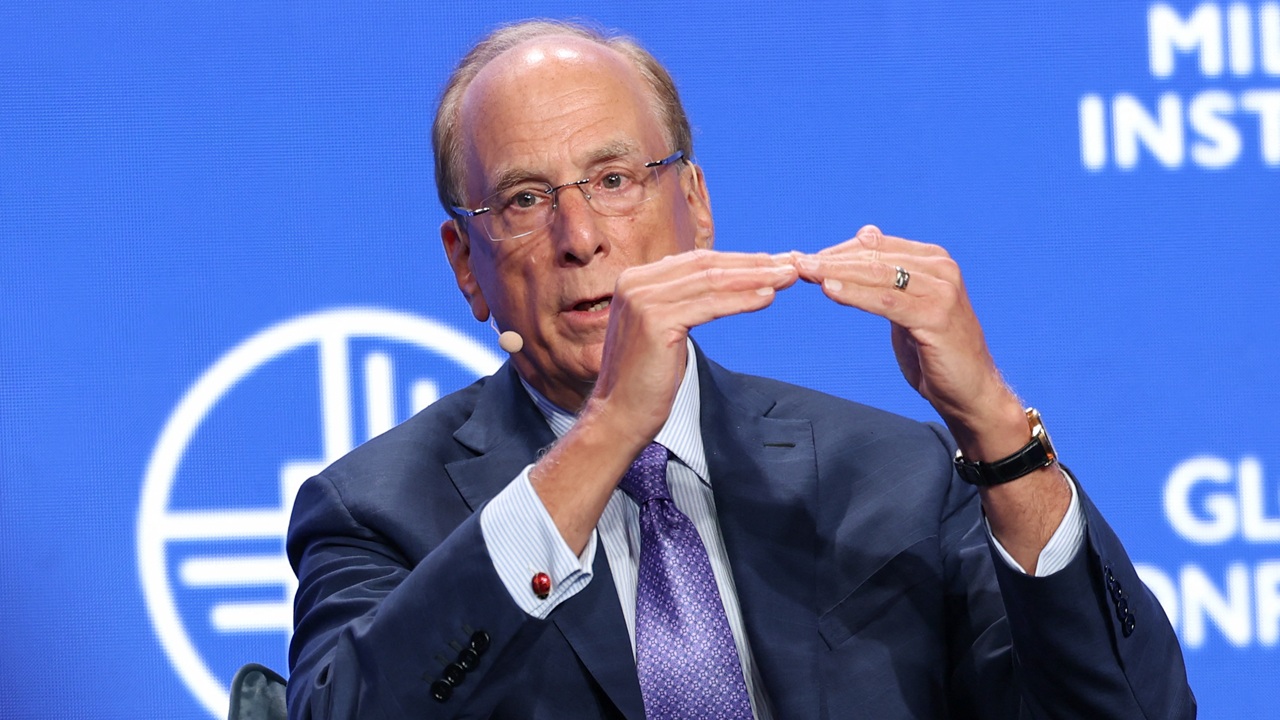
BlackRock, the world’s largest asset manager and a principal architect of the modern ESG movement, disclosed in its 2025 Climate Report that it relied on RCP 8.5 as its primary “no climate action” scenario for stress-testing investment portfolios. BlackRock called it a “tough, but plausible” pathway. The international scientific community now disagrees on the second part.
Munich Re sells a “Company Climate Risk Edition” product to insurers and corporations worldwide, marketed explicitly as a compliance tool for the Task Force on Climate-related Financial Disclosures, the EU’s Corporate Sustainability Reporting Directive, and the International Sustainability Standards Board. The product offers projections under RCP 4.5 and RCP 8.5, running out to 2030, 2050, and 2100.
The International Association of Insurance Supervisors, the global body coordinating insurance regulation across more than 200 jurisdictions, commissioned a climate risk tool built directly on RCP 8.5, described as “the pathway with the highest assumed greenhouse gas emissions,” to assess climate impacts on insurers through 2080.
California Insurance Commissioner Ricardo Lara rolled out a “Long-Term Solvency Regulation” in 2025 requiring climate stress tests for 2030, 2040, and 2050. This is a framework that quietly imports scenario assumptions from the same body of science the U.N. has now repudiated.
And the Network for Greening the Financial System (140 central banks and supervisors strong, including the Federal Reserve, the European Central Bank, and the Bank of England) built its entire suite of climate scenarios on integrated assessment models calibrated to the IPCC’s high-emissions pathways. The Federal Reserve’s 2026 supervisory stress test began in the first quarter of this year. It is still operating.
This is the weaponization of ESG laid bare. Regulators force banks and insurers to model an impossible scenario. The output gets fed into climate-related financial disclosures. Those disclosures get scored by ratings agencies like MSCI, ISS, and Sustainalytics. Those scores determine which companies get capital, and at what cost. American energy producers, which underperform on every climate metric calibrated to an apocalypse, get starved of investment. Banks that lend to them get downgraded. Insurers that underwrite them face escalating “physical risk” premiums and can be pressured to drop coverage entirely.
The result is a regulatory machinery that spent nearly a decade choking off capital to American oil, gas, and coal producers on the basis of a scenario its own authors now admit will never come to pass.
The market is finally pushing back. Bank lending to oil and gas grew more than 20% in 2024, hitting a three-year high of $869 billion, as major institutions quietly retreated from the net-zero pledges that never made financial sense in the first place. Real markets do not operate on retired U.N. scenarios. They operate on demand, technology, and political reality. Yet regulators and ratings agencies, operating in a parallel universe insulated from market discipline, still have not caught up. Or, more accurately, they do not want to.
Here is what should happen now. Every financial regulator that has built climate stress testing on RCP 8.5 or SSP5-8.5 should formally retract those exercises and disclose the implications for any institution downgraded or restricted on their basis. ESG ratings agencies should publish exactly which inputs in their methodologies depend on retired scenarios, and to what extent. The Federal Reserve should state publicly whether its 2026 supervisory stress test relies on inputs drawn from the now-retired pathway and, if so, suspend the exercise. State insurance regulators should pause climate-related solvency requirements and reassess from scratch. And the European Central Bank, which tested 112 banks against an extreme-scenario “Hot House World” pathway, should issue corrected guidance to every institution whose capital plans it has shaped.
The Net-Zero Banking Alliance is dead. The Net-Zero Insurance Alliance is dead. The doomsday scenario that justified both is now officially dead too. It is past time to bury the regulatory infrastructure they built and to restore American banks, insurers, and energy producers to the discipline of real markets and real science.
We publish a variety of perspectives. Nothing written here is to be construed as representing the views of the Daily Signal.
More from this network:
Domains for Sale · GOTPeople.org · TheDSAPlatform · The Truth About Socialism
What's Your Reaction?
 Like
0
Like
0
 Dislike
0
Dislike
0
 Love
0
Love
0
 Funny
0
Funny
0
 Wow
0
Wow
0
 Sad
0
Sad
0
 Angry
0
Angry
0

I am just an average American. My teen years were in the late 70s and I participated in all that that decade offered. Started working young, too young. Then I joined the Army before I graduated High School. I spent 25 years in, mostly in Infantry units. Since then I've worked in information technology positions all at small family owned companies. At this rate I'll never be a tech millionaire. When I was young I rode horses as much as I could. I do believe I should have been a cowboy. I'm getting in the saddle again by taking riding lessons and see where it goes.
Premium domains for sale























Comments (0)