

Want less spoiled kids? Have more of them
Premium domains for sale
Freedom Is Back In Style
Kids are different these days. Kids are spoiled these days.
Freedom Is Back
In Style
Premium domains for sale
It sounds like something an old curmudgeon might say, but sometimes the old curmudgeons are right, aren’t they?
Loving children doesn't require arranging the world around them. In fact, doing so can hamstring the very people we're trying to help.
There have always been rich people who could spoil their children. But for most of human history, ordinary people simply didn’t have enough money to do much spoiling with things. They lived modestly, and their children did too.
Kids didn’t have bedrooms and closets overflowing with toys. They might have a doll, a wooden train, a ball, a bat, a top, and a few other things. Read old memoirs and accounts of childhood, and you encounter children delighted by things that would barely register as presents today — an orange in a Christmas stocking, for instance.
Imagine giving the average American kid in 2026 an orange for Christmas and expecting excitement.
Spoils of abundance
Mass abundance changed all that. We can now spoil our children with things on a scale our ancestors could hardly have imagined. But I think we spoil them in another, more consequential way too.
We spoil them with importance.
Spoiling children with things is a problem everybody understands, even if plenty of us do it anyway. We know that buying children whatever they want whenever they want it can produce ungrateful, entitled adults.
But we talk much less about what happens when we organize family life around children — their preferences, their feelings, their schedules, their entertainment, their happiness. We don't merely give children too much. We make too much of them.
There are many ways to describe this kind of spoiling, but the simplest is that we teach children to believe the world revolves around them. A child who learns that lesson fails to learn humility, flexibility, self-awareness, and the ability to accommodate other people. He grows up with a distorted view of how the world works and what his place in it is.
This has been happening for at least a generation or two, and I think we've all seen the results in our degrading culture, even if we don't always recognize the cause.
The explosion in material spoiling is easy enough to explain: mass abundance. But what explains this other kind?
Lonely islanders
As usual, there isn't one answer. The rise of “gentle parenting” is part of it. So is the cultural change that followed the social revolutions of the 1960s, when adults increasingly began looking to “the youth” rather than expecting the young to learn from their elders. Another part is parents abdicating their roles as leaders, teachers, and disciplinarians because they would rather be their children's friends.
But there is another explanation that interests me more: Families got smaller.
The connection between smaller families and spoiled children is pretty straightforward. The fewer children you have, the more time and attention you can devote to each one. That sounds wonderful, of course. All good parents want more time with their kids.
But smaller families don't just give parents more time. They give parents more bandwidth to accommodate every preference, negotiate every disagreement, indulge every mood, and bend over backward in ways that aren't necessarily good for a child.
If you have one child, that child naturally becomes the center of your world. And why wouldn't he? We love our children. Of course they're central to our lives.
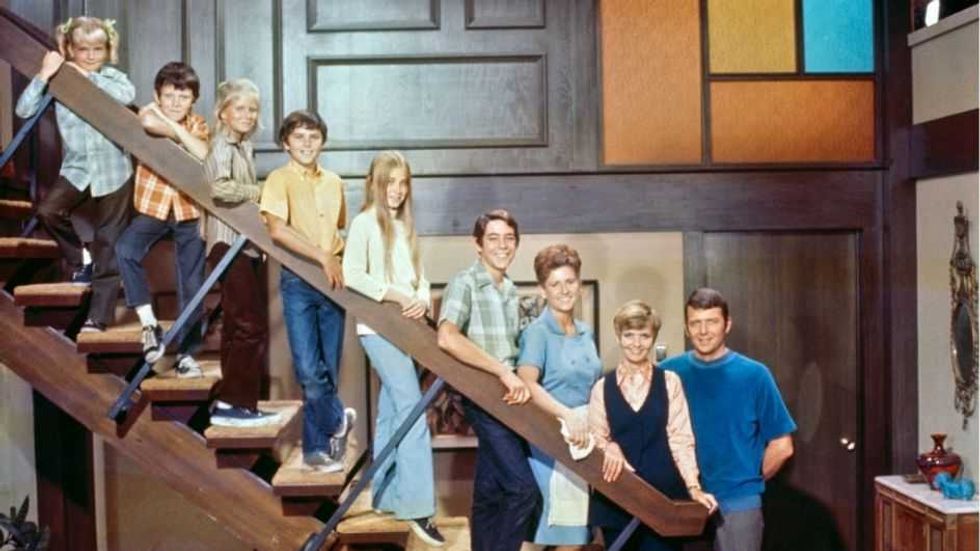
But there is a difference between three, four, five, or six children being the center of a family's world and one child being the center of it.
When all of a family's attention, energy, money, patience, anxiety, and ambition can be concentrated on one child, it's much easier for that child to conclude that his importance within the family reflects his importance everywhere else.
A large family naturally limits how much the household can revolve around any one child. And that may be one of its greatest virtues.
Thank you for sharing
When parents have more children, they are forced to divide their time and attention. They cannot endlessly negotiate every dispute or accommodate every preference. They can't always have infinite patience, and that's not necessarily a bad thing.
Sometimes Dad has to be the judge and make a ruling. Sometimes your brother gets his way. Sometimes your sister gets the front seat. Sometimes somebody else gets the last piece. Sometimes you have to wait. Sometimes you have to share. Sometimes the family is doing something you don't particularly want to do, and you're doing it anyway because you're part of the family.
That's life.
A house full of siblings teaches lessons that parents can otherwise spend enormous amounts of effort trying to manufacture. You learn that other people have needs and desires too. You learn to negotiate, compete, compromise, forgive, wait, lose, and get over things. Most importantly, you learn that you are loved enormously without being the most important person in the room.
RELATED: We need a Labor Day for moms
 David McNew/Getty Images
Love and limits
Having more children places natural limits on our ability to spoil them as much as we might instinctively want to. In doing so, it can make us better parents and our children better prepared for the world.
Because the desire to spoil our children is perfectly natural. We want to give them everything. We want them to be happy. We want to enjoy our time with them. We want them to know how deeply they are loved.
Those are good impulses. But good impulses can manifest themselves in unhealthy ways. Loving children doesn't require arranging the world around them. In fact, doing so can hamstring the very people we're trying to help.
At the end of the day, our job is the same job parents have had throughout history: to raise children who become moral, functioning, upright, hardworking, well-adjusted adults capable of forming families and raising good children of their own.
Our children should know that they are loved beyond measure. They should also know that the world does not revolve around them.
Teaching them both may be one of the most loving things a parent can do.
More from this network:
Domains for Sale · GOTPeople.org · TheDSAPlatform · The Truth About Socialism
What's Your Reaction?
 Like
0
Like
0
 Dislike
0
Dislike
0
 Love
0
Love
0
 Funny
0
Funny
0
 Wow
0
Wow
0
 Sad
0
Sad
0
 Angry
0
Angry
0

I am just an average American. My teen years were in the late 70s and I participated in all that that decade offered. Started working young, too young. Then I joined the Army before I graduated High School. I spent 25 years in, mostly in Infantry units. Since then I've worked in information technology positions all at small family owned companies. At this rate I'll never be a tech millionaire. When I was young I rode horses as much as I could. I do believe I should have been a cowboy. I'm getting in the saddle again by taking riding lessons and see where it goes.
Premium domains for sale























Comments (0)