

We Prepare Astronauts For Space, Why Not Veterans For Civilian Life?
Premium domains for sale
Freedom Is Back In Style
Our nation is preparing to return to the moon, but not for another one-off flag-planting mission. It is part of a long-term strategy to build the infrastructure needed for humans to live, work, and eventually establish a permanent presence in one of the most hostile environments imaginable.
Freedom Is Back
In Style
Premium domains for sale
Just last week, NASA awarded nearly $600 million to advance that mission, while Elon Musk announced that SpaceX’s near-term focus has shifted from Mars to the moon. Both share the same objective of building the infrastructure necessary for a permanent human presence there.
America understands that preparation determines success. We instinctively apply that principle when sending astronauts into space, yet abandon it when preparing America’s homeless veterans for life after military service. It doesn’t take a rocket scientist to understand something NASA and SpaceX both know: success doesn’t begin with the launch; it begins with careful planning.
Long before astronauts ever leave Earth, engineers build the training, logistics, communications, supply chains, contingency plans, and eventually, base camps that make the mission possible. They aren’t launching astronauts with hope as a strategy; they’re building the infrastructure for success before the missions even launch. Whether it’s NASA or SpaceX, the principle is the same: sustainable success requires building systems that make success possible.
Now, extend this principle to our veterans. In the fall of 2024, after I discussed America’s homeless veterans crisis on Fox News, Elon Musk responded on X with a simple observation: “Wow, this is messed up.” Millions of Americans would likely agree. The injustice is obvious. The challenge is having the vision and resolve to build a system that fixes it.
So why do we treat our homeless veterans any differently than a mission to the moon? We should show the same forethought when preparing America’s veterans for success as they transition to their next mission after completing one of the nation’s most demanding jobs — military service.
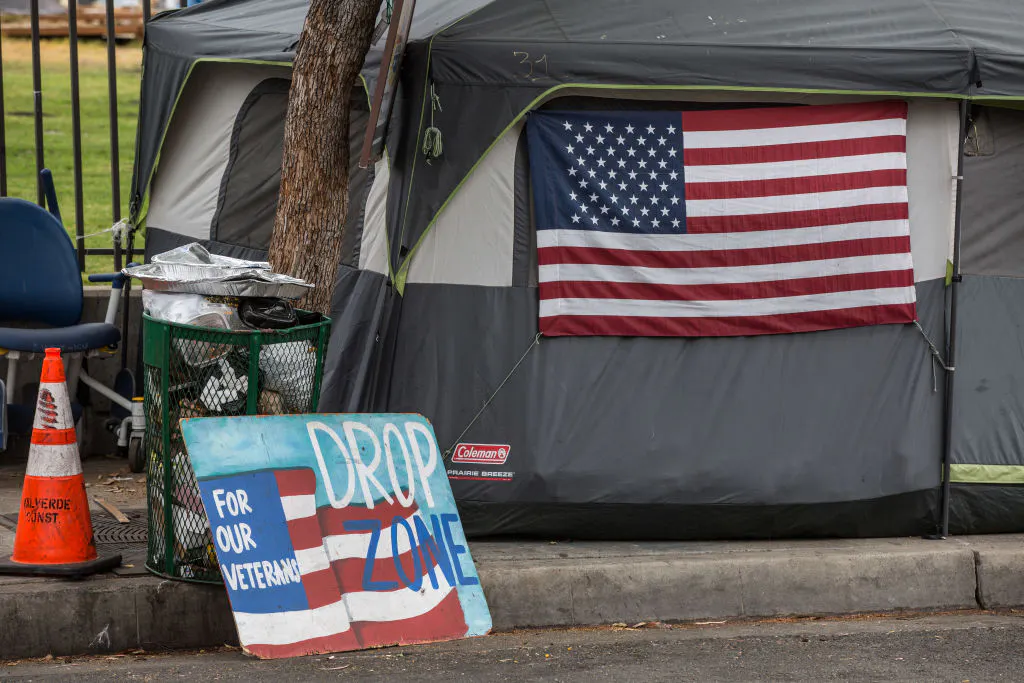
Many vets come home carrying invisible wounds: trauma, addiction, mental health struggles, and the sudden loss of the structure and purpose the military provided. California is home to roughly 28% of America’s homeless veterans, making it the epicenter of a crisis that demands a new approach. Yet instead of building the comprehensive support infrastructure they need to thrive, we too often launch them into society with nothing but temporary shelters and unreliable services. “Housing first” sounds compassionate until you realize you cannot house your way out of addiction or untreated trauma.
As I detail in my book, “The Race to Save California,” the Golden State’s homelessness crisis proves that this isn’t primarily a housing shortage, nor is it a funding shortage — it’s a failure of diagnosis, accountability, and incentives. “Compassion” policies that tolerate open drug use and disorderly encampments are just abandonment dressed up as empathy. We warehouse people in misery instead of providing the structure and infrastructure they desperately need.
We’ve spent tens of billions with results visibly worsening because the system rewards the haphazard management of the crisis, not the ending of it, celebrating meaningless metrics of so-called “success,” like the number of beds constructed. Can you imagine if the space exploration industry treated these lunar projects the same way? Imagine NASA endlessly funding new thermal protection tiles that keep burning up on faulty spacecraft that never reach the moon, then proudly touting the huge number of new tiles produced for those perpetually faulty rockets, as though it’s some impressive metric of success. It’s absurd, and serious people recognize that.
California carries the heaviest burden of homeless veterans in the nation. These are disciplined, mission-focused Americans who once operated with clear rules, camaraderie, and purpose. Leaving them on the streets isn’t just a tragedy — it’s a colossal waste of talent and a moral failure.
The solution isn’t more of the same expensive, ineffective housing programs. It’s Basecamps — structured, secure environments modeled on the very discipline that made these veterans successful in the first place, and costing a fraction of the failed programs currently preferred by greedy politicians and NGOs.
Envision drug-free stability with clear rules, accountability, treatment programs, and an atmosphere of community, camaraderie, and contribution. This would provide essential social and psychological infrastructure. Meanwhile, cafeterias, laundry, chapels, life skills training, and workforce pathways would offer physical and occupational infrastructure. And within this Basecamp community, residents — especially veterans — can take advantage of the opportunity to mentor others and pay it forward as they accomplish their own successful transitions back into society.
This blueprint isn’t glamorous, lucrative, or politically correct, but it works. It treats the whole person: addiction, mental health, lack of purpose, and the need for both structure and community. Transition into taxpayer-funded housing without personal transformation is just another revolving door back onto the streets.
NASA and SpaceX understand that lasting success in the most unforgiving environments doesn’t happen by accident. If we can meticulously plan basecamps and support systems for the Moon, then we can certainly do the same for the heroes who defended this country here on Earth.
No more warehousing misery. No more accepting expensive failure as the status quo. It’s time to apply the same foresight, discipline, and results-oriented mindset to our homeless veterans that we apply to space exploration.
America is building the infrastructure to sustain life on the Moon. It’s time we built the infrastructure to restore the lives of those who defended ours.
***
Kate Monroe is the CEO of VetComm, a U.S. Marine Corps veteran, and author of The Race to Save California and The Race to Save America.
More from this network:
Domains for Sale · GOTPeople.org · TheDSAPlatform · The Truth About Socialism
What's Your Reaction?
 Like
0
Like
0
 Dislike
0
Dislike
0
 Love
0
Love
0
 Funny
0
Funny
0
 Wow
0
Wow
0
 Sad
0
Sad
0
 Angry
0
Angry
0

I am just an average American. My teen years were in the late 70s and I participated in all that that decade offered. Started working young, too young. Then I joined the Army before I graduated High School. I spent 25 years in, mostly in Infantry units. Since then I've worked in information technology positions all at small family owned companies. At this rate I'll never be a tech millionaire. When I was young I rode horses as much as I could. I do believe I should have been a cowboy. I'm getting in the saddle again by taking riding lessons and see where it goes.
Premium domains for sale















Comments (0)