

What A Cattle Rancher Knows About Beef Prices That Consumers Don’t
Premium domains for sale
Freedom Is Back In Style
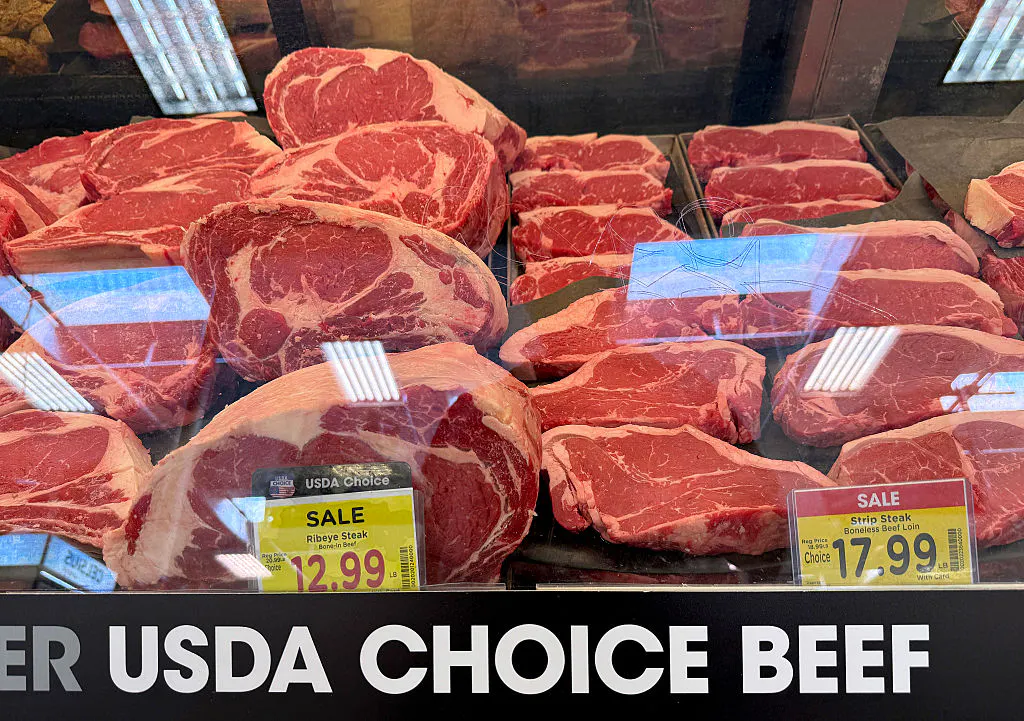
Consumers are feeling the effects of rising beef prices every time they walk into the grocery store. What many don’t realize is that those prices are the result of pressures that have been building on American farmers for decades.
Freedom Is Back
In Style
Premium domains for sale
Today, the U.S. cattle herd is at its lowest level in roughly 75 years. It may sound like a simple supply-and-demand problem, but after more than 50 years in the cattle business, I can tell you it’s more complicated than that.
The cattle shortage we are experiencing today did not happen overnight. Years of rising operating costs, growing competition from imports, and industry consolidation have forced many ranchers to reduce their herd sizes or leave the business altogether. And while there are efforts underway to rebuild the nation’s cattle herd, it will take time. And the rebuild is not a certainty. A cow’s gestation period is nine months — then it takes another two years for that calf to reach slaughter. A herd rebuild is measured in years, not months.
But the cattle shortage itself is only part of the story.
Many consumers have little knowledge of where their beef actually comes from. Current labeling rules can allow imported beef to be processed domestically and marketed in ways that leave consumers with the impression it was entirely produced in the United States. At the same time, the modern American beef supply chain has become increasingly dependent on imported lean beef, which is frequently blended with domestic beef before reaching consumers.
As a result, consumers often have no clear way of knowing where the beef they purchase originated or how much of it was raised by American ranchers. The lack of transparency makes it difficult for consumers to make informed purchasing decisions and intentionally support domestic producers.
At the same time, four major meatpacking companies process the vast majority (about 80%) of America’s beef. This concentration has reduced competition, weakened the bargaining position of American ranchers, and placed significant influence over pricing and supply chains in the hands of a small number of companies.
When consumers see higher beef prices, they should understand that many ranchers are not the ones setting these prices. Most are simply trying to stay in business, while remaining largely at the mercy of a highly concentrated meatpacking industry.
I know this because I lived it.
For decades, my family’s farm in Bluffton, Georgia — White Oak Pastures — operated within the conventional industrial model that has come to dominate American agriculture. Over time, I began to see how an emphasis on scale, efficiency, and consolidation created unintended consequences for everyone involved.
That experience taught me an important lesson: there are factors beyond efficiency, such as how we steward the land, animal welfare, and resilience in the food supply chain.
If we continue down our current path, we risk fewer independent ranchers, fewer young people entering agriculture, and greater dependence on increasingly outsourced beef production.
One important step we can take today is Mandatory Country of Origin Labeling (MCOOL), which would provide consumers with greater transparency about where their meat originates, and allow them to make more informed purchasing decisions — and to specifically support American farmers. But labeling alone is not enough in the long run.
If we want affordable beef, a secure food supply, and a stronger agricultural future, we need policies that support independent producers, strengthen rural economies, and preserve America’s ability to produce its own food.
The current cattle shortage should be viewed as more than a temporary spike in beef prices — it is a warning sign.
For decades, shrinking cattle inventories, rising production costs, industry consolidation, and growing dependence on global supply chains have quietly reshaped the beef industry. Today’s higher prices are simply making those underlying pressures more visible to consumers.
Food security does not begin at the grocery store. It begins on farms and ranches across America. If we want affordable food tomorrow, we must ensure American farmers and ranchers can remain in business today.
***
Will Harris is the owner of White Oak Pastures and is a fourth-generation cattle rancher.
More from this network:
Domains for Sale · GOTPeople.org · TheDSAPlatform · The Truth About Socialism
What's Your Reaction?
 Like
0
Like
0
 Dislike
0
Dislike
0
 Love
0
Love
0
 Funny
0
Funny
0
 Wow
0
Wow
0
 Sad
0
Sad
0
 Angry
0
Angry
0

I am just an average American. My teen years were in the late 70s and I participated in all that that decade offered. Started working young, too young. Then I joined the Army before I graduated High School. I spent 25 years in, mostly in Infantry units. Since then I've worked in information technology positions all at small family owned companies. At this rate I'll never be a tech millionaire. When I was young I rode horses as much as I could. I do believe I should have been a cowboy. I'm getting in the saddle again by taking riding lessons and see where it goes.
Premium domains for sale


















Comments (0)