

What Does it Mean to be American? 3 Defining Beliefs
Premium domains for sale
Freedom Is Back In Style
What makes an American an American? Hillsdale College Professor Matthew Spalding joined the Heritage Foundation’s Executive Vice President Derrick Morgan on Monday to answer this question and to discuss Spalding’s new book, The Making of the American Mind.
Freedom Is Back
In Style
Premium domains for sale
The Declaration of Independence offers a unique answer to this question, Spalding told Morgan.
He laid out certain principles that undergird the document and ought to unite Americans.
How The Declaration Defines The American Mind
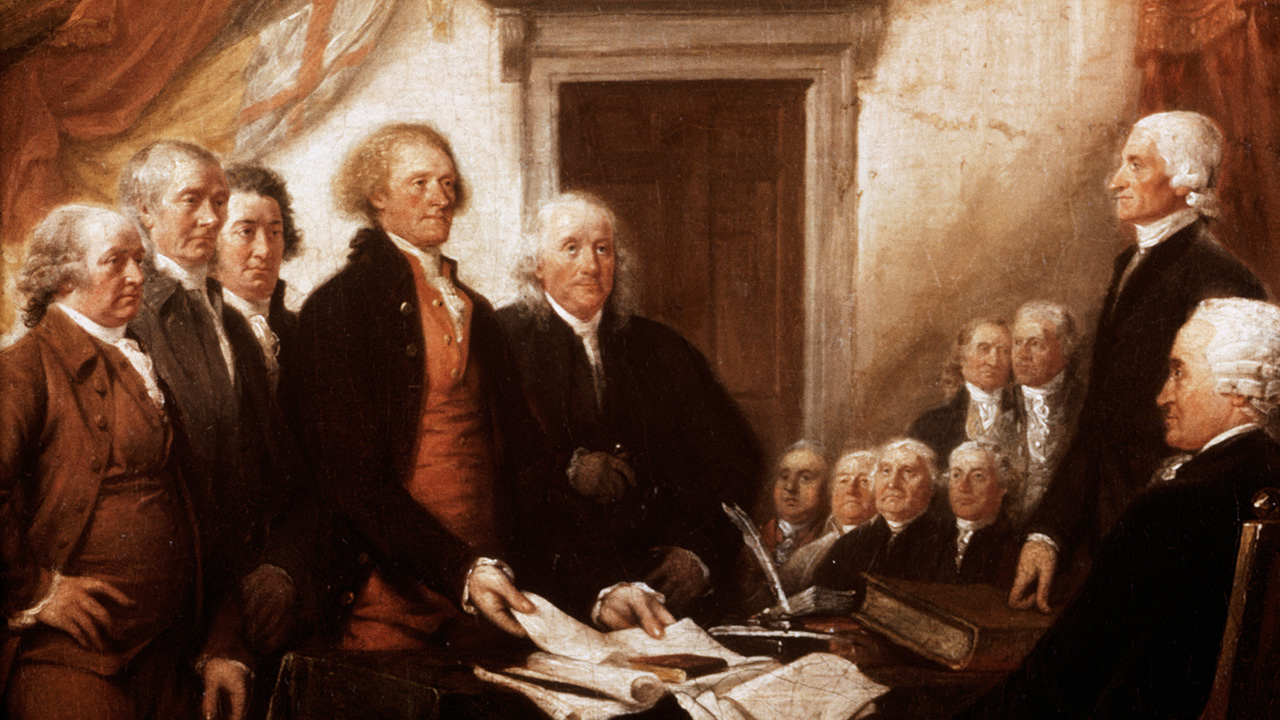
Spalding mentioned the most famous line in the Declaration: “We hold these truths to be self-evident, that all men are created equal, that they are endowed by their Creator with certain unalienable Rights, that among these are Life, Liberty, and the pursuit of Happiness.”
Spalding claimed Americans often do not appreciate the depth behind these lines.
“It doesn’t say ‘We have some personal, subjective values we would like to share with you for your affirmation,’” Spalding said.
The Founders declared their belief in stringent, objective truths that are evident or not. There is no “my truth” or “your truth”; rather, there is only “the truth”—a truth that guarantees the rights of man and later proved necessary to abolish slavery in the states.
Second, “Prudence, indeed, will dictate.”
In the modern age, Spalding claimed, people tend to think in binaries: “It’s all good or it’s all bad. It’s one thing or the other. We can’t think in nuance. We can’t make prudential judgments.”
This was not the thought process of the Founders. The virtue of prudence was to guide the unfolding American project.
Third is the very last line of the Declaration: “We mutually pledge to each other our Lives, our Fortunes and our sacred Honor.”
This Spalding called a “perfect sentence…an oath to each other.”
But there is also the word “sacred,” which indicates a theology that underwrites the Declaration.
Spalding claimed that there are five references to God in the Declaration. By the time the reader reaches the fifth, he is left with a certain understanding of the Founders’ God.
“The [Founders’] God is the God of divine providence that intervenes in the lives of men…more than the deistic second version of the modern world,” Spalding told Morgan.
What Unites Us to This Founding?
According to Spalding, the Declaration is what binds Americans today to their founding.
“That is what unites us. That’s what makes us a country,” Spalding said. “We are dedicated to universal truths about human liberty. That’s what makes America exceptional. It’s what makes America great and worthy of our affection.”
When we lose the principle of liberty as an objective and divine truth guided by virtue, we lose our nation.
“If you lose on that, you’re going to lose everything anyway.”
According to Spalding, John C. Calhoun had to first attack the Declaration to defend the institution of slavery. Likewise, the Progressive movement beginning in 1912 also sought to eradicate the Declaration and its underwritten principles.
Whoever wins the battle over these principles “is going to win America.”
As we approach the 250th anniversary of the signing of the Declaration and beyond, there will be many birthdays to celebrate.
“The 250th anniversary of the Constitution is 11 years from now. So, between now and then, there are constant 250th anniversaries of all the steps to get there.”
Spalding said each of these birthdays presents an opportunity to learn about our country and “think of the patriotic moments” that bind us to our Founding.
“That’s how you make people love their country,” Spalding said.
More from this network:
Domains for Sale · GOTPeople.org · TheDSAPlatform · The Truth About Socialism
What's Your Reaction?
 Like
0
Like
0
 Dislike
0
Dislike
0
 Love
0
Love
0
 Funny
0
Funny
0
 Wow
0
Wow
0
 Sad
0
Sad
0
 Angry
0
Angry
0

I am just an average American. My teen years were in the late 70s and I participated in all that that decade offered. Started working young, too young. Then I joined the Army before I graduated High School. I spent 25 years in, mostly in Infantry units. Since then I've worked in information technology positions all at small family owned companies. At this rate I'll never be a tech millionaire. When I was young I rode horses as much as I could. I do believe I should have been a cowboy. I'm getting in the saddle again by taking riding lessons and see where it goes.
Premium domains for sale








Comments (0)