

What Fathers Leave Behind
Premium domains for sale
Freedom Is Back In Style
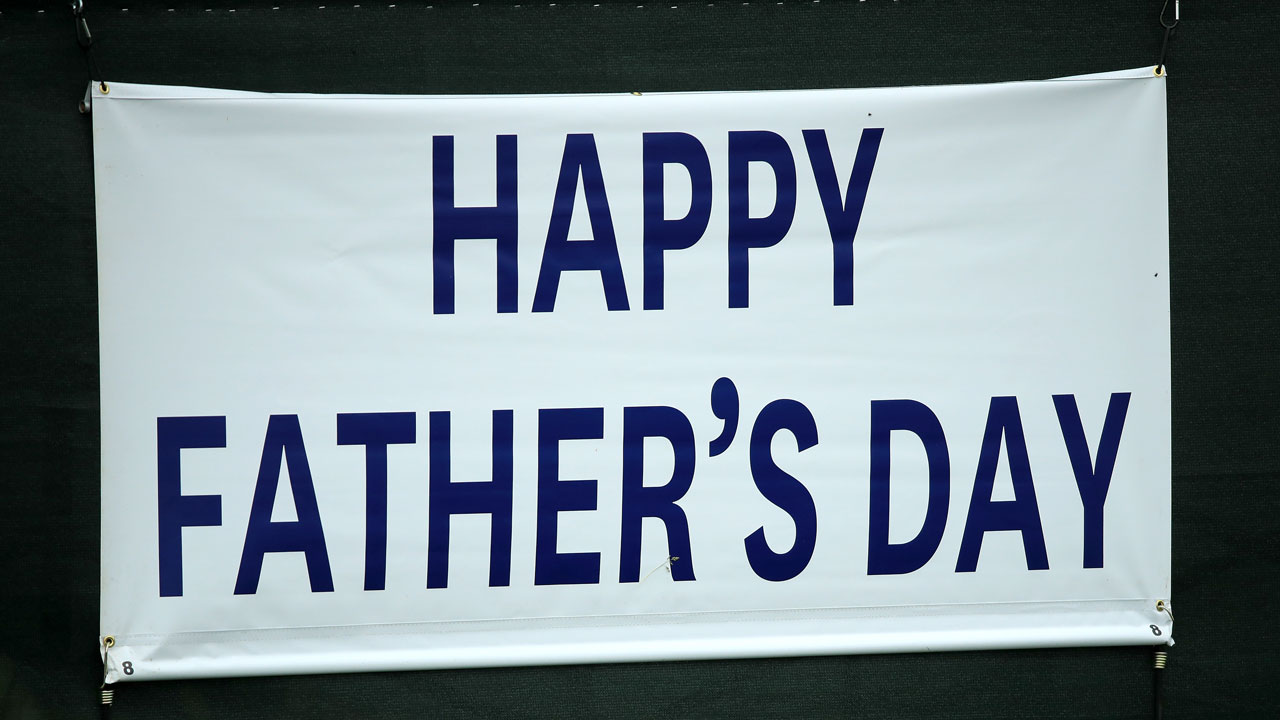
June 18, 2026, marks 15 years since my father died, and as Father’s Day approaches, I find myself thinking less about the day he left us and more about what he left behind.
Freedom Is Back
In Style
Premium domains for sale
My father, Dennis Joseph Gerber Sr., was known by many as Big Dennis. I was Little Dennis. From the time I was old enough to understand what it meant to share a name, I loved it. I loved being his son, and I loved carrying a name that reminded me every day who I hoped to become.
Like many boys, I watched my father closely. I paid attention to how he treated people, how he carried himself, how he approached challenges, and how he showed up for those around him. Even today, my signature is little more than a poor imitation of his. I remember watching him intently as he signed documents, studying his signature and wondering how I could make mine look like his when I got older. Looking back, that seems fitting because much of who I am was learned the same way.
I was adopted as an infant, but I never spent a single moment wondering whether I belonged. My father never made me feel adopted, he made me feel chosen. He would often say, “God made you for us.” As an adopted son, those words carried special weight, but he was also expressing something deeper about how he viewed his life. He believed that God had entrusted him with responsibilities as a husband, father, neighbor, and citizen, and he embraced those responsibilities wholeheartedly. He never approached fatherhood as a burden. He approached it as a calling.
Perhaps that is one reason why St. Joseph has always occupied such an important place in my life. My father and I shared the middle name Joseph, but more importantly, we shared a devotion to the saint who taught both of us something essential about fatherhood.
When I think about St. Joseph today, I am struck by the quiet trust that defined his life. Scripture records none of his words, yet his actions reveal a man who accepts God’s will with humility and courage. He did not choose the circumstances placed before him, but he faithfully embraced the responsibilities entrusted to him. God the Father entrusted His Son to Joseph’s care. Joseph did not seek that responsibility, but when it was given to him, he embraced it completely. He protected Jesus, taught Him, worked for Him, and loved Him, all while knowing that the child entrusted to him ultimately belonged to God.
As an adopted son, that reality has always resonated with me. Joseph reminds us that fatherhood is not primarily a biological relationship. It is a vocation of love, sacrifice, and responsibility.
Looking back now, I realize that both St. Joseph and my father understood the same truth: Children ultimately belong to our Heavenly Father. Earthly fathers are entrusted with them for a time. Their task is to love them, guide them, protect them, and through their example help them come to know the love of the Father from whom all fatherhood takes its name.
My father understood that instinctively.
He was not a perfect man, but he was a remarkably loving one. We hugged often. We were never afraid to show our affection for each other. Sometimes, as we would walk together, he would simply place his hand on my head or the back of my neck. Those small gestures communicated something every child longs to hear: “I am here. I love you. You belong.”
Part of the reason we were so close was that he was always there. Whether it was a football game, a track meet, a school event, or some other activity that seemed enormously important to me at the time, I could count on seeing him there. He was present. He was interested. He was proud.
As a boy, there is something powerful about knowing your father is in the stands.
As a man, there is something even more powerful about realizing how many sacrifices it took for him to be there.
When I was home from college and working locally, we would go to lunch together almost every day. Those lunches remain some of my favorite memories. We talked about work, family, our community, and whatever else happened to be on our minds. When I was away at school or traveling for work, I called him every day, sometimes several times a day. It never felt like an obligation. He was simply the person I most wanted to talk to.
My father was also the kind of man who believed that if you wanted your community to be better, you had to help make it better. He coached our teams, served on the local school board, and served on the library board. What he lacked in technical expertise as a coach, he more than made up for in encouragement and leadership. He had a gift for making people believe in themselves.
More importantly, he taught me that when someone asks for help, the first response should not be whether helping is convenient. The response should be, “How can I help?”
He did not merely teach that lesson. He lived it.
Years after I became an adult, I began hearing something from friends that surprised me. More than one person told me, “Your dad was like a father to me.”
At first, I was caught off guard by those comments. Then I realized they made perfect sense.
My father had a gift for making people feel seen. He encouraged people. He listened. He showed up. Without ever trying to become a father figure, he became one for many people simply because he cared.
The week before my father died, my wife and I shared some joyful news with him. We had just learned that we were expecting our first child.
I still remember his response; he told me that I was going to be a great dad.
At the time, it felt wonderful to hear. Looking back, it means even more because those words came from the man who had been my model of fatherhood for my entire life.
Less than a week later, he was gone.
I was traveling for work in Egypt when he died unexpectedly. The loss devastated me. Even now, fifteen years later, it is difficult to put into words.
Yet one memory has remained with me through all the years since.
Before he left this world, my father gave me one final gift. He gave me confidence that I could do what he had done.
He told me I could be a father.
Today, my son Blaise is 3 years old. Like most little boys, he wants to do whatever his dad is doing. If he sees me exercising, he drops to the floor and tries to do pushups beside me. If I am getting dressed for Mass, he wants to dress like Dad. He wants to sit next to me, hold my hand, and be wherever I am.
Truthfully, he is my best friend.
Whenever I watch him imitate me, I find myself thinking about how much of my own life was spent trying to imitate my father. Children learn far less from what we tell them than from who we are.
There is something beautiful about watching a little boy carry a name that has been carried before him. Not because the name itself is important, but because of the men who carried it. My father taught me what it means to bear the name Gerber. Every day, I am trying to teach Blaise the same thing.
Fifteen years after my father’s death, I have come to understand what fathers leave behind.
Not merely a name, though I am proud to carry his. Not possessions, accomplishments, or even memories. Fathers leave behind examples. They leave behind habits, convictions, and a way of loving. They leave behind a vision of the kind of man their sons might become.
I see that inheritance every time I take Blaise’s hand. I see it every time he imitates something I am doing. I see it every time I find myself responding to the needs of another person with the same instinct my father had so many years ago: “How can I help?”
Fifteen years after his death, my father is still teaching a little boy how to be a man.
The difference is that little boy is no longer me.
It is Blaise.
And for that gift, I thank God the Father, St. Joseph, and Big Dennis.
More from this network:
Domains for Sale · GOTPeople.org · TheDSAPlatform · The Truth About Socialism
What's Your Reaction?
 Like
0
Like
0
 Dislike
0
Dislike
0
 Love
0
Love
0
 Funny
0
Funny
0
 Wow
0
Wow
0
 Sad
0
Sad
0
 Angry
0
Angry
0

I am just an average American. My teen years were in the late 70s and I participated in all that that decade offered. Started working young, too young. Then I joined the Army before I graduated High School. I spent 25 years in, mostly in Infantry units. Since then I've worked in information technology positions all at small family owned companies. At this rate I'll never be a tech millionaire. When I was young I rode horses as much as I could. I do believe I should have been a cowboy. I'm getting in the saddle again by taking riding lessons and see where it goes.
Premium domains for sale




Comments (0)