

What Is Iran’s Pickaxe Mountain — And Why Is Trump Talking About It?
Premium domains for sale
Freedom Is Back In Style
Buried deep beneath a mountain in central Iran is a nuclear-related facility so heavily fortified that some experts believe it may be beyond the reach of U.S. airstrikes — and President Donald Trump wants Tehran to know he’s watching it.
Freedom Is Back
In Style
Premium domains for sale
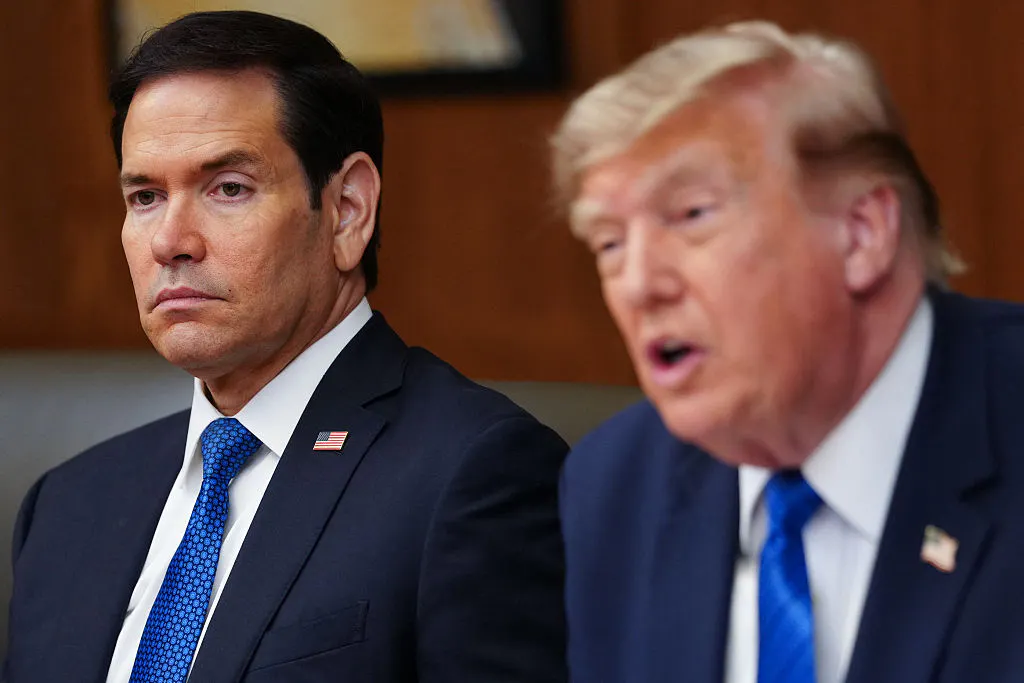
“We have eyes on it and Pickaxe Mountain is a possible target for a nice big fat shot right in the front door,” Trump said Monday in an interview with radio host Hugh Hewitt.
“Tell the Iranians to be ready,” Trump added. “There is not a damn thing they can do about it.”
The mountain complex has become one of the biggest mysteries surrounding Iran’s nuclear program since U.S. forces struck Fordow, Natanz, and Isfahan during Operation Midnight Hammer last year.
While those facilities suffered extensive damage, Pickaxe Mountain was left untouched.
Analysts believe the site was spared because it was not yet operational and its extraordinary depth would have made it one of the most difficult targets in Iran for conventional airstrikes.
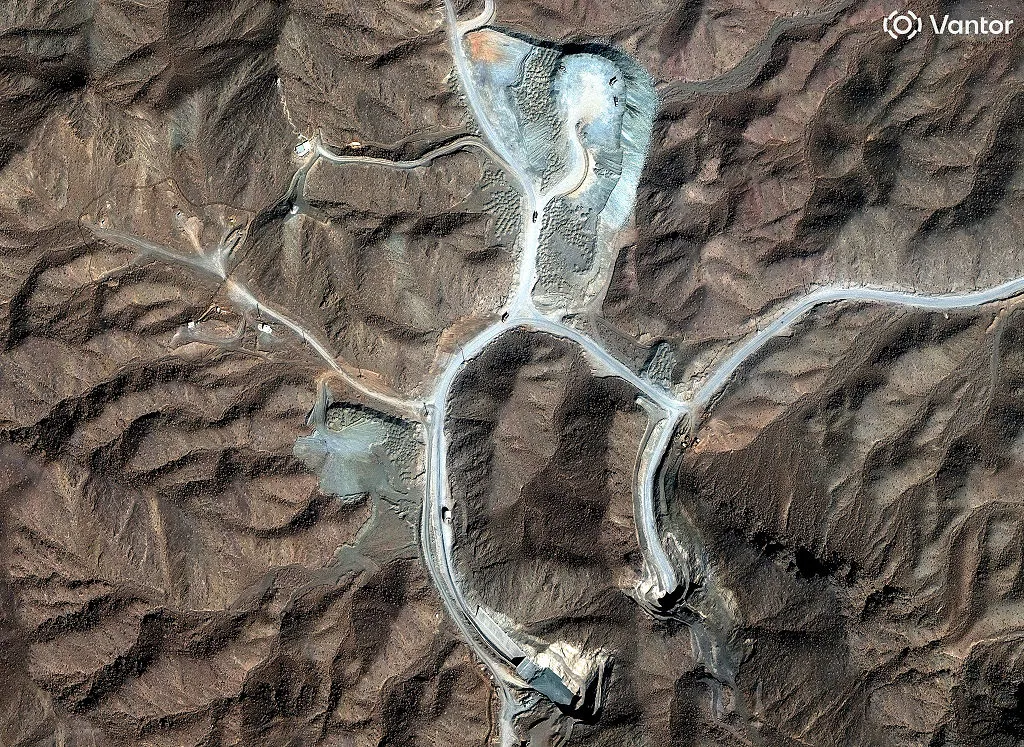
Yet recent satellite imagery suggests construction has continued, raising concerns that Tehran may be turning the mountain complex into a hardened fallback location for its nuclear program that has been under heavy assault for more than a year.
“I think this is like their Alamo,” Jonathan Schanzer, executive director of the Foundation for Defense of Democracies (FDD), told The Daily Wire.
“You retreat to this place and the goal would be to hunker down,” Schanzer said. “The Iranians now find themselves where they understand that there’s not a lot they can do in the places that have been destroyed. They have this fallback embedded deep underground. They understand that it will be exceedingly difficult for the United States to neutralize this facility.”
Located in Iran’s Isfahan province, roughly one mile south of the Natanz uranium enrichment facility and about 200 miles south of Tehran, the site is formally known as Kuh-e Kolang Gaz La — or “Pickaxe Mountain.”
After construction began in 2020, Iranian officials claimed the facility was intended to replace a centrifuge manufacturing plant at Natanz that was destroyed in a suspected Israeli sabotage operation.
But the site’s secrecy, scale, and extraordinary fortification have raised concerns among Western governments and nuclear experts, particularly because the International Atomic Energy Agency has never inspected the facility. The lack of international oversight has fueled speculation that Iran could eventually use the complex to enrich uranium to weapons-grade levels or store sensitive nuclear material away from outside scrutiny.
According to reporting by The New York Times, some experts fear Iran may already have moved portions of its stockpile of highly enriched uranium — roughly 970 pounds before the 2025 strikes — into the facility.
According to the Institute for Science and International Security, the facility’s chambers are buried substantially deeper than those at Fordow, the mountain-enclosed enrichment facility struck by American B-2 bombers in June 2025. The organization estimates that the tunnel complex lies at least 100 meters beneath the mountain and may contain multiple underground levels accessed through two pairs of tunnel entrances.
Satellite imagery reviewed by the institute shows Iran has spent years fortifying the site.
In 2025, Tehran began constructing a double security perimeter around the mountain, consisting of fencing, walls, and patrol routes. Tunnel entrances have been hardened with layers of concrete and earth, according to the institute.
Some experts believe Trump was referring to Pickaxe Mountain when he warned during an April 1, 2026, primetime address that Iran was attempting to rebuild its nuclear program at a “totally different location” following Operation Midnight Hammer.
“In June, I ordered a strike on Iran’s key nuclear facilities in Operation Midnight Hammer,” Trump said. “The regime then sought to rebuild their nuclear program at a totally different location, making clear they had no intention of abandoning their pursuit of nuclear weapons.”
“It’s long been understood to be an area that would be well out of reach if it becomes fully operational,” Schanzer said. “Out of reach of the U.S. military — or any other military for that matter.”
The facility’s unusual fortification has also sparked debate among military planners about whether conventional airstrikes could ever fully eliminate it.
“The U.S. and Israel reportedly didn’t bomb Pickaxe Mountain before because of its depth and due to an assessment that it wasn’t really operational,” Jason Brodsky, policy director at United Against Nuclear Iran, told The Daily Wire. “But Pickaxe Mountain can be used as a site where the Iranians breakout should they decide to develop a nuclear weapon. This necessitates that Pickaxe Mountain be neutralized.”
Brodsky added that because of the facility’s depth, “it may require a ground component to destroy the complex.”
Some officials and analysts have privately discussed options ranging from special operations raids to other unconventional methods because traditional bunker-buster bombs may not be sufficient, according to the New York Times. Other analysts have proposed rendering the facility unusable by sealing tunnel entrances or using chemical agents to contaminate access routes rather than attempting to destroy the mountain itself.
Schanzer said the facility presents the Trump administration with difficult choices.
“There are still options for neutralizing this facility,” he said. “Ground forces. Tactical nukes. But these are things that the administration, at least until now, has been very nervous about initiating.”
He added that such options would carry enormous military and geopolitical risks, including concerns about setting precedents that adversaries such as Russia could later invoke in other conflicts such as the war in Ukraine.
The renewed focus on Pickaxe Mountain comes after FDD argued that ongoing construction at the site may have breached the now-defunct Memorandum of Understanding, under which Iran agreed to maintain the status quo of its nuclear program.
“The regime appears intent to continue its nuclear activity,” Schanzer said. “Despite all of the measures that the U.S. military has taken against the regime, they’re defiant.”
While little activity has reportedly been observed at Fordow, Natanz, or Isfahan since the American strikes, satellite imagery reviewed by the Institute for Science and International Security showed vehicle activity near the tunnel entrances in late June, suggesting the facility remains under construction and that fortification efforts are continuing.
For U.S. and Israeli officials seeking to ensure Iran never obtains a nuclear weapon, the fact that Pickaxe Mountain remains unfinished offers only limited reassurance. Once operational, the deeply buried complex could become the regime’s most secure nuclear asset — and perhaps its hardest to eliminate.
More from this network:
Domains for Sale · GOTPeople.org · TheDSAPlatform · The Truth About Socialism
What's Your Reaction?
 Like
0
Like
0
 Dislike
0
Dislike
0
 Love
0
Love
0
 Funny
0
Funny
0
 Wow
0
Wow
0
 Sad
0
Sad
0
 Angry
0
Angry
0

I am just an average American. My teen years were in the late 70s and I participated in all that that decade offered. Started working young, too young. Then I joined the Army before I graduated High School. I spent 25 years in, mostly in Infantry units. Since then I've worked in information technology positions all at small family owned companies. At this rate I'll never be a tech millionaire. When I was young I rode horses as much as I could. I do believe I should have been a cowboy. I'm getting in the saddle again by taking riding lessons and see where it goes.
Premium domains for sale











Comments (0)