

Whom Do Democratic Socialists of America Politicians Represent?
Premium domains for sale
Freedom Is Back In Style
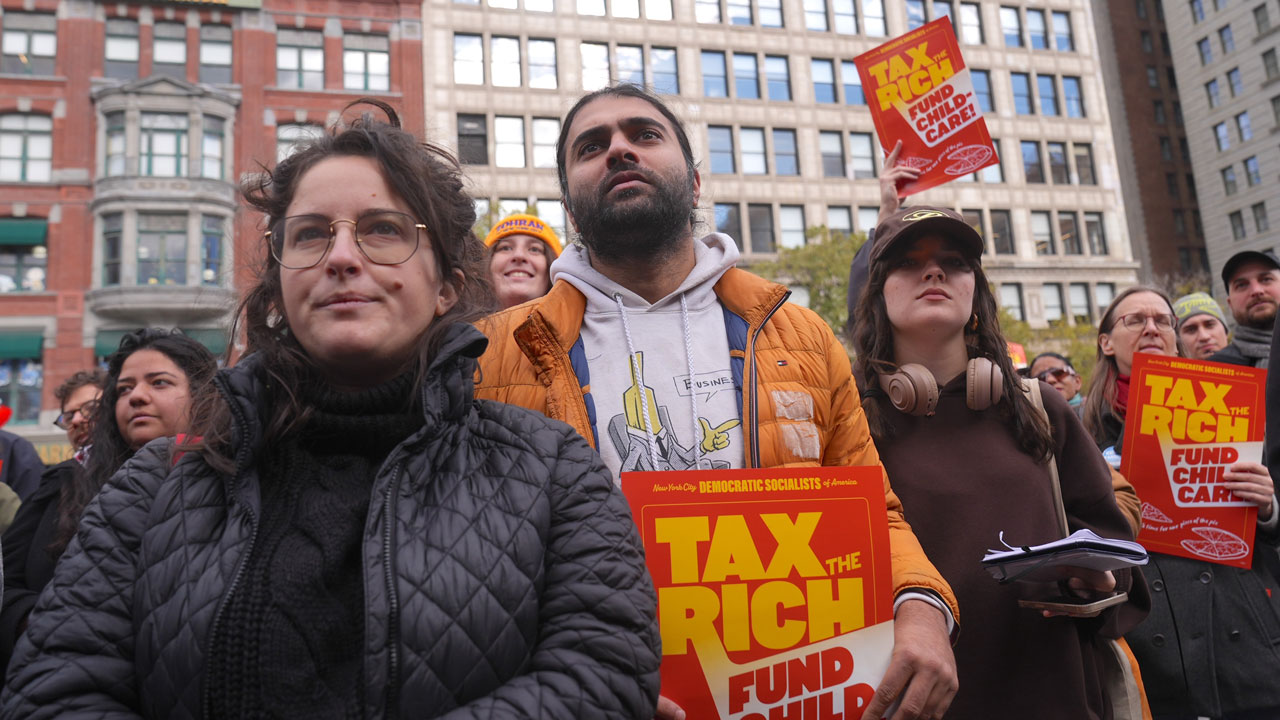
The Democratic Socialists of America has made no secret of how it views elected office. The remarkable thing is that almost no one seems to have noticed.
Freedom Is Back
In Style
Premium domains for sale
At its 2025 national convention, the DSA passed a package of electoral measures drafted by members of the organization’s National Electoral Commission. One of those measures, called “Focused National Endorsements,” established new criteria governing which candidates can receive the DSA’s national endorsement and support.
And one requirement in particular is striking.
Candidates are expected to “view themselves as socialist organizers first, and legislators second.”
Read that again: organizers first, legislators second.
This raises a question that every voter should be asking when a nationally endorsed DSA candidate appears on the ballot: If elected, whom does that person actually represent—his constituents or the socialist movement?
The DSA’s other requirements help answer that question. Candidates are expected to encourage people to join the organization, help grow their local DSA chapter, and develop DSA leaders through their campaigns.
For the DSA, then, electoral success serves a purpose beyond winning office or passing legislation. It is also meant to help build the DSA itself.
That stands in sharp contrast to the traditional American understanding of representative government.
James Madison, writing in Federalist Paper No. 57, described republican government as a system intended to select rulers possessing the “wisdom to discern, and most virtue to pursue, the common good of the society.” He also stressed the importance of representatives maintaining “fidelity and sympathy with the great mass of the people.”
John Adams made a related point in “Thoughts on Government,” written in 1776 as the colonies were creating new political institutions. A representative assembly, he argued, “should be in miniature, an exact portrait of the people at large. It should think, feel, reason, and act like them.”
Adams’ emphasis was on whom a representative assembly ultimately belongs to: the people.
Madison, meanwhile, also warned about the danger of factions in Federalist Paper No. 10. He feared that groups driven by a common passion or interest could sacrifice “the public good and the rights of other citizens” to their own objectives. The constitutional system was designed in part to prevent precisely that kind of narrow interest from overwhelming the broader good.
Seen in that light, the DSA’s choice of words is especially revealing.
To be sure, an elected official will inevitably have political convictions. He may belong to a party, campaign on a platform, and make promises about the policies he intends to pursue. But once in office, he represents an entire constituency, including people who opposed him at the ballot box.
Serving that broader constituency requires judgment. As circumstances change, unforeseen issues arise and competing interests have to be weighed. An elected official remains accountable to the voters, but accountability is not the same thing as obedience to a political organization.
Of course, political parties expect their candidates to support their programs.
But there is an important difference between sharing a group’s principles and declaring that one’s main role after election is to remain an organizer for that group.
Members of Congress do not take an oath to the Republican Party, the Democratic Party, or the Democratic Socialists of America. They swear to support and defend the Constitution of the United States. Public office is a public trust rooted in our constitutional system, not a franchise granted by a political movement.
The DSA has attracted plenty of attention in recent years for its radical positions on capitalism, policing, Israel, and other issues. Those policies deserve scrutiny. But Americans should also scrutinize the assumptions the organization brings to elected office itself.
The DSA says its candidates are socialist organizers first. Voters should remember that before making them legislators.
We publish a variety of perspectives. Nothing written here is to be construed as representing the views of the Daily Signal.
More from this network:
Domains for Sale · GOTPeople.org · TheDSAPlatform · The Truth About Socialism
What's Your Reaction?
 Like
0
Like
0
 Dislike
0
Dislike
0
 Love
0
Love
0
 Funny
0
Funny
0
 Wow
0
Wow
0
 Sad
0
Sad
0
 Angry
0
Angry
0

I am just an average American. My teen years were in the late 70s and I participated in all that that decade offered. Started working young, too young. Then I joined the Army before I graduated High School. I spent 25 years in, mostly in Infantry units. Since then I've worked in information technology positions all at small family owned companies. At this rate I'll never be a tech millionaire. When I was young I rode horses as much as I could. I do believe I should have been a cowboy. I'm getting in the saddle again by taking riding lessons and see where it goes.
Premium domains for sale


















Comments (0)