

Who’s Really Embracing Political Violence
This article is part of Upstream, The Daily Wire’s new home for culture and lifestyle. Real human insight and human stories — from our featured writers to you.
Live Your Best Retirement
Fun • Funds • Fitness • Freedom
***
If you were to ask legacy media or many prominent Democrats, they’d tell you that young men are getting radicalized. Yes, many young men are isolated and pessimistic about their futures. Some are falling down content rabbit holes that normalize misogyny and antisemitism. But while men are listening to provocateurs such as Nick Fuentes to cope with their low societal cachet, young women are getting radicalized too.
There’s evidence that men have actually stayed relatively stable, while women have lurched left with the widespread adoption of social media and the collapse of marriage. Most concerningly, a new study shows that it’s not incels or deadbeats living in basements who are more tolerant of political violence. It’s women.
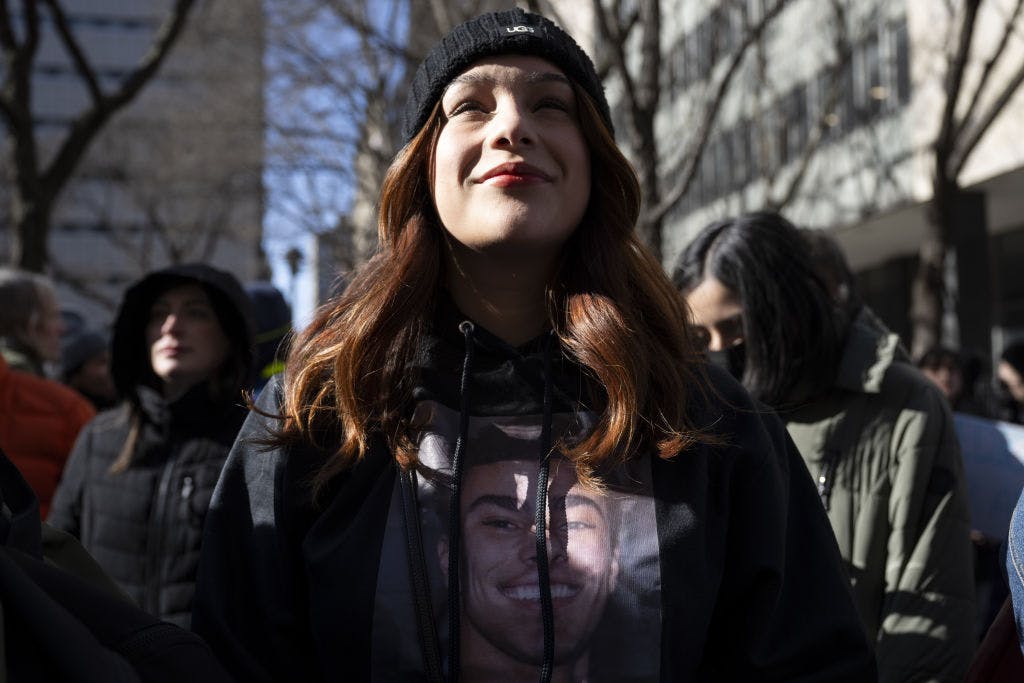
Between their romanticization of alleged murderer Luigi Mangione and their dangerous intimidation of Immigration and Customs Enforcement agents, many young women today are consumed by political causes. All over TikTok, young women are documenting their political rage for issues that have nothing to do with their immediate family, bills, or other priorities. And for the most part, there is little tolerance for other viewpoints. Egged on by radical professors on college campuses, some women would even theoretically support the assassinations of their ideological opponents.
Asked by her professor for a hot take on Charlie Kirk’s death, a female student at Oberlin College reports that she said, “We need to bring back political assassinations. Some people should be afraid to express their opinion.”
Free discourse, which inevitably allows both good and bad ideas to spread, is disliked disproportionately by women. Female students are more censorial than male students, according to a 2022 analysis from the Foundation for Individual Rights and Expression. This was regardless of whether the speaker was liberal or conservative. However, female students opposed platforming conservative speakers by an especially large margin compared to male students, the study showed. Almost 60% of women said promoting an inclusive society was more important than protecting free speech, while 71% of men felt the opposite, a 2019 report by the Knight Foundation found.
Anyone who has experienced cancel culture knows it’s just another word for the policing of social mores, something that women instinctively do. But do women foster inclusion through gentle influence? Though they lack physical leverage, women today use social punishment via shaming, stigmatizing, or by leveling allegations with life-ruining potential (but discouraging due process).
According to a recent study, women in the U.S. are willing to go further to preserve what they believe to be proper norms. Conducted by the Network Contagion Research Institute at Rutgers, the study found that under certain conditions, women were more likely than men to express support for political violence. Challenging the cultural assumption that the fairer sex opts for diplomacy over confrontation, the study shows that women would support vigilantism to spur political change or eliminate people they deem to be threats. Female respondents were approximately 21% more likely than males to express some justification for murdering New York City Mayor Zohran Mamdani and nearly 15% more likely to justify murdering President Donald Trump.
We know from history that women are just as capable as men of encouraging violence against ideological enemies if they’re convicted enough about the righteousness of their cause. Many notorious perpetrators of the Rwandan genocide in 1994 were women.
Psychologically speaking, women are more susceptible to consensus pressure. Women average higher on agreeableness and neuroticism, or sensitivity to negative emotions including social rejection cues, while men average higher on tolerance for disagreement and social conflict. Women are also more empathetic, which, combined with their inclination toward herd mentality, means they tend to lean more liberal. The rise of technology, and specifically the smartphone, has multiplied the effect.
Now with the world at our fingertips in seconds, people are getting caught in online echo chambers that affirm their beliefs. Social media has become a negative feedback loop, especially for women. Platforms abound with women lamenting and “raising awareness” for things outside their control, drumming up upset and panic that exponentially grows as the algorithm feeds it to more women. Rinse and repeat. And though there are a plethora of content corners on the internet, women are getting stuck in collective outcry, which is being rewarded by companies and institutions that take them seriously. A lot of content serves to egg on women to take out their cameras and either capture or become the next viral moment, too.
Renee Good was fatally shot by an ICE officer in Minneapolis after antagonizing him and then accelerating her car toward him as her partner filmed it. In response, many women posted incitements to violence against agents online. While we should have a debate about ICE training, many female TikTokers seemed shocked to learn that lethal force could be used if they interfere with an active federal law enforcement operation. But social media has made them believe that this is all a game. They think they can obstruct armed officers for the thrill of fighting “oppression,” then press pause when they’ve decided they’re done playing. But it doesn’t work that way. Real life has real consequences.
A large part of the female influencing world insists to impressionable screen-addicted women that every political issue demands a DEFCON 1 reaction. They are convinced that everyone else should be just as worked up as they are, even at the expense of their families. I’ve seen firsthand how apolitical creators who’d rather mind their own business are scolded in the comments for not making political statements, almost always on progressive issues. It is healthy to be detached from things that don’t affect your home or your zip code. That attitude was typical of most Americans before the social media age.
The NCRI data indicate that doomscrolling on social media is sowing revolutionary thinking in young women, contradicting the prevailing narrative that mainly young men are being primed online to legitimize political violence. To be sure, men are statistically more likely to be physically aggressive and get arrested for violent crimes at higher rates. They’ve faced great societal headwinds too — from a romantic recession to dropping college enrollment — that you’d think would make them ready to rage. And yet, the study suggests that women have reconciled the possibility of domestic terrorism with a law-abiding civil society, irrespective of political affiliation, more than men have. They’re getting hooked on online narratives that glamorize political violence as heroism rather than what it really is: fundamentally incompatible with a functioning republic.
***
Caroline Downey is a columnist and video personality at National Review. She is also a senior fellow at the Independent Women’s Forum and a 2025-2026 Novak fellow with the Fund for American Studies.
The views expressed in this piece are those of the author and do not necessarily represent those of The Daily Wire.
What's Your Reaction?
 Like
0
Like
0
 Dislike
0
Dislike
0
 Love
0
Love
0
 Funny
0
Funny
0
 Wow
0
Wow
0
 Sad
0
Sad
0
 Angry
0
Angry
0

I am just an average American. My teen years were in the late 70s and I participated in all that that decade offered. Started working young, too young. Then I joined the Army before I graduated High School. I spent 25 years in, mostly in Infantry units. Since then I've worked in information technology positions all at small family owned companies. At this rate I'll never be a tech millionaire. When I was young I rode horses as much as I could. I do believe I should have been a cowboy. I'm getting in the saddle again by taking riding lessons and see where it goes.






















Comments (0)