

Why America Now Worships Its Cold-Blooded Killers
Premium domains for sale
Freedom Is Back In Style
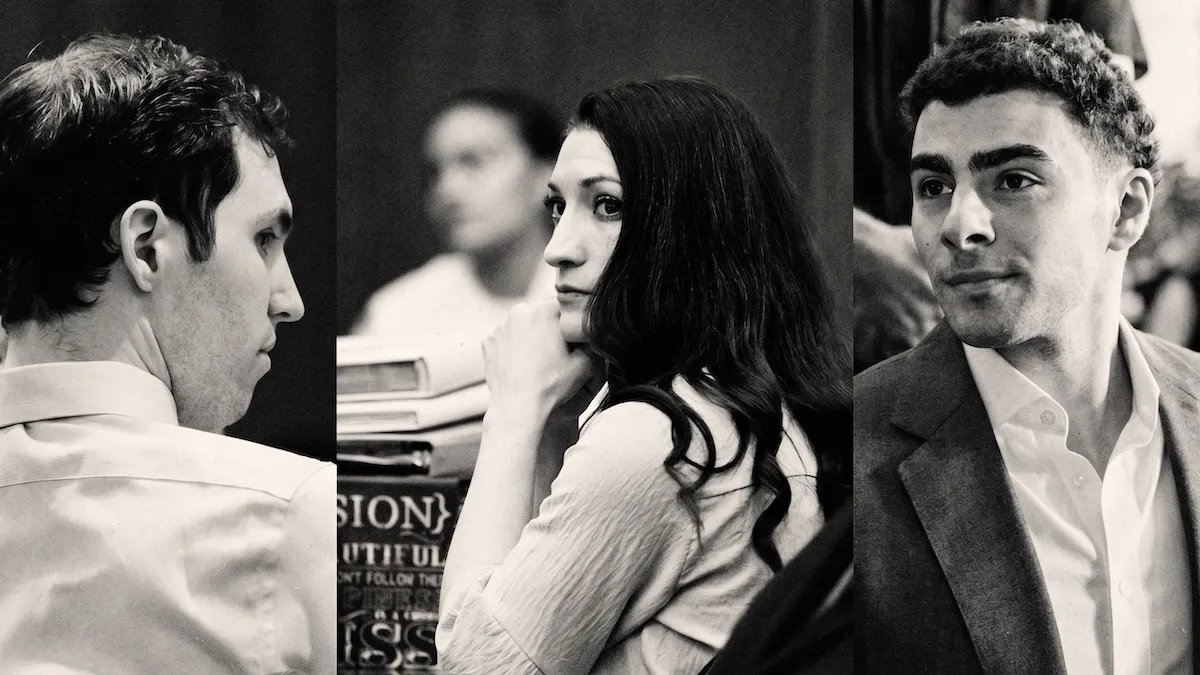
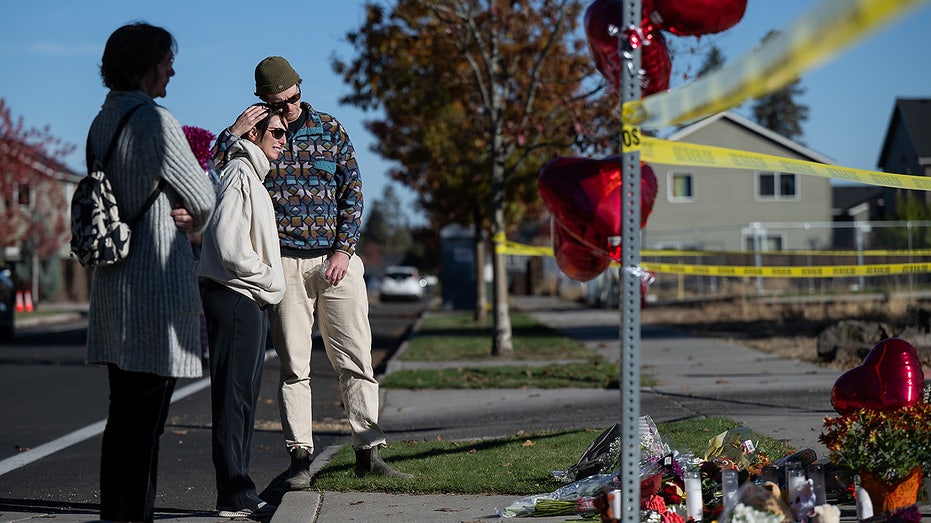
The trial of Lindsay Clancy, who has admitted killing her three young children but argues that severe mental illness left her not criminally responsible, has gripped the nation. Unlike the O.J. Simpson trial a generation ago, today’s trial watchers have the internet to seek out information and express their opinions. What is perplexing to many is the growing number of women who express support, not for the three precious souls whose lives Clancy ended, but for Clancy herself. Columnist Caitlin Flanagan writes, “What began as admirable compassion for a woman has turned into something strange: an almost exultant, fan-like celebration of Lindsay Clancy.”
Freedom Is Back
In Style
Premium domains for sale
Something strange indeed. Yet the Clancy fan club — complete with online support groups and crowds who show up outside the courthouse dressed in pink to cheer her on — is not the only recent cohort of crazy. Luigi Mangione, the 28-year-old man who admitted in federal court that he shot and killed UnitedHealthcare executive Brian Thompson, has a growing legion of supporters. There is even a website where fans can learn how to send Luigi letters and read his statements. This, for a self-confessed killer who left a wife without a husband and two young boys without a father. And, of course, conspiracy theorists, egged on by Candace Owens’s rapid-fire theories, have tried to make alleged Charlie Kirk killer Tyler Robinson a cult hero.
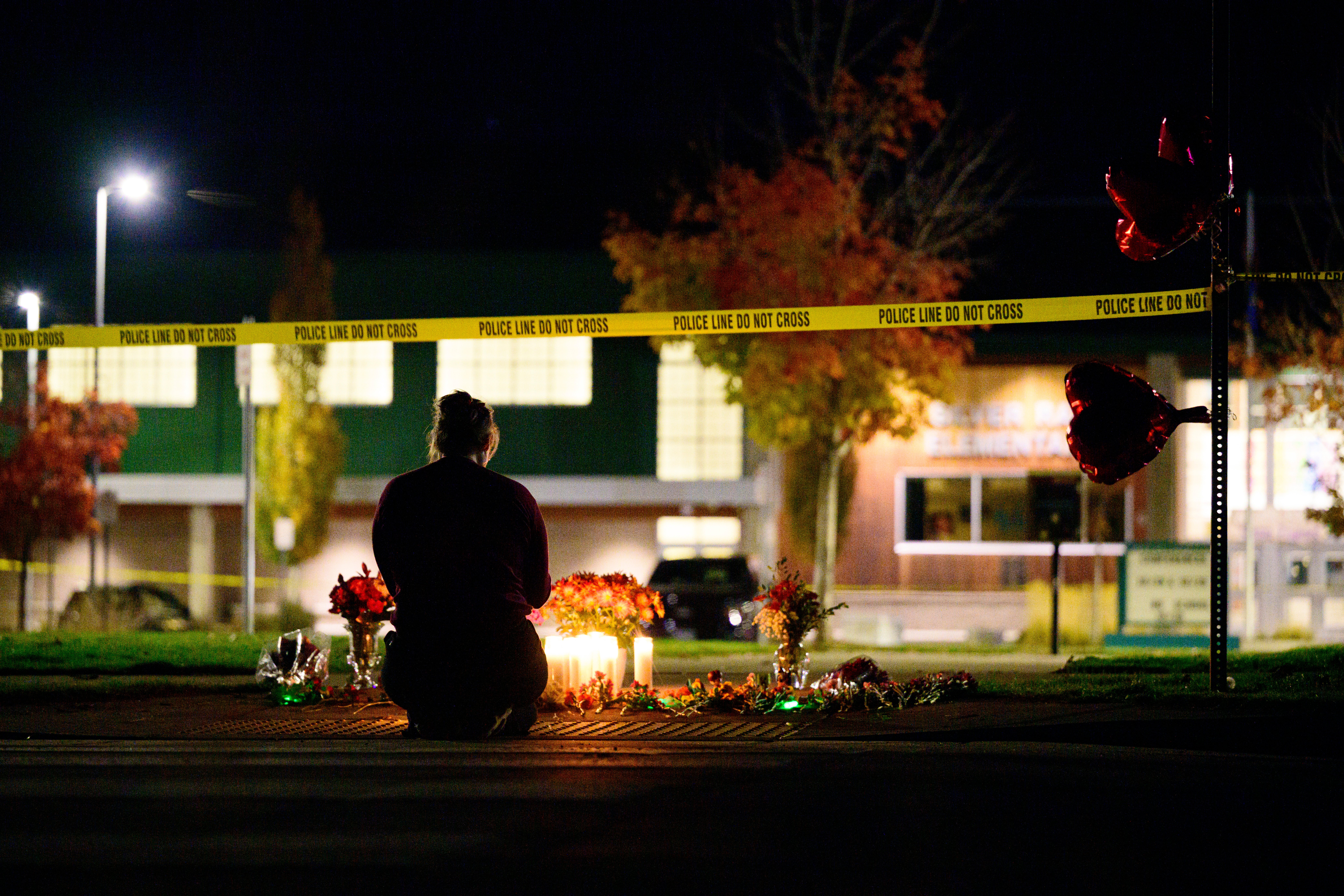
Then, on August 31, a woman armed with two knives randomly attacked two people in Times Square, killing Bank of America employee Erin Piacenti as she stood at a food cart. Piacenti, 32, was a young mother who had recently returned from maternity leave. Inexplicably, online ghouls celebrated her death for the crime of working for a bank. One Hollywood director even marked the occasion with a Luigi meme.
High-profile murderers have always attracted prurient interest and fringe groupies. The Manson Family was linked to at least nine murders, and Charles Manson maintained a small but rabid following. But today, a few cultural forces have brought us to the point where accused and admitted killers alike are lauded as heroes.
First, we live in an age of expressive individualism, a term popularized by sociologist Robert Bellah and his coauthors. It describes the belief that every person has an authentic self within and that the purpose of life is to discover and express that self. Identity, then, is not received from family, religion, tradition, or a moral order outside us. It is found by looking inward. Authenticity becomes a virtue. So the “real” Lindsay Clancy, according to her fans, is not the woman who strangled her children in a barbaric and torturous way, but the loving and caring mother underneath the act. And the blame falls not on Clancy but on the institutions that were supposed to protect her: her family, the pharmaceutical industry, and a society that demanded too much of her. There is no doubt that Clancy suffered severe mental anguish. But according to her fans, that anguish means she is not morally culpable for what she did.
There’s also this sort of gnostic desire to find “the real story” behind the story. Even though the evidence against Tyler Robinson appears substantial, and he has been ordered to stand trial, podcasters such as Owens feed the suspicion that the obvious story is a cover story. Robinson is, of course, entitled to the presumption of innocence. But conspiracy thrives when trust in human institutions is low. It provides a sort of comfort, an explanation for the evil of the age. No amount of contrary evidence can pierce the personal truths people choose to believe when those “truths” shape their preferred narratives. Convinced that Israel or a global cabal is really behind Kirk’s death, the believer turns Robinson into a sympathetic pawn, even a victim.
Tribalism, fueled by an oppressor-versus-oppressed view of justice, helps excuse violence when the killer — or alleged killer — is assigned to the right class. For Luigi, the cold-blooded shooting of a husband and father becomes righteous because he was taking on the healthcare industry, which his fans regard as the summation of all social evil. For Clancy’s fans, she is not morally culpable because the system — the mental-health industry, pharmaceutical companies, and her marriage — contains the real villains. If an act is committed by someone in the oppressed class against someone in the oppressor class, it becomes understandable, even justified. This is how a slain mother such as Piacenti moves from victim to villain when people discover that she worked for Bank of America, an unforgivable choice. The actual victims no longer have names. Their humanity is subsumed beneath the entity they supposedly represent.
Expressive individualism and moral relativism, combined with the daily algorithmic churn that catechizes Americans into narrow tribes, blind people to the moral questions at the heart of these crimes. Empathy — the good instinct to see ourselves in others — becomes twisted and warped beyond the Golden Rule. The compassionate act of imagining someone’s plight turns into justifying that person’s decisions, regardless of his or her morality. “Any one of us could be sitting in her chair,” the Clancy supporters say. “I am Luigi,” his rabid fans declare, as if this killer stands for them in an epic social struggle. And conspiracists imagine they too could be Robinson, set up by a dark global cabal as a pawn in a larger war.
The swirling cross currents, amplified in our digital age, emerge as the loss of a moral consensus — rooted in America’s Judeo-Christian heritage — has left many people without fixed standards of good and evil. Relying on the inner self and sorted by society into our clans, we make truth relative and justice preferential.
The right response is both to recoil and resist. The horror we feel about the death of the innocent and those who cheer it reflects a rightly shaped moral conscience. We should refuse to accept the upside-down morality that turns victims into villains and the accused into heroes. Cora, Dawson, Callan, Brian Thompson, Charlie Kirk, and Erin Piacenti were not symbols of oppressive systems or supporting characters in somebody else’s grievance. They were human beings made in the image of God. Luigi Mangione, Lindsay Clancy, Tyler Robinson, and Pamela Cisneros are morally culpable for the acts they allegedly committed, and the state should hold them accountable.
What’s more, we must point ourselves and others away from the online tribal circles that nurture our baser instincts and toward the true, the good, and the beautiful. The Christian story tells us both that evil is real and that it will not win. Light, the gospel of John declares, has come into the world, and the darkness has not overcome it. Instead of belonging built around grievance, spectacle, and death, the church offers community built around shared faith and the possibility of redemption. It causes us to see ourselves and our narratives not as central, but as part of a larger and eternal story.
***
Daniel Darling is the director of the Land Center for Cultural Engagement at Southwestern Seminary, a columnist for World, and the author of several books, including his latest, “In Defense of Christian Patriotism.”
This article is part of Upstream, The Daily Wire’s new home for culture and lifestyle. Real human insight and human stories — from our featured writers to you.
More from this network:
Domains for Sale · GOTPeople.org · TheDSAPlatform · The Truth About Socialism
What's Your Reaction?
 Like
0
Like
0
 Dislike
0
Dislike
0
 Love
0
Love
0
 Funny
0
Funny
0
 Wow
0
Wow
0
 Sad
0
Sad
0
 Angry
0
Angry
0

I am just an average American. My teen years were in the late 70s and I participated in all that that decade offered. Started working young, too young. Then I joined the Army before I graduated High School. I spent 25 years in, mostly in Infantry units. Since then I've worked in information technology positions all at small family owned companies. At this rate I'll never be a tech millionaire. When I was young I rode horses as much as I could. I do believe I should have been a cowboy. I'm getting in the saddle again by taking riding lessons and see where it goes.
Premium domains for sale









Comments (0)