

Why Are Noncitizen Voters Only Found After They’re Registered?

Premium domains for sale
Freedom Is Back In Style
New Jersey recently exposed a problem poised to change the national conversation about election administration. State officials disclosed a so-called processing error at the Motor Vehicle Commission that resulted in approximately 6,600 people who identified themselves as noncitizens registering to vote between June 2023 and June 2024.
Freedom Is Back
In Style
Premium domains for sale
The numbers are troubling, but they are not the most important part of the story. Those individuals reportedly did not falsely claim to be citizens. They told the government they were not U.S. citizens, yet they were registered anyway.
Election officials often assure the public that such incidents are isolated anomalies, clerical mistakes, or software glitches. One case, standing alone, may deserve that description.
But Virginia recently removed more than 6,500 voter registrations associated with declared noncitizens, while North Carolina is investigating nearly 1,600 registrations flagged by the federal SAVE system. Alabama, Iowa, and Ohio have reported similar findings, including documented voting histories among some noncitizen registrants.
At what point does a “glitch” become a systemic vulnerability?
A responsible election system should protect eligible citizens from erroneous removal while also identifying registrations that do not belong on the rolls. Those objectives are complementary, not contradictory.
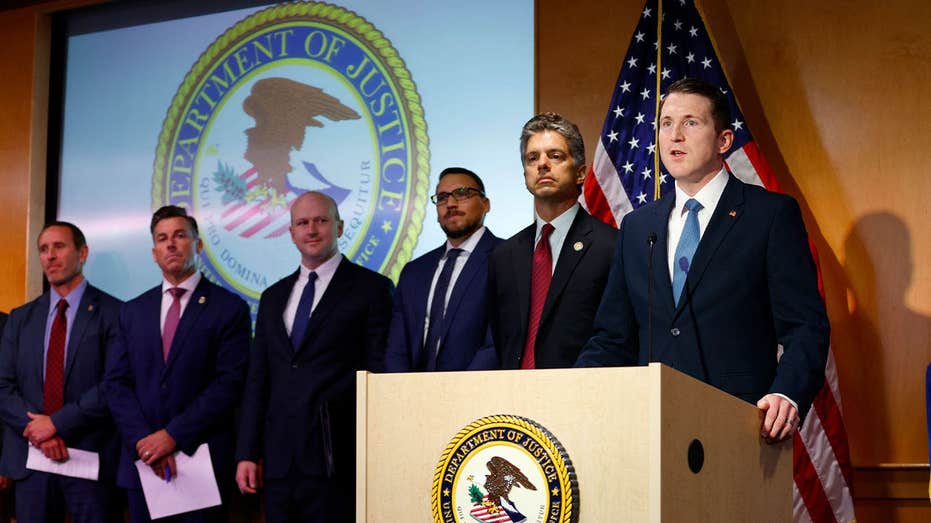
This is not simply a matter of imperfect databases. Federal prosecutors have recently brought cases in Texas, Alabama, Florida, Louisiana, and New Jersey involving noncitizens who registered or voted unlawfully. In Texas, British citizen Ada Ngozi Otuka pleaded guilty after prosecutors said she voted in multiple elections over more than a decade despite never becoming a U.S. citizen.
The evidence is no longer hypothetical. Noncitizens do make it onto voter rolls, many have cast ballots, and election officials sometimes do not discover the problem until years later—if at all.
Removing ineligible registrations protects future elections, and prosecuting those who knowingly violate election law punishes offenders, but neither can retrieve an unlawful ballot after it has been counted and incorporated into a certified election result.
Every unlawful ballot counted dilutes the weight of ballots lawfully cast by eligible American citizens.
At the same time, voters themselves are demanding stronger safeguards. This November, voters in Arizona, Arkansas, Kansas, and West Virginia will decide on measures explicitly reaffirming that voting is reserved for U.S. citizens. Those initiatives reflect growing public recognition that citizenship should be verified, not simply assumed.
States deserve credit for conducting citizenship audits and for removing ineligible registrations, all while protecting the rights of eligible citizens. Every audit to discover ineligible entries improves voter confidence in future elections. But the current push exposes a prior weakness: Noncitizen voters should never get on American voter rolls at all.
The SAVE America Act can shore up these weaknesses. Existing law already limits voting to U.S. citizens. Thus, the issue is not whether noncitizen voting is legal, but whether citizenship is verified before someone is added to the voter rolls. The SAVE America Act would move that safeguard to the beginning of the registration process rather than relying primarily on audits, database comparisons, and criminal investigations years later.
Reasonable people can debate the details of how that verification should work and how best to protect naturalized citizens from erroneous removal. But ensuring only citizens are able to vote should not be controversial.
Election officials should know whether an applicant is eligible before adding that person to the voter rolls, not years later after another audit, another prosecution, or another election “glitch.”
States are proving that voter-roll maintenance works because they are finding invalid registrations. They deserve credit for doing so.
But cleanup is not prevention.
The real measure of election integrity is not the number of post-hoc removals for ineligible registrations but whether such ineligible registrations are prevented in the first place.
The SAVE America Act offers the preventive answer: Citizenship verification before registration, rather than prosecution after an illegal ballot has already been cast.
More from this network:
Domains for Sale · GOTPeople.org · TheDSAPlatform · The Truth About Socialism
What's Your Reaction?
 Like
0
Like
0
 Dislike
0
Dislike
0
 Love
0
Love
0
 Funny
0
Funny
0
 Wow
0
Wow
0
 Sad
0
Sad
0
 Angry
0
Angry
0

I am just an average American. My teen years were in the late 70s and I participated in all that that decade offered. Started working young, too young. Then I joined the Army before I graduated High School. I spent 25 years in, mostly in Infantry units. Since then I've worked in information technology positions all at small family owned companies. At this rate I'll never be a tech millionaire. When I was young I rode horses as much as I could. I do believe I should have been a cowboy. I'm getting in the saddle again by taking riding lessons and see where it goes.
Premium domains for sale











Comments (0)