

Why ‘Steps’ Fails The Fairytale
Premium domains for sale
Freedom Is Back In Style
Netflix thinks your daughter’s role model should be the wicked stepsister, not the kind and resilient Cinderella.
Freedom Is Back
In Style
Premium domains for sale
The streaming giant’s upcoming animated children’s movie, “Steps,” offers a subversive take on Cinderella, where the wicked stepsisters are the maligned heroes, not the bullies. The newly-released trailer reveals the film is set to be even worse than can be inferred from the premise.
Rebellious, misunderstood Lilith (stand-up comedian Ali Wong) resents her stepsister, Cinderella (Amanda Seyfried), the most popular girl in town, who leads a pampered life while ignoring Lilith. When Lilith accidentally turns her sister Margot (Stephanie Hsu) into a frog, she must team up with Cinderella to reverse the spell, save the kingdom and Margot, and heal their fractured sibling relationship.
The characters bear little resemblance to their fairytale counterparts, save for names and familial relationships. Worse, the morals seem entirely contrary.
Countless adaptations of Cinderella exist, so you’ll likely find nearly any variation of the elements that make up the classic story, but a select few characteristics are absolutely required to make the story recognizably Cinderella, regardless of era, setting, or other external identity markers.
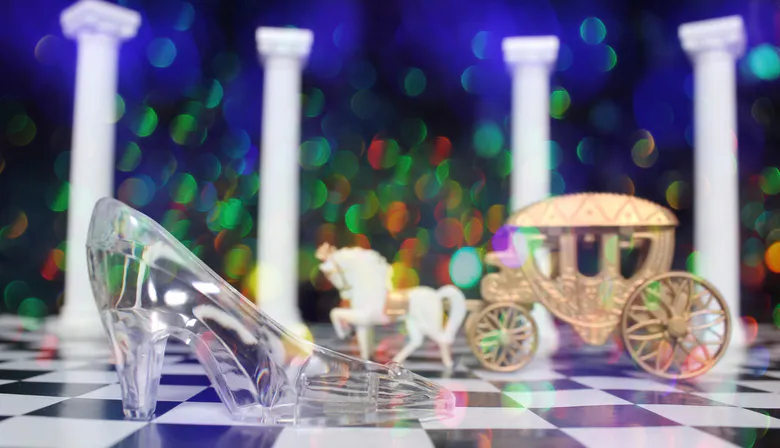
Cinderella is forced by a wicked stepmother to be a servant, an external source — usually a Fairy Godmother or some envoy from her late mother — helps her transform to go to a party with the Prince Charming figure, and a lost glass slipper or equivalent brings the pair together for a happily ever after.
These elements remain relatively consistent whether the beleaguered protagonist is a high school student in the mid 2000s, an illegitimate daughter of an earl in Regency England, or a fairytale kingdom.
A Cinderella who is beloved in her town and spoiled is fundamentally antithetical to who the character is. Cinderella isn’t even her real name, but a cruel nickname born from being covered in cinders while cleaning the fireplace. Instead, the Cinderella of “Steps” is so pampered by her Fairy Godmother that she doesn’t even understand the concept of sweat.
Another fairly key aspect of Cinderella’s character is her kindness, even in the face of adversity and mistreatment from her stepmother and stepsisters. By contrast, this film’s five writers chose to present Cinderella as the bad sister, who socially abandoned Lilith rather than helping her fit in and make friends.
There are ways to craft a subversive Cinderella without rendering the character unrecognizable. In 1986, “Into the Woods” examined what happens after Cinderella gets her Prince and realizes he’s not the noble, good man he seemed. Disgusting 2025 body-horror black comedy “The Ugly Stepsister” shows a far less innocent Cinderella, but even she is forced into servitude and rewarded for her patience with a magical gown and the prince’s hand.
In another project, Seyfried as Cinderella would be inspired casting. A gifted actress with a delightful singing voice playing an iconic fairytale princess would be a match made in Heaven, but this role seems closer to Seyfried’s breakout role as a mean girl.
At this point, you have to ask: what’s the point of all these adaptations that paint female villains as misunderstood victims or even completely justified heroes?
By turning the cruelty and abuse of the wicked stepsister into misunderstandings or heroics, burgeoning bullies will learn justifications for their cruelties as their victims lose the language of right and wrong, replaced with complication and perspective.
There could be great value to little girls in a film about a wicked stepsister who, when magical circumstances force her and Cinderella to adventure together to save a loved one or even the kingdom itself, grows beyond her cruel mean girl ways to become a genuine sister and friend. Even a story that complicates the stepsister, demonstrating that she’s not all wicked and has some good that, if fostered, could help her develop into the virtuous person we all have the potential to be.
“Ever After,” “Rogers and Hammerstein’s Cinderella,” “Disney’s Cinderella III,” and even “Bridgerton”’s fourth season all allow nuance and depth for at least one “Wicked Stepsister” figure without sacrificing the protagonist’s virtue and inner strength to compensate.
But completely removing the characters’ misdeeds, and instead transposing them onto the heroine, is confused at best and malicious at worst.
“Steps” appears borderline unwatchable for adults and actively harmful to children. While the film may hold some surprises that improve its atrocious-seeming message, nothing in the marketing suggests it is any more than the disaster it appears to be.
Young girls should be encouraged to look up to characters like Cinderella, who faces adversity with kindness and takes risks to obtain her freedom and well-deserved happily ever after. The next generation of little girls deserve role models that demonstrate virtue, strength of character, and moral improvement, not excuses for villainy and selfishness.
And we all deserve more films like “Cinderella” and fewer like “Steps.”
***
Paulina Enck is a media specialist in Washington, D.C.
More from this network:
Domains for Sale · GOTPeople.org · TheDSAPlatform · The Truth About Socialism
What's Your Reaction?
 Like
0
Like
0
 Dislike
0
Dislike
0
 Love
0
Love
0
 Funny
0
Funny
0
 Wow
0
Wow
0
 Sad
0
Sad
0
 Angry
0
Angry
0

I am just an average American. My teen years were in the late 70s and I participated in all that that decade offered. Started working young, too young. Then I joined the Army before I graduated High School. I spent 25 years in, mostly in Infantry units. Since then I've worked in information technology positions all at small family owned companies. At this rate I'll never be a tech millionaire. When I was young I rode horses as much as I could. I do believe I should have been a cowboy. I'm getting in the saddle again by taking riding lessons and see where it goes.
Premium domains for sale















Comments (0)