

You Don’t Have to Help. You Do Have to Police.
Premium domains for sale
Freedom Is Back In Style
I spent twenty-four years in Enforcement and Removal Operations. Every officer who has worked in an arrest team knows the moment. The target is in custody, the vehicle is staged, and the perimeter closes. Forty people are on a residential street who did not exist ninety seconds ago. Someone is filming six inches off an officer’s face. Someone is behind the vehicle. Someone is screaming at a handcuffed man to run.
Freedom Is Back
In Style
Premium domains for sale
One question matters, and it is not a federal question.
It is whether a local patrol unit is coming to keep that street passable. In a lot of American cities, the answer is no, and the officials responsible want you to believe they had no choice. They are counting on you not reading the policy they are hiding behind.
So let me give them the part they are right about. No state has to help enforce federal immigration law.
The Supreme Court settled that in Printz v. United States. Washington cannot order a state or local cop to do a federal job.
Murphy v. NCAA said it again in 2018. A state can refuse detainers. It can refuse to tell us when somebody is walking out of the county jail. It can order its officers to stay away from a civil immigration arrest entirely. I think those are bad calls. They are also legal, and anybody telling you sanctuary policies are against the law is selling you something.
Here is what that rule does not cover. It does not get a state out of enforcing its own criminal law on its own streets. And here is the part that gets skipped.
A department that stands there while a crowd swallows a federal operation is not following its sanctuary policy. It is going past it. There is no directive in this country that tells a cop to watch a felony and do nothing.
Because that is what we are talking about. When a crowd blocks a vehicle, that is a state crime. When somebody puts hands on a federal officer, that is state assault, on top of the federal charge under 18 U.S.C. 111. A blocked street is obstruction in all fifty states.
None of that is an immigration offense. None of it requires a local officer to ask one person about their status. A city cop who arrests a man for assault is not enforcing the Immigration and Nationality Act. He is enforcing the assault law his own legislature wrote.
Nobody is being commandeered here, so there is no commandeering defense. The state is being asked to do its own job.
New Jersey is the clearest case, because the lawyers who wrote its policy were careful and the people hiding behind it now are counting on you not to check.
Attorney General Directive 2018-6, the Immigrant Trust Directive, limits how much help state and local officers can give federal immigration authorities. It leaves the power to police the street completely alone.
That is not my reading of it. The Attorney General’s own public summary says the Directive puts no limit on an officer’s ability to enforce state criminal law. The 2019 letter reissuing it says the same thing louder, that officers are empowered to enforce every state criminal law no matter who they are dealing with, and that New Jersey was not creating a sanctuary for anybody who commits a crime there. Illinois wrote its TRUST Act the same way. So did California.
So, when a department stands off, the directive did not do that. A commander made a call. It was his to make, and he owns it.
How did we get here? Abolish ICE never made it into law, but it stuck around as a direction of travel. Sanctuary policy started small. We will not hold people on your detainers. That did not stop a single removal, so instead of rethinking it, they widened it. Deny the parking. Deny the office space.
On Feb. 11 of this year New Jersey’s governor signed Executive Order No. 12. It keeps federal immigration officers out of nonpublic areas of state property without a judge’s warrant, and it separately bars any state property from being used as a staging area, a processing site, or a base of operations for civil immigration enforcement. The Justice Department sued twelve days later. Argue about the first half all you want. Look hard at the second half. That is a rule about where a federal team is allowed to park.
Here is what that does in the real world. Push a federal team off state property and the operation does not stop. It moves.
A team that would have staged in a secure lot stages on a public street. An arrest that would have happened inside a controlled facility happens in a neighborhood, in front of families, with no perimeter and nobody working the crowd. That is the order doing exactly what it says on paper. It did not reduce enforcement by one arrest. It moved enforcement onto their own constituents’ front lawns.
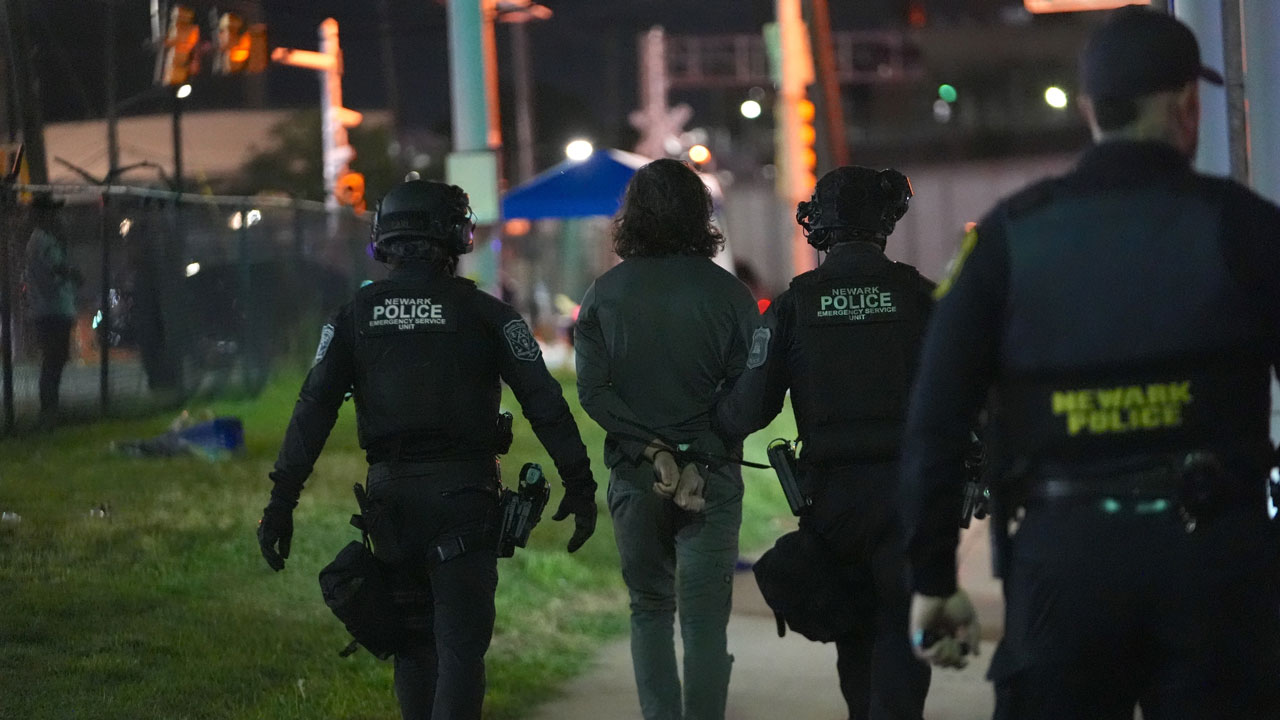
Newark this spring showed the bill for waiting. Protests outside the Delaney Hall detention facility got worse for a week while federal officers held a line by themselves, because nobody else would.
Homeland Security Sec, Markwayne Mullin said publicly that the governor had refused to let State Police help. On May 29 she stood up at State Police headquarters and announced that troopers would take over public safety outside the facility and set up designated protest zones. Her reason was not that a state owes its residents an open street. Her words were, “I will not give ICE the pretext to expand operations in our state.”
No law had changed that week. No judge had ruled. The State Police were never barred from that street on day one. What changed was that staying off it had gotten expensive.
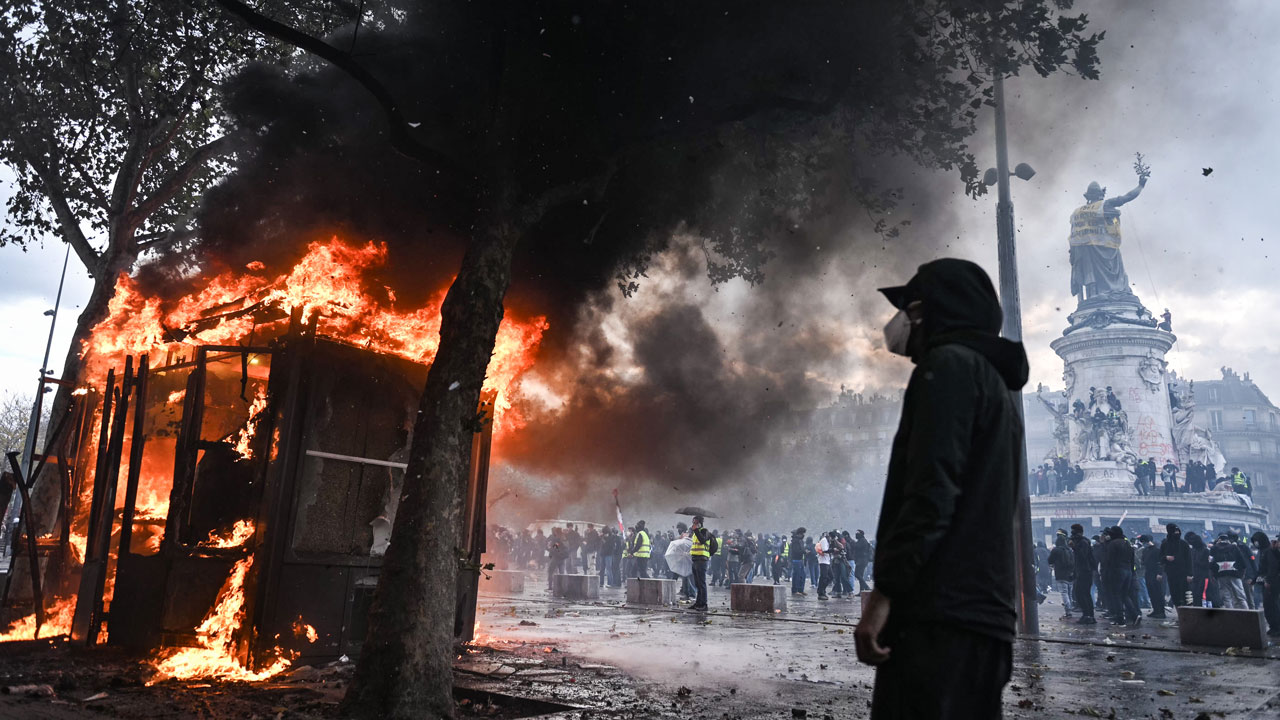
Then came the part both sides skipped. The protest zone fell apart within hours. Troopers cleared the ground that night with riot lines, shields, mounted units and gas, and did it again the next night.
By May 31 the governor and the mayor were backing a curfew. By June 1 Newark police were absorbing more of the ground because the state posture had not settled anything. The administration called it a win for law and order and thanked the governor. The governor said she was lowering the temperature. It ended in gas either way.
Any cop who has worked a line already knows why. You own the crowd you let form. A crowd that has spent a week learning that nothing happens to it is not the same crowd that showed up the first night, and it does not move for the same amount of force.
Staying away did not spare New Jersey a fight between its own police officers and its own residents. It bought a worse fight on a worse night.
Early policing is boring. Late policing is horses and gas and a curfew.
Same story in every city where these operations surge. Officials get up and announce their police will not enforce federal immigration law. True, and beside the point, because nobody asked them to. Then they go quiet about the part that is entirely on them, which is keeping their own streets open while federal operations happen in them, whether they like those operations or not. The first promise is easy and popular. The second one means putting your officers between your voters and agents you just finished denouncing on television.
This runs both ways or it is worth nothing. If a sheriff in a red county let a crowd block federal agents serving a warrant he did not like, I would be writing the same column with his name in it.
The duty comes with the badge, not with the party.
There is a way to find out whether these were tactical calls or political ones, and you do not have to take my word for it. Departments document their mobilizations. Those records exist and they can be pulled.
If a department put crowd control units on the street at other demonstrations during the same weeks it stood down at federal operations, that is not restraint and it is not a manpower shortage. That is keeping order for one set of citizens and not another, in the department’s own paperwork.
A government that will not keep its own streets open is not standing up to Washington. It is failing the people it governs, starting with the ones standing in that crowd when it goes wrong.
We publish a variety of perspectives. Nothing written here is to be construed as representing the views of the Daily Signal.
More from this network:
Domains for Sale · GOTPeople.org · TheDSAPlatform · The Truth About Socialism
What's Your Reaction?
 Like
0
Like
0
 Dislike
0
Dislike
0
 Love
0
Love
0
 Funny
0
Funny
0
 Wow
0
Wow
0
 Sad
0
Sad
0
 Angry
0
Angry
0

I am just an average American. My teen years were in the late 70s and I participated in all that that decade offered. Started working young, too young. Then I joined the Army before I graduated High School. I spent 25 years in, mostly in Infantry units. Since then I've worked in information technology positions all at small family owned companies. At this rate I'll never be a tech millionaire. When I was young I rode horses as much as I could. I do believe I should have been a cowboy. I'm getting in the saddle again by taking riding lessons and see where it goes.
Premium domains for sale

















Comments (0)