

Your VPN might be spying on you. Here’s how to find a better one.
Premium domains for sale
Freedom Is Back In Style
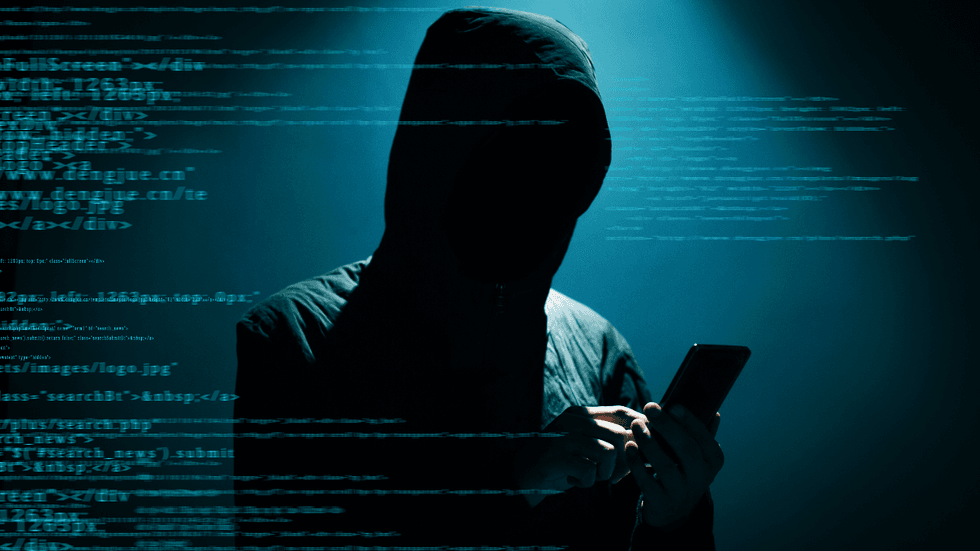
Is your Virtual Private Network spying on your browser activity? According to a bombshell study by private email provider Proton, many VPNs installed in the U.S. are actually tracking users instead of helping them. Even worse, some of these offenders are registered to companies in China. Here’s what you can do to keep yourself safe.
Freedom Is Back
In Style
Premium domains for sale
VPNs are meant to encrypt your web traffic so that third parties — like your internet service provider, digital marketers, and hackers — can’t see which websites you visit. In order for this to work, though, a user has to trust that the VPN installed on his device does what it claims to do, and the VPN provider then has to deliver on its promise to shield web activity from outside sources.
Many Americans are being tracked by the VPN on their devices, and they don’t even know it.
Proton says that many VPN providers are failing to fulfill their side of the bargain.
In a statement published to its website, Proton says, “After a months-long survey of over 7,000 mobile VPN apps around the world, Proton has found that 85% of those downloaded in the U.S. contain trackers, and around a quarter of those actively track users’ physical location.”
Many of the trackers were found to send data back to foreign nations, including China, Russia, Israel, Canada, and the United Kingdom. Even more alarming, some of the tested VPNs were either outright owned by organizations based in China, or they were registered to shell companies intended to provide a facade of security.
In other words, many Americans are being tracked by the VPN on their devices, and they don’t even know it.
Unfortunately, Proton didn’t list all of the VPNs that are most likely to spy on users. The company also makes its own VPN service, which it’s trying to promote over competitors, regardless of their actual stance on user privacy. That said, if you use a VPN on your phone, tablet, or computer, it’s a good idea to understand how it works and whether or not you can trust it to shield your web activity from prying eyes.
RELATED: How to escape the surveillance state: Use a VPN
How to find a trustworthy VPN
There are several important factors to look for when shopping for a VPN you can trust.
- Free vs. paid VPNs: Some VPNs on the App Store and Google Play offer completely free options where users don’t have to pay a cent to get VPN protection. Don’t trust these apps. If you pay nothing, you are the product, and your data is the monetization mechanism. Always choose a paid option instead. Remember that real protection is never free.
- RAM only: Like a computer, VPNs can have two types of storage options. VPNs with hard disk drives can save data in perpetuity, while VPNs that run on RAM-only servers physically can’t collect long-term data. Instead, the data is wiped from the server every time it’s rebooted, ensuring that your information isn’t retained.
- Registered country: VPN providers must operate according to the laws and regulations of the country where they are registered. If that country is allowed to collect company data like China, or spy on user activity like Russia, your browsing activity is not safe or protected. On the flip side, Panama, Switzerland, and Spain have some of the best reputations for maintaining user privacy.
- Open source: Open source software generally means that the source code for an app or service is made public for the sake of transparency and sometimes for modification. When it comes to VPNs, open source options allow third-party security groups to look through the code and verify its ability to properly encrypt and protect user data. This way, you know unequivocally if a service lives up to its promises.
Now that you know what to look for, you should have a good idea if the VPN on your device works as advertised. If for any reason you suspect your VPN is collecting, storing, or sharing your data, remove it from your device immediately. You’re better off not having a VPN at all than to trust one that’s actually compromising your safety, security, and privacy.
Like Blaze News? Bypass the censors, sign up for our newsletters, and get stories like this direct to your inbox. Sign up here!
More from this network:
Domains for Sale · GOTPeople.org · TheDSAPlatform · The Truth About Socialism
What's Your Reaction?
 Like
0
Like
0
 Dislike
0
Dislike
0
 Love
0
Love
0
 Funny
0
Funny
0
 Wow
0
Wow
0
 Sad
0
Sad
0
 Angry
0
Angry
0

I am just an average American. My teen years were in the late 70s and I participated in all that that decade offered. Started working young, too young. Then I joined the Army before I graduated High School. I spent 25 years in, mostly in Infantry units. Since then I've worked in information technology positions all at small family owned companies. At this rate I'll never be a tech millionaire. When I was young I rode horses as much as I could. I do believe I should have been a cowboy. I'm getting in the saddle again by taking riding lessons and see where it goes.
Premium domains for sale

























Comments (0)