

5 steps to reset your body's clock to God's natural design

Premium domains for sale
Freedom Is Back In Style

Unless you live in Arizona — one of the few places that skip the ritual — you’re probably feeling it this week.
Freedom Is Back
In Style
Premium domains for sale
Freedom Is Back
In Style
Premium domains for sale
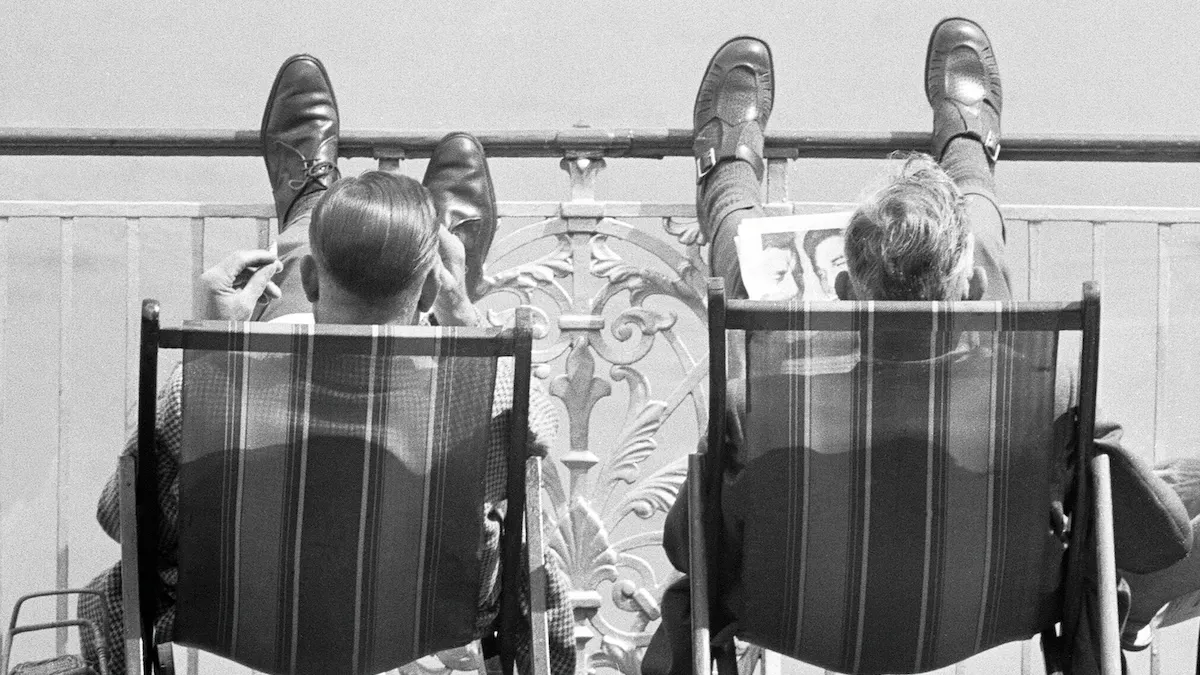
The curse of daylight saving time.
Even sitting in the shade exposes your body to light far stronger and more natural than indoor lighting. Our bodies need bright days — and dark nights — to stay in rhythm.
That groggy, slightly awful feeling on Monday morning wasn’t in your head. Research has linked the shift to increases in car accidents, workplace injuries, and even heart attacks in the days that follow. No bueno.
But the bigger problem may not be the clock change.
It’s that modern life has pulled us away from the natural rhythm our bodies were designed to follow.
Because the truth is simple: Your body runs on sunlight — not the clock on the wall.
The God-given clock inside you
Nearly every organ in the human body operates on an internal timing system.
This biological cycle — known as circadian rhythm — follows roughly a 24-hour pattern tied to the rising and setting of the sun.
For most of human history, that rhythm governed daily life.
- The sun rose.
- People woke up.
- The day unfolded in natural light.
- Night fell, and darkness signaled the body to wind down.
Then electric lights arrived. And screens. And climate-controlled buildings where many of us spend nearly the entire day indoors.
And the signals that once kept our internal clocks synchronized with the natural world faded away.
The result? Many researchers now believe modern humans are living in a constant state of circadian disruption.
And that disruption may affect far more than sleep.
This isn’t new science, by the way (info links coming below). But because the solution is simple, free, and impossible to turn into a pill — and because most physicians receive no training in it — many people have never heard about it.
That is finally starting to change.
The circadian rule
The principle behind circadian health is remarkably simple: The more your daily life aligns with the sun’s natural rhythm, the better your body functions.
The more you fight that rhythm, the more your health eventually pays the price.
This isn’t mystical new age nature worship. It’s biology.
God created your eyes with specialized receptors that detect different wavelengths of light. Those signals travel directly to the brain, triggering hormonal changes that regulate:
- Alertness;
- Sleep;
- Metabolism;
- Mood; and
- Immune function.
Light literally tells your body what time it is.
Which means the kind of light you see — and when you see it — matters more than most people realize.
A simple daily light routine
You don’t need to overhaul your life to benefit from circadian alignment. Start with something simple. (And remember, lose the sunglasses!)
1. Sunrise — the most important light of the day
First morning light offers your body perhaps the most powerful circadian signal.
Sunrise light contains a high concentration of red wavelengths. When this light enters your eyes, those receptors God designed at the back of your retina go to work, signaling to your brain that the day has begun. That signal triggers a cascade of hormonal changes:
- Cortisol rises, helping you wake up and feel alert.
- Your internal clock starts the day’s metabolic rhythm.
- And about 12 hours later, your body begins preparing to release melatonin — the hormone that helps you fall asleep.
In other words, morning light sets the schedule for the entire day.
Try this: Greet the sun.
- Go outside for 15-20 minutes near sunrise (no sunglasses, or any glasses or contacts, if possible).
- You don’t need to stare at the sun — just let your eyes take in the morning sky (even on cloudy days, the circadian signal is still there).
- I like to listen to a Bible passage and meditate on the beauty He created around me.
2. The morning UVA window
About an hour after sunrise, another important type of light becomes more prominent — UVA light.
Unlike the stronger UVB light that peaks later in the day, UVA light is gentler but still biologically powerful. Research suggests morning UVA exposure helps:
- Support hormone balance;
- Improve mood and energy (much like good food does);
- Improve gut microbiome; and
- Prepare the skin for stronger sunlight later in the day.
Try this: Take a morning sun walk.
- Take a 20-to-30-minute walk outdoors roughly an hour after sunrise.
- Let your eyes and skin soak in the natural light (again, no glasses).
3. The midday vitamin D window
So you’ve been out twice today, once at sunrise and then for a “UVA walk” — and you might be congratulating yourself on getting some vitamin D.
But you actually didn’t get any yet.
The only time your body can naturally produce vitamin D is when your skin absorbs UVB light, which happens midday.
This varies greatly depending on time of year and location — winter offers a far shorter window if any at all, and you get more UVB the closer you are to the equator. Here in the U.S., if you’re not in a southern border state, you may not have any UVB for a few mid-winter weeks.
But midday sunbathing is the only natural way your body can produce vitamin D and all its related metabolites, which are not part of your vitamin D supplement. (It’s a shame modern medicine has so effectively terrorized people from even going outside midday.)
Actual sunbathing, where you minimize clothing and maximize exposure, should be done only after being out in the earlier morning light, which as mentioned primes your skin for the stronger rays.
Note that sunscreen defeats the purpose of this and is not needed, if you start with just a few minutes (less than five) and very gradually increase your daily exposure. When exposure builds gradually, the skin develops what researchers call a “solar callus” (the rest of us call it a tan).
This is how to be sunburn-proof.
Try this: Get direct midday sun.
- After a few days of increasing your morning sun time, take your lunch outside for a few days.
- Spring is a great time to start this because the UV light is more gentle than it will be in summer.
- Get the MyCircadian or Circadian app to help you know when UVB light is available in your area.
4. Bright daylight throughout the day
Sunlight isn’t just one thing.
It’s a spectrum. A rainbow of different colored light. More red early and late in the day, more blue midday, and every hue in between, all of which send different signals to your body’s internal clock.
Which leads to a surprisingly simple piece of advice: Spend more time outside.
Even sitting in the shade exposes your body to light far stronger and more natural than indoor lighting. Our bodies need bright days — and dark nights — to stay in rhythm.
Be outside as often as you can.
Try this: Take regular sun breaks.
- People used to take a smoke break at work — take a sun break.
- Every time you get up to use the bathroom or grab a drink or whatever, spend an extra 60 seconds to pop outside.
- Look for ways to take your inside tasks outside.
- Take meetings and calls outside.
- Take your laptop outside.
- Eat meals or snacks outside.
- Take a book outside.
- And if you must scroll on your phone — do it outside.
5. Sunset — your body's evening signal
Just as sunrise tells your body the day is beginning, sunset helps confirm that it’s ending. The warm light of dusk signals the approach of nighttime.
After sunset, however, modern life introduces a problem — bright artificial light.
Screens, LED lighting, and overhead lights emit strong blue wavelengths that can confuse your circadian system.
To your brain, that blue light looks like midday sunlight, which means the body delays melatonin production — making sleep harder.
Try this: Watch the sunset and dim the lights.
- Spend 5-10 minutes outside at sunset enjoying God’s original work of art — a new one every night.
- Consider dining outside during sunset.
- After sunset, dim indoor lights.
- Soft lamps and/or incandescent bulbs are better than bright overhead lights.
- Staring at a fire is better than staring at the TV.
- Reading a book is better than scrolling on your phone.
- Bathing by candlelight is better than using harsh bathroom lighting.
 Caroline Seidel/Getty Images
Living by the sun
Making small changes as in the above routine can gradually bring your internal clock back into sync with the natural world.
Long before electric lights, smartphones, and daylight saving time, the sun quietly set the rhythm of human life.
Our bodies never forgot that rhythm.
And the more closely we align with that rhythm, the more we may rediscover something modern life has made easy to forget: God designed us to live by light — spiritually and physically.
Apps to help
The Circadian app or MyCircadian both help you identify what the sun is doing in your precise location so you can optimize when you go outside. D Minder helps you target safe UVB exposure.
Further information
Many voices in the circadian health space argue that our bodies evolved to sync with the sun. But Christians understand that this rhythm reflects design, not accident. Chelsea Blackbird, aka the Christian Nutritionist, often discusses these topics on her podcast.
Circadian health is often linked to the emerging field of “quantum biology.” A few experts worth following include:
- Dr. Martin Moore-Ede: “The Light Doctor” is a former professor at Harvard Medical School, and he’s a leading expert on circadian medicine.
- Sarah Kleiner is the creator of the MyCircadian app recommended above. Lots of information can be found on her website, and she also has a regular podcast with Carrie Bennett, another good source for quantum biology/circadian information.
- Zaid Dahhaj is author of The Circadian Classroom, a newsletter with a tremendous amount of scientific information that he makes easier to understand.
- Nikko Kennedy writes about circadian principles as they apply to pregnancy, childbirth, and postpartum in Brighter Days, Darker Nights.
- Ryan Brown offers a lot of interesting research-based information, like this article on light’s impact on diabetes. Ryan healed his own autoimmune condition using circadian principles (as did quite a few of the people now sharing this information).
- Dr. Jack Kruse is a neurosurgeon and health educator. Follow him on Facebook, X, or Instagram. (He recently posted some interesting information on how circadian principles apply to fertility.
- Dr. Alexis Cowan is a “light biologist” who studies how sunlight shapes human health.
- And if you like getting your information from easy-to-absorb, beautiful graphics on Instagram, Danielle Hamilton is a great follow.
What's Your Reaction?
 Like
0
Like
0
 Dislike
0
Dislike
0
 Love
0
Love
0
 Funny
0
Funny
0
 Wow
0
Wow
0
 Sad
0
Sad
0
 Angry
0
Angry
0

I am just an average American. My teen years were in the late 70s and I participated in all that that decade offered. Started working young, too young. Then I joined the Army before I graduated High School. I spent 25 years in, mostly in Infantry units. Since then I've worked in information technology positions all at small family owned companies. At this rate I'll never be a tech millionaire. When I was young I rode horses as much as I could. I do believe I should have been a cowboy. I'm getting in the saddle again by taking riding lessons and see where it goes.
Premium domains for sale





















Comments (0)