

A Chinese Car Ban Might Be Closer Than You Think
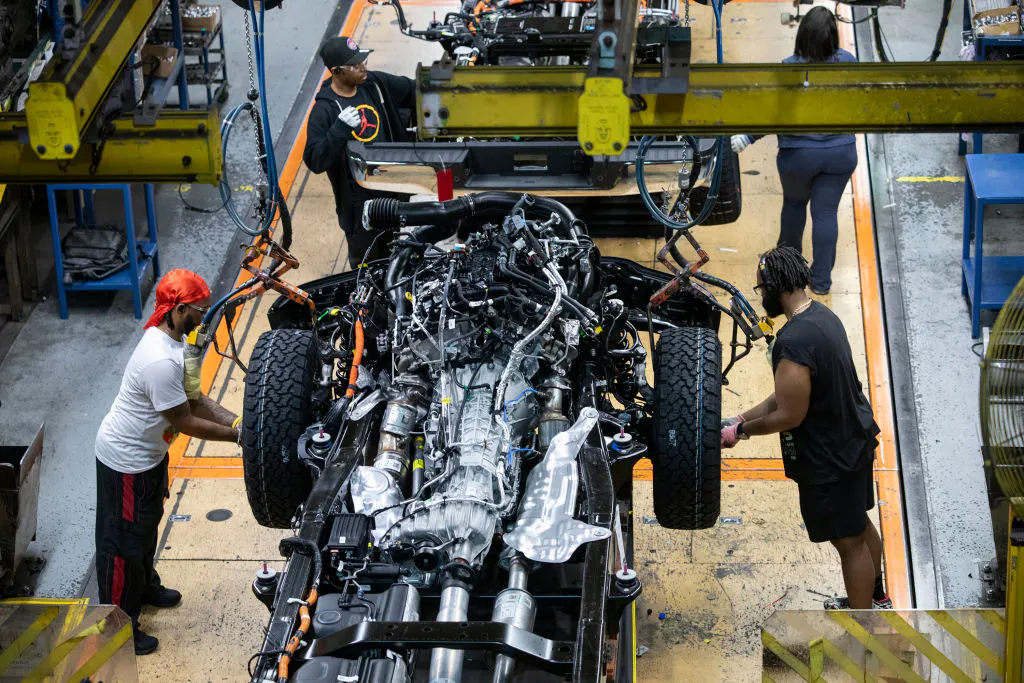
A bipartisan Senate bill aimed at keeping Chinese-made vehicles and automotive technology off American roads moved one step closer to becoming law on Wednesday after clearing the Senate Commerce Committee with unanimous support.
Live Your Best Retirement
Fun • Funds • Fitness • Freedom
The Connected Vehicle Security Act of 2026, sponsored by Sens. Bernie Moreno (R-OH) and Elissa Slotkin (D-MI), would prohibit the import, sale, and operation of vehicles manufactured by China and other designated foreign adversaries while also banning Chinese-developed connected vehicle technology, including software and data systems, from American roads.
Supporters argue the bill is necessary not only to protect the American auto industry from heavily subsidized Chinese competition, but also to address national security concerns posed by increasingly software-driven vehicles capable of collecting vast amounts of data on their owners.
“Chinese cars are surveillance packages on wheels, with the ability to collect on American citizens and transmit that data back to Beijing,” Slotkin said after the bill advanced. “The Chinese Communist Party’s playbook of heavily subsidizing their product and underselling the competition puts Michigan’s auto industry and millions of American workers at risk.”
Moreno echoed those concerns, arguing that Beijing’s ambitions extend beyond simply competing in the global auto market. “China’s auto industry was not built to compete, it was built to destroy American manufacturing, gut the middle class, and undermine our national security,” Moreno said. “For decades, D.C. globalists propped up Chinese businesses — now it’s time for Congress to stop this cancer before it spreads through the American auto market.”
The legislation would significantly expand upon regulations adopted during the Biden administration that effectively blocked Chinese automakers from entering the U.S. passenger vehicle market. Rather than focusing solely on connected vehicle technology, the bill broadly prohibits Chinese-manufactured vehicles and connected components throughout the production, importation, and sales process.
Moreno has argued that modern automobiles function as “roving electronic devices” capable of collecting sensitive location, infrastructure, and behavioral data while also allowing remote access to critical vehicle functions such as steering, braking, and acceleration. The bill also seeks to protect domestic manufacturers from what lawmakers describe as China’s strategy of flooding global markets with heavily subsidized vehicles sold below market prices.
The measure received backing from major American automakers, labor unions, steel manufacturers, and industry groups. General Motors praised the legislation for protecting American manufacturing while maintaining that U.S. automakers “can compete with anyone in the world when we are given a level playing field.”
Ford likewise commended the bipartisan effort “to protect the U.S. industrial base,” while Stellantis said the legislation addresses “important issues related to connected vehicle security and fair competition.”
United Auto Workers President Shawn Fain also endorsed the proposal, arguing that rebuilding American manufacturing requires preventing further offshoring of the domestic auto industry. “Our national and economic security relies on a strong U.S. auto industry,” Fain said. “We can’t keep selling out the U.S. working class to transnational corporations that have no respect for labor rights.”
The Alliance for Automotive Innovation, which represents major automakers, warned that Chinese manufacturers are already flooding overseas markets with low-cost vehicles and said the legislation sends “a clear message” that the United States will not allow the same strategy to undermine the domestic market.
The bill was not without debate during Wednesday’s committee markup. Commerce Committee Chairman Ted Cruz (R-TX) expressed concerns over a provision barring automakers with more than 15% Chinese ownership from selling vehicles in the United States, warning the language could inadvertently affect companies such as Mercedes-Benz, which has substantial Chinese investment despite maintaining significant American manufacturing operations.
Moreno responded that the ownership provisions would not take effect until 2030 and include a waiver process to address companies caught by the threshold. He emphasized that lawmakers had no intention of preventing Mercedes-Benz from selling vehicles in the United States.
An amendment to soften the ownership requirements was ultimately withdrawn, while another amendment that would have narrowed the bill’s definition of connected vehicle hardware failed on a bipartisan vote.
The legislation now awaits consideration by the full Senate.
What's Your Reaction?
 Like
0
Like
0
 Dislike
0
Dislike
0
 Love
0
Love
0
 Funny
0
Funny
0
 Wow
0
Wow
0
 Sad
0
Sad
0
 Angry
0
Angry
0

I am just an average American. My teen years were in the late 70s and I participated in all that that decade offered. Started working young, too young. Then I joined the Army before I graduated High School. I spent 25 years in, mostly in Infantry units. Since then I've worked in information technology positions all at small family owned companies. At this rate I'll never be a tech millionaire. When I was young I rode horses as much as I could. I do believe I should have been a cowboy. I'm getting in the saddle again by taking riding lessons and see where it goes.



















Comments (0)