

A Major American Farm Company Went To China, And It Didn’t End Well
Premium domains for sale
Freedom Is Back In Style
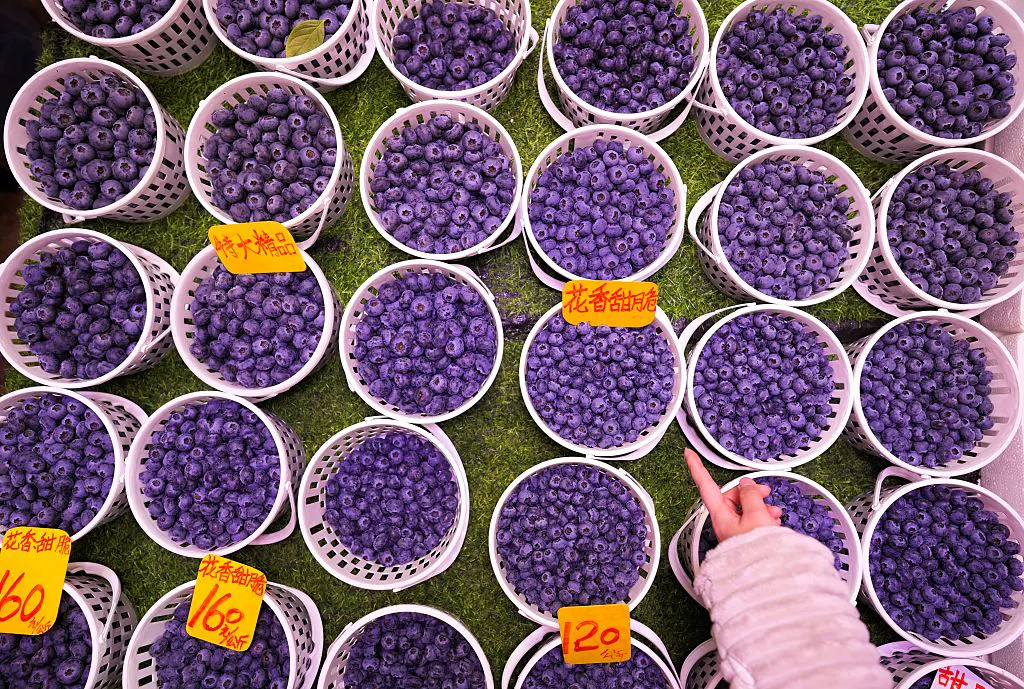
Driscoll’s, the largest berry company in the United States, went to China nearly 15 years ago hoping to turn blueberries into the country’s next big food craze — and succeeded. Then Chinese competitors copied its techniques, illicitly propagated protected blueberry varieties, and flooded the market with berries, cratering prices.
Freedom Is Back
In Style
Premium domains for sale
Now Driscoll’s is fighting to protect the business it helped build. After the company invested in the country, Chinese production exploded. Among the new foreign blueberry growers, some began using legally protected varieties and growing techniques without authorization, according to court records and industry sources reported by The Wall Street Journal.
China became the world’s largest blueberry producer by 2021, with more than 77,000 hectares planted, according to the International Blueberry Organization. By 2025, industry estimates put Chinese blueberry acreage at more than 105,000 hectares and production at approximately 810,000 metric tons. The surge helped drive blueberry prices sharply lower. In one example, prices for 250-gram packages in Shenzhen fell from nearly 30 yuan, or about $4.36, to 19.9 yuan, or roughly $2.89, as supplies increased.
The development illustrates the risks American and other Western companies can face when they bring specialized technology, genetics, and production expertise into China. Driscoll’s initially entered Yunnan province because conventional farming presented major challenges. The company invested in greenhouse production, sophisticated irrigation, and other techniques designed to grow premium berries in conditions that were not naturally suited to the crop. The strategy worked. Chinese consumers embraced blueberries, and Driscoll’s expanded its operations with local growers. But the rapid growth also created an intellectual property problem.
In 2014, Australian blueberry breeder Mountain Blue Orchards exclusively licensed its varieties to Driscoll’s for production in China. The varieties received Plant Breeders’ Rights protection in China. However, Mountain Blue later discovered that Chinese nurseries had illegally propagated its varieties. The company says it began finding evidence of unauthorized propagation around 2018 and 2019. Eventually, the company took one nursery to court.
In December 2024, the Kunming Intermediate People’s Court ruled in Mountain Blue’s favor in a case involving the unauthorized reproduction, propagation, and sale of its Ridley 1602, also known as Eureka Sunrise, blueberry variety. The International Blueberry Organization described the case as the first successful Chinese court case brought by a non-Chinese company over illegal blueberry propagation.
However, the problem was not limited to genetics. The Journal reported that Chinese competitors copied aspects of Driscoll’s production methods, including greenhouse designs and irrigation techniques. As more growers entered the market, Chinese blueberry production rapidly expanded, eventually surpassing U.S. production.
The resulting glut has created a difficult market for growers. Industry publications have documented repeated episodes of oversupply and falling prices as production expands across provinces including Yunnan and Sichuan.
The phenomenon has become so pronounced that Chinese agricultural observers have used the term “involution” to describe the market: companies and farmers continue expanding production and competing aggressively even as returns deteriorate.
Driscoll’s has not abandoned China. It continues operating in the country, maintaining relationships with Chinese growers, while seeking to reinforce protection for its intellectual property. Mountain Blue has likewise continued operating in China, shifting in some cases from litigation toward licensing arrangements with growers.
Some signs indicate Chinese authorities and industry groups are taking the intellectual property issue more seriously. The China Blueberry Committee was established under the China Chamber of Commerce, with Driscoll’s Asia executive Jae Moon Chun serving as vice chairman. Industry members have committed to avoiding unauthorized production, reproduction, and sale of licensed breeding material.
Unfortunately, Driscoll’s remains burdened with an all-too-familiar business problem for American companies in the Chinese market. The company went to China with technology and expertise that helped establish a lucrative new market. The market expanded far beyond what it was when Driscoll’s arrived — but so did illicit competition, unauthorized propagation, and, as a result, supply.
Driscoll’s helped teach China how to grow blueberries. Now China has more blueberries than it knows what to do with.
More from this network:
Domains for Sale · GOTPeople.org · TheDSAPlatform · The Truth About Socialism
What's Your Reaction?
 Like
0
Like
0
 Dislike
0
Dislike
0
 Love
0
Love
0
 Funny
0
Funny
0
 Wow
0
Wow
0
 Sad
0
Sad
0
 Angry
0
Angry
0

I am just an average American. My teen years were in the late 70s and I participated in all that that decade offered. Started working young, too young. Then I joined the Army before I graduated High School. I spent 25 years in, mostly in Infantry units. Since then I've worked in information technology positions all at small family owned companies. At this rate I'll never be a tech millionaire. When I was young I rode horses as much as I could. I do believe I should have been a cowboy. I'm getting in the saddle again by taking riding lessons and see where it goes.
Premium domains for sale











Comments (0)