

A Path Out Of The Education Woods In Appalachia

Premium domains for sale
Freedom Is Back In Style
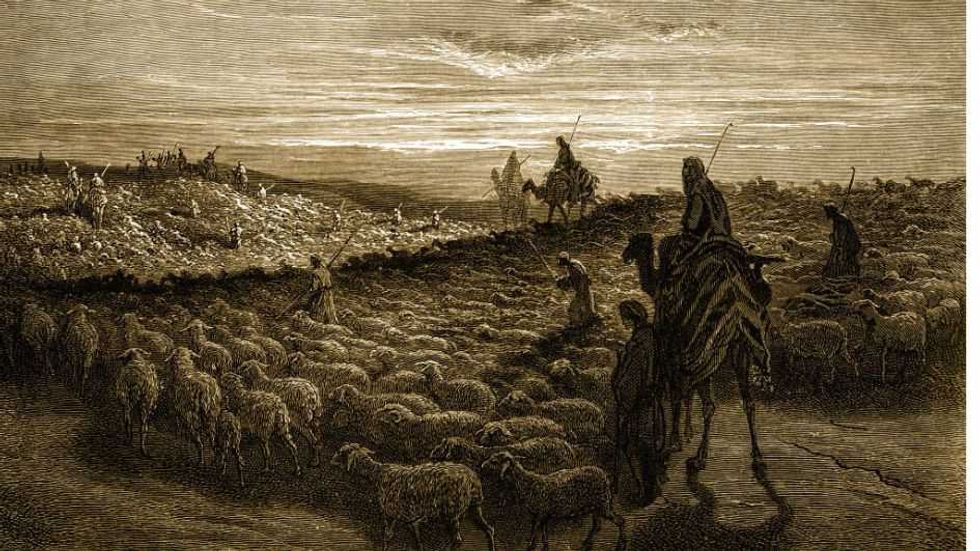
For decades, the Appalachian region of America has been the subject of political promises, federal programs, philanthropic funding, and endless so-called solutions. Despite trillions of dollars in government spending and generations of outside intervention, the majority of Appalachian communities continue to struggle with poverty, addiction, outmigration, economic stagnation, and weak educational outcomes.
Freedom Is Back
In Style
Premium domains for sale
Appalachia has long been given “the wrong kind of attention,” according to Garrett Ballengee, president and CEO of the Cardinal Institute for West Virginia Policy. Under Ballengee’s leadership, the Center for Appalachian Renewal is committed to creating a brighter future for people, not another generation of paternalistic programs or distant experts managing decline from afar.
Nowhere is that failure more obvious than in education. If Appalachia is going to experience meaningful renewal in the decades ahead, the region will need far more competition in education.
Public schools lack incentives to improve when families lack meaningful alternatives. Monopolies rarely produce excellence, innovation, or accountability — and public education in much of Appalachia has operated as a monopoly for generations.
Approximately 95% of Appalachian K-12 students remain in the public school district system, making the region home to one of the most concentrated education monopolies in the country. Just 5% of Appalachian students are enrolled in an educational option outside the traditional district system, whether in private schools, charter schools, microschools, homeschool co-ops, or classical schools.
That matters because education is not merely one policy issue among many. It is upstream of nearly everything else.
Strong education options help retain families in the community, attract investment, cultivate entrepreneurship, strengthen civic life, and restore hope that young people can build meaningful futures. Weak systems do the opposite. They contribute to the cycle Appalachia has struggled with for generations: declining opportunity, population loss, and the persistent belief that leaving the region is the only path to success.
The overwhelming majority of Appalachian families have had little to no meaningful choice when it comes to how or where their children are educated. Viable alternatives to the district public school have been almost nonexistent in these rural communities.
That is beginning to change.
Across Appalachia, states are embracing education freedom at a pace that would have seemed politically impossible just a few years ago. West Virginia passed the nation’s first universal education savings account program in 2021. Ohio and North Carolina followed in 2023, Alabama in 2024, and Tennessee in 2025.
This momentum matters. But policy reform alone will not transform Appalachia. Building educational options that meet the demand created by school choice policy is essential for transformation.
In rural Appalachia, launching new schools comes with enormous barriers: geographic isolation, limited startup capital, and a shortage of mentorship networks for education entrepreneurs.
That is precisely why the newly launched Center for Appalachian Renewal, an initiative of the Cardinal Institute for West Virginia Policy, is not only significant but also timely. Its mission is to “advance market-based solutions that strengthen education, opportunity, and civic life in Appalachian communities.”
Its flagship “Education Quarterback” initiative is designed to identify, mentor, and support education entrepreneurs across Appalachia. Modeled after the highly successful BLUUM in Idaho, the program will help cultivate microschools, classical schools, hybrid learning models, homeschool collaboratives, and other educational alternatives that can bring real competition and innovation to these communities.
This effort is not about importing outside solutions into Appalachia. Instead, it centers on empowering people in the region to build institutions that reflect the values, culture, and needs of their own communities.
That distinction matters because Appalachia has spent decades on the receiving end of top-down “solutions” imposed by outsiders who often misunderstand both the region’s challenges and its strengths.
For example, the Appalachian Regional Commission was established in 1965 as part of Lyndon Johnson’s War on Poverty. Since that time, astronomical amounts of money have been spent aimed at the revitalization of Appalachia. Yet many of those efforts fueled government dependency rather than self-sufficiency and bureaucracy rather than entrepreneurship.
There are already signs that Appalachia is standing at a genuine inflection point. Major private-sector investments are flowing into the region. For example, in West Virginia, Google is developing a multibillion-dollar data center, and Nucor is building a $4 billion steel facility. GE is pursuing multi-site energy expansion, including a collaborative effort to build a $1.2 billion natural gas-fired power plant.
For too long, Appalachia has been dependent on federal assistance and defined by narratives of decline, dependency, and helplessness. But a better path forward is possible — one rooted in educational freedom, entrepreneurship, local leadership, and a renewed culture of ownership and responsibility.
Strong families, communities, civic institutions, and education options — on top of economic development — will create a healthier, more vibrant, more self-sufficient Appalachian future.
***
Dr. Keri D. Ingraham is a Senior Fellow at Discovery Institute, Director of the American Center for Transforming Education, and a Senior Fellow at Independent Women.
More from this network:
Domains for Sale · GOTPeople.org · TheDSAPlatform · The Truth About Socialism
What's Your Reaction?
 Like
0
Like
0
 Dislike
0
Dislike
0
 Love
0
Love
0
 Funny
0
Funny
0
 Wow
0
Wow
0
 Sad
0
Sad
0
 Angry
0
Angry
0

I am just an average American. My teen years were in the late 70s and I participated in all that that decade offered. Started working young, too young. Then I joined the Army before I graduated High School. I spent 25 years in, mostly in Infantry units. Since then I've worked in information technology positions all at small family owned companies. At this rate I'll never be a tech millionaire. When I was young I rode horses as much as I could. I do believe I should have been a cowboy. I'm getting in the saddle again by taking riding lessons and see where it goes.
Premium domains for sale


















Comments (0)