

Ain’t no scam: Bitcoin fixes the looming AI oversight fiasco
Premium domains for sale
Freedom Is Back In Style
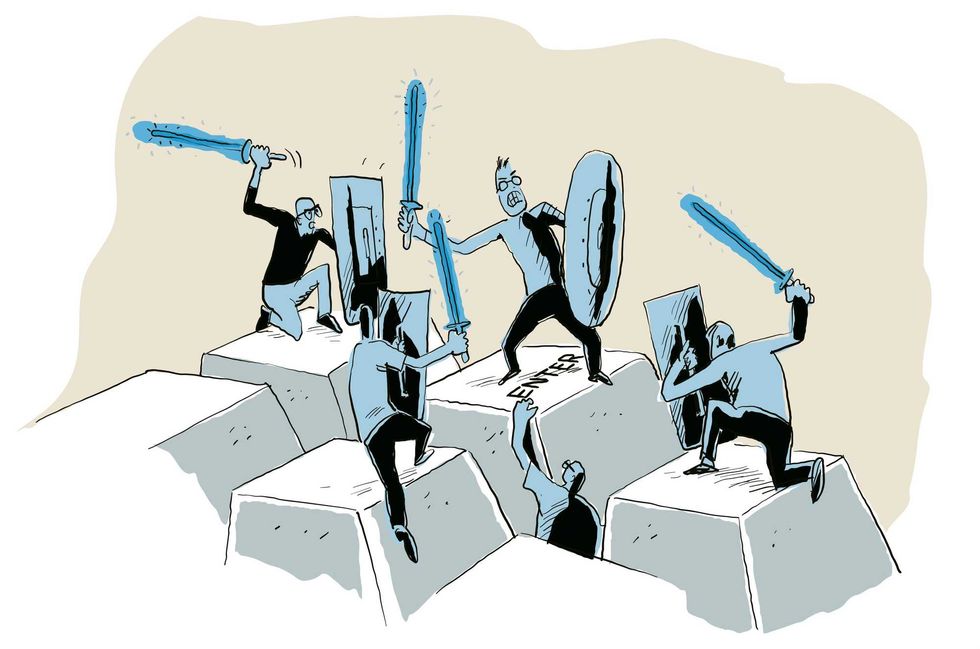
Welcome, America, to the Thunderdome of AI oversight.
Freedom Is Back
In Style
Premium domains for sale
President Trump has dropped his executive order, putting the onus on the federal government’s most secretive agencies to determine whether the products of private corporations are safe for public consumption. The National Security Agency is at the heart of the plan, with the intelligence community setting classified benchmarks, vetting, and gatekeeping new AI models within a 30-day window. Private-sector institutions and stakeholders, including AI companies themselves, must sit and wait, blind, for decisions to be handed down.
It can’t be said that this decision is strongly supported by conservatives, the “based community,” or even MAGA people more narrowly. The personal, private bid by former White House AI and crypto chief David Sacks to stop the Trump train on AI resulted only in a delay and a narrowing of the oversight window. On X, Sacks had to resort to emphasizing the things the order doesn’t do that he and the accelerationist wing of the right oppose.
Is there anything we can tell these machines to do that doesn’t tend to demote us as human beings?
That means even Trump’s inner circle will keep on duking it out among themselves.
Congress is wrestling with OpenAI’s approach, which relies on (deep breath) the National Institute of Standards and Technology’s Center for AI Standards and Innovation. In short, the idea is that oversight and testing should be carried out under the aegis of established and respected bodies that bridge government and industry through public-private partnerships. This approach allows AI companies themselves, plus other stakeholders and experts outside the intelligence community, to have a participatory role in testing and oversight of new models.
Yet Congress is sharply divided, and the upcoming midterm elections could alter the balance of power. Competing bills are already in the mix on Capitol Hill, with the leading piece of draft legislation, the bipartisan American Leadership in AI Act, hinging on outcomes in the rat’s nest of congressional politics — ranging from Louisiana Republican House Speaker Mike Johnson’s unwillingness to reauthorize the House AI Task Force to rank-and-file Democrats’ unfavorable disposition toward the draft bill.
Can both houses of Congress come to an agreement on AI model development as well as testing? One that Trump won’t veto? Probably not, but with anti-AI sentiment running hotter and hotter across the populist (and opportunist) wings of both parties, principled members and ambitious members alike are all but guaranteed to shoot their shot before November.
That means Americans won’t be looking to their elected representatives for clarity on AI.
RELATED: Why dystopian AI doomers need to get religion
 The doomer delusion ArtMarie via iStock/Getty Images
And Pope Leo XIV, of course, has his landmark encyclical out there, insisting — along with many other Christians — that no law or regulation or basket of rules is enough to enable anyone, even the United States government, to get the kind of grip on AI that will ensure our sacred human being is no worse for wear.
But there’s no indication that America’s Christians, much less the world’s, are poised to throw down their doctrinal and ecclesiological differences and line up shoulder to shoulder with the pope’s presentation of things — or with the pope as a singular planetary spiritual authority on all matters AI and tech.
That means neither our leading political power players nor our leading spiritual authority figures will give Americans the kind of overall guidance they increasingly seem to crave.
Perhaps, however, we should all recognize that’s actually for the best, because the essence of the problem concerning AI is its risk, not of wiping out the human race, but of emptying the human race of all power and authority except for a tiny cyborg elite, one hell-bent on remaking all God’s creation, every single one of us included, in their monomaniacal image.
Paradoxically, responding to this risk by maximizing tech hate and consolidating all tech hatred into as tiny and powerful an elite as possible dramatically increases the risk of both wiping out the human race and deepening the would-be cyborg elite’s conviction that if they don’t achieve a radical and irreversible break with all to ever come before them, then they’ll meet a fate worse than death.
Back on our feet and back in charge
Given the dangers of over-centralized AI oversight on one hand and a regulatory war of all against all on the other, now is a good time to ask whether Bitcoin can offer ordinary people a more balanced, distributed, and practical path forward.
For all the noise and blather in the fractured crypto world, the case for Bitcoin in the AI age is simple: If we are not going to dismantle these machines — and if people will keep building more powerful ones — can we direct them toward anything that preserves rather than diminishes our human dignity?
The answer is obviously yes, but the combination of massive fear over techno-dystopia and massive resistance to “organized religion” leads many to paint themselves into a paralyzing psychological corner where no answer seems plausible or effective.
That’s a shame. Bitcoin is sitting right there, an advanced, mature technology that allows people with a minimum of new information or expertise to start creating and growing markets and institutions that benefit and protect themselves and their friends, families, and parishes, without having to rely on superintelligent machines or government financial systems.
Given that superintelligent machines and government financial systems have a clear logical and practical tendency to converge, becoming one system very well suited to enforcing a single, uniform, and servile existence worldwide, it would seem fairly urgent for people to consider the benefits of taking a few steps outside their zone of comfort or self-disempowerment and start to use Bitcoin at least a little with those they care about most.
That’s why I continue to offer my book on our tech reckoning, "Human Forever," only in Bitcoin. Piling up the digital currency and waiting for Nirvana just isn’t going to cut it, whether we face a societal collapse scenario, an age of mandatory pleasure and plenty, or a mutant future that somehow combines both into one waking phantasmagoria. Using Bitcoin needs to happen well beyond the realm of books, obviously. But being a writer, well — I’m putting my money where my mouth is.
Is it enough to solve all our problems, with our machines and with one another? Obviously, again, no. But it just might fix our attention on how we can preserve human ways of life that open the way not just to solutions, but to salvation.
More from this network:
Domains for Sale · GOTPeople.org · TheDSAPlatform · The Truth About Socialism
What's Your Reaction?
 Like
0
Like
0
 Dislike
0
Dislike
0
 Love
0
Love
0
 Funny
0
Funny
0
 Wow
0
Wow
0
 Sad
0
Sad
0
 Angry
0
Angry
0

I am just an average American. My teen years were in the late 70s and I participated in all that that decade offered. Started working young, too young. Then I joined the Army before I graduated High School. I spent 25 years in, mostly in Infantry units. Since then I've worked in information technology positions all at small family owned companies. At this rate I'll never be a tech millionaire. When I was young I rode horses as much as I could. I do believe I should have been a cowboy. I'm getting in the saddle again by taking riding lessons and see where it goes.
Premium domains for sale













Comments (0)