

America, the Hedge Fund
Premium domains for sale
Freedom Is Back In Style
From its beginnings, America has thrived on a tradition of separation between government and private industry.
Freedom Is Back
In Style
Premium domains for sale
But having just emerged from the Biden era, with its heavy-handed regulation of energy, automotives, and appliances, the U.S. is now entering a new period in which the government is becoming a strategic shareholder. The idea, ostensibly, is to use taxpayer money to support key industries like mining and microchips while allowing Americans to participate in any share price appreciation.
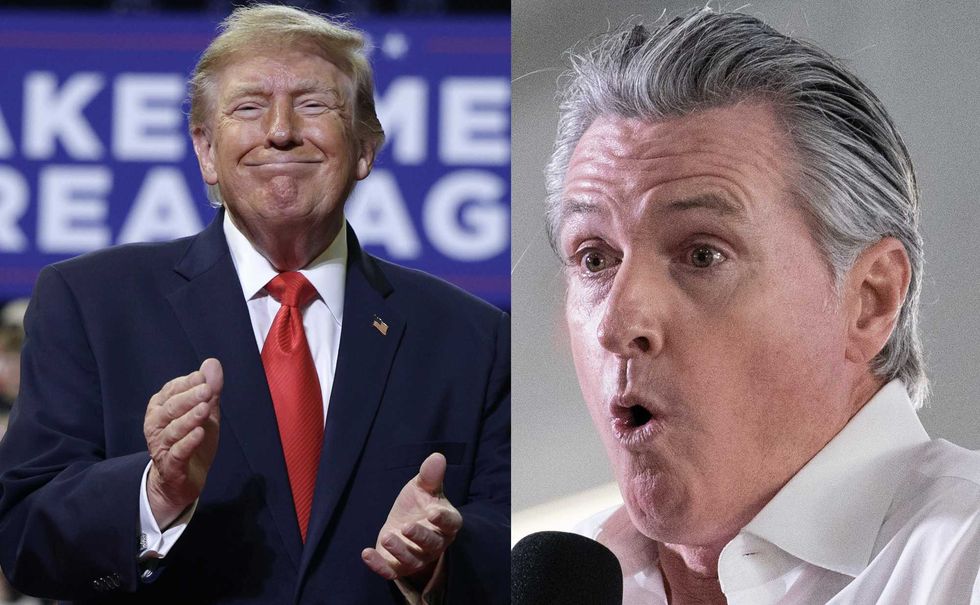
As President Donald Trump put it regarding his plan to take a stake in OpenAI, “pieces could be given to the American public, where the American public essentially becomes a partner.”
In addition to taking direct stakes in Intel and various mining companies, Trump’s 2025 executive order seeks to establish a sovereign wealth fund, in which the U.S. government—currently $39 trillion in debt—would use its business acumen to invest in a portfolio of companies.
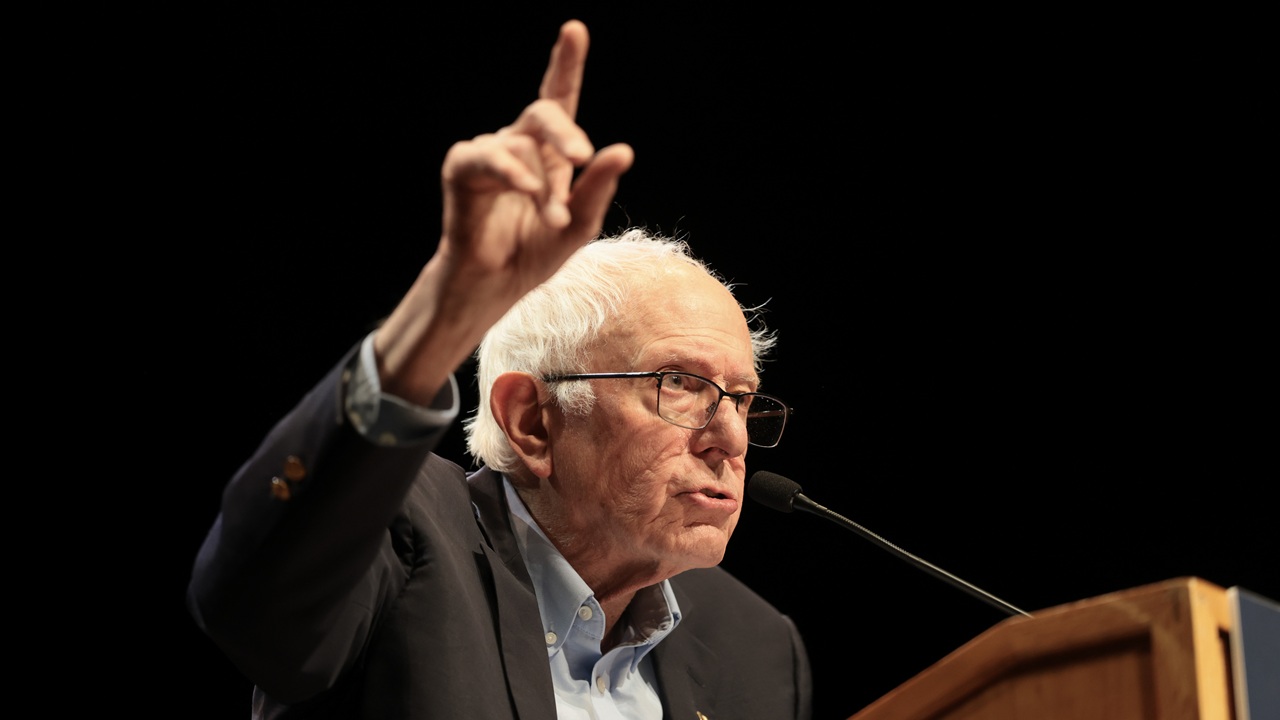
Sen. Bernie Sanders, I-Vt., loves the idea, though with a twist. He recently proposed the American A.I. Sovereign Wealth Fund Act, which would empower the government to take a 50% stake in America’s largest AI companies.
“This would guarantee that the trillions created by AI are used to improve the lives of all of us — and block oligarch decisions that harm the American people,” Sanders posted on X.
Where Trump advocates supporting strategic industries and profit sharing, Sanders talks about promoting social justice. But whatever the motivation, free-market economists say America should avoid going down this path.
“The United States did not become the global economic powerhouse it is because the government, and specifically the executive branch without input from Congress, took ownership of private companies,” Tad DeHaven, a policy expert at the Cato Institute, told The Daily Signal.
“We’ve certainly had enough history to know that state-owned firms tend to be less productive and focused more on pleasing politicians and bureaucrats than on pleasing their customers,” DeHaven said. “It’s an inherently corruptive venture.”
State ownership, critics say, corrupts both politicians and the companies they acquire.
“Mixing government and business has a long track record of graft, cronyism, and increasing the chances of insider trading by government officials,” Jeffrey Degner, a policy expert at the American Institute for Economic Research, told The Daily Signal.
“Firms will take their eye off the ball—shareholder returns,” he said. “Instead, the focus can change to investments in projects that are politically favored but not supported by genuine market signals.”
Perhaps a greater concern is that companies could effectively become agents of the state, engaging in activities like censorship and illegal surveillance, which are legally prohibited to government officials under the Constitution. There are already many examples of this, even without the state being a shareholder.
They include the FBI compelling banks to data mine customer accounts without warrants or probable cause following the January 6 Capitol riot; the Biden administration leaning on social media companies to censor posts that contradicted government messaging; federal and local law enforcement hiring private data brokers to gather information en masse on Americans’ buying habits, travel, and church attendance; and New York state regulators pressuring insurance companies to deny policies to disfavored groups like the National Rifle Association.
“Consider the Biden administration’s pressure applied to social media firms during the Covid lockdowns,” Degner said. “Imagine the silencing of free speech if the government had already taken ownership stakes in these firms!”
Government ownership of companies is not new, but to date it has been largely an emergency, temporary measure. The federal government took stakes to prop up banks during the Great Depression through the Reconstruction Finance Corporation, and through the Troubled Asset Relief Program during the 2008 mortgage crisis. In 2009, the federal government acquired a 60% stake in General Motors in an effort to keep the automaker afloat, although taxpayers ultimately lost more than $10 billion when the shares were sold.
What is different this time, however, is that the goal is not to rescue and divest, but to become a long-term corporate partner, and in the case of the Trump administration, bypassing Congress. Many analysts fear that once a president takes upon himself the power to buy companies, this precedent will be further exploited and expanded by future administrations.
“The concern here is what is the appropriate role and responsibility of not just the federal government but the executive branch itself, and it’s a bipartisan problem,” DeHaven said.
“There [is] nothing stopping the next Democratic administration using these stakes to put their thumb on these companies, across industries and across the broader economy, to effectuate outcomes that they desire,” he said. “But it’s not a Democrat thing and it’s not a Republican thing, it’s a ratchet effect—the tentacles are going to get deeper and stronger, unless it’s stopped.”
Drawing a line of separation between government and private industry in America will likely require action from lawmakers.
“Congress could pass legislation to prohibit both itself and the executive branch and its agencies from taking an ownership stake in any private company,” Degner said. “The constitutional authority to make such purchases is shaky to begin with.”
Failing that, the “ratchet” of government control over the private sector will likely continue to tighten.
We publish a variety of perspectives. Nothing written here is to be construed as representing the views of the Daily Signal.
More from this network:
Domains for Sale · GOTPeople.org · TheDSAPlatform · The Truth About Socialism
What's Your Reaction?
 Like
0
Like
0
 Dislike
0
Dislike
0
 Love
0
Love
0
 Funny
0
Funny
0
 Wow
0
Wow
0
 Sad
0
Sad
0
 Angry
0
Angry
0

I am just an average American. My teen years were in the late 70s and I participated in all that that decade offered. Started working young, too young. Then I joined the Army before I graduated High School. I spent 25 years in, mostly in Infantry units. Since then I've worked in information technology positions all at small family owned companies. At this rate I'll never be a tech millionaire. When I was young I rode horses as much as I could. I do believe I should have been a cowboy. I'm getting in the saddle again by taking riding lessons and see where it goes.
Premium domains for sale











Comments (0)