

A National Role Model: Louisiana’s Indictment of Non-Citizen Voter Can Teach Other States
Premium domains for sale
Freedom Is Back In Style
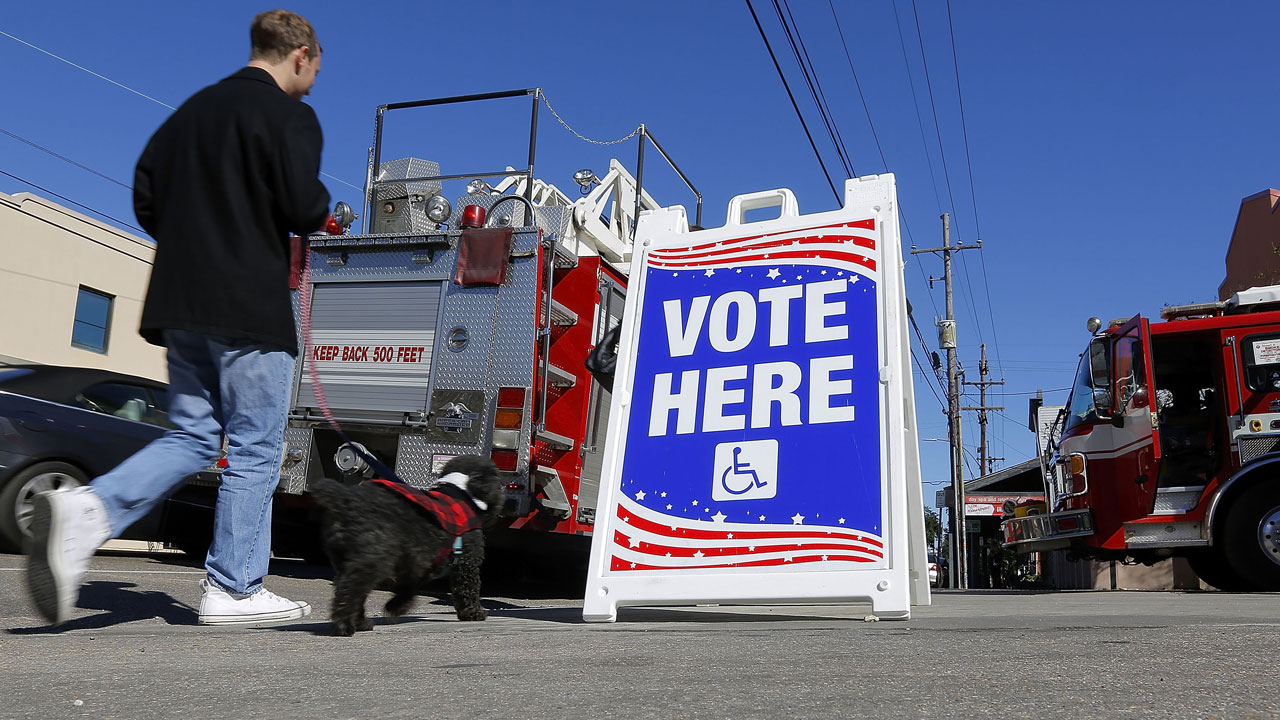
Secure elections begin with accurate voter rolls. Creating these voter rolls requires public servants dedicated to election integrity. After her string of recent successes with the use of the federal SAVE databases and passage of an enhanced voter ID law, other states could take some pointers from Louisiana Secretary of State, Nancy Landry.
Freedom Is Back
In Style
Premium domains for sale
Landry was pivotal in Louisiana’s adoption of the revamped Systematic Alien Verification for Entitlements (SAVE) database in May 2025, when it became the first state to do so. Commenting on its results in an X post, Landry stated: “Preliminary results of an ongoing investigation into noncitizens on our state’s voter registration list show that 390 noncitizens were registered in Louisiana. Of those, 79 voted in at least one election.”
Since the state’s change, Louisiana voters are seeing signs of improved election integrity as illegal voters from the past are brought to justice. Take the case of Australian national Denise Nataly Migliore. On June 11, 2026, the 51-year-old legal permanent resident of Franklinton, Louisiana was charged with four counts pertaining to election fraud.
According to the indictment, Migliore fraudulently purported to be a citizen in order to register and vote in the federal 2022 and 2024 elections, violating Title 18, United States Code, Section 1015(f), and Title 52, United States Code, Section 20511(2)(B), She awaits trial and, if convicted, faces up to five years in prison, a fine of up to $250,000, and a $100 mandatory special assessment fee. There is a possibility that she could be deported regardless of the case’s outcome.
Per federal statute, only United States citizens can register to vote and cast ballots in local, state, and federal elections. However, there are only a few options to properly verify the citizenship of applicants to vote. Louisiana’s prompt implementation and employment of the SAVE database has helped identify individuals such as Migliore who attempted to circumvent the law and undermine election integrity.
As Landry explained, “the federal indictment of Denise Nataly Migliore … is the direct result of Louisiana’s proactive efforts to identify and investigate individuals who may be unlawfully registered to vote.” Continuing, she asserted that “cases like this send a clear message that Louisiana takes election integrity seriously, and we will continue using every available tool to ensure that only eligible citizens participate in our elections.”
The message is clear: Louisiana’s elections are for Louisianans. If you want to vote illegally, Louisiana is not the state for you. As Landry stated on X: “We hope this is just the first indictment with more to come.”
When voters see officials taking steps to protect elections, voter confidence increases. Higher voter confidence prompts higher voter turnout, since voters are more inclined to participate in a system they trust.
Other states should take notes from Louisiana and start employing the SAVE database to secure their own elections. The updated version of SAVE, which was adopted by Louisiana, improves user-friendly options, does not charge for database searches, improves result accuracy and efficiency of large batch verifications, and integrates criminal records with addresses and immigration timelines, and includes automatic status updates.
Despite SAVE success stories and the recent executive order aimed at lowering barriers to use SAVE and similar databases, 22 states are still not using it or attempting to establish an agreement with the Bureau of Citizenship and Immigration Services to do so.
Even among the 28 states employing SAVE, usage varies. Some are still in the process of setting up access. Only 18 of the states used SAVE for voter registration or voter list maintenance between Oct. 1, 2025 and May 31, 2026.
Unfortunately, the future use of the SAVE databases is in doubt with a recent ruling in the Washington, D.C., District Court that vacated the use of the expanded program to identify citizenship of registrants on privacy grounds and an alleged violation of the Administrative Procedures Act. The initial ruling is expected to be appealed.
Every state should protect the integrity of its elections. Every citizen, regardless of their state of residence, has a right to secure elections. The SAVE database offers states a simple means of verifying voters’ citizenship and thereby securing elections. While SAVE databases are neither foolproof nor a catch-all solution, they empower states to identify the Denise Migliores on their rolls and remove them, making elections more secure for legitimate voters.
In the midst of ongoing politically-charged debate over the efficacy of SAVE, Secretary Landry and Louisiana teach us that the database is indispensable in any state devoted to promoting election integrity.
More from this network:
Domains for Sale · GOTPeople.org · TheDSAPlatform · The Truth About Socialism
What's Your Reaction?
 Like
0
Like
0
 Dislike
0
Dislike
0
 Love
0
Love
0
 Funny
0
Funny
0
 Wow
0
Wow
0
 Sad
0
Sad
0
 Angry
0
Angry
0

I am just an average American. My teen years were in the late 70s and I participated in all that that decade offered. Started working young, too young. Then I joined the Army before I graduated High School. I spent 25 years in, mostly in Infantry units. Since then I've worked in information technology positions all at small family owned companies. At this rate I'll never be a tech millionaire. When I was young I rode horses as much as I could. I do believe I should have been a cowboy. I'm getting in the saddle again by taking riding lessons and see where it goes.
Premium domains for sale








Comments (0)