

Big Tech Isn’t Even Pretending That It’s Not Listening Anymore
Premium domains for sale
Freedom Is Back In Style
The co-CEOs building what could become the next major tech disruptor say Americans have already surrendered their privacy, and it’s time to stop pretending otherwise.
Freedom Is Back
In Style
Premium domains for sale
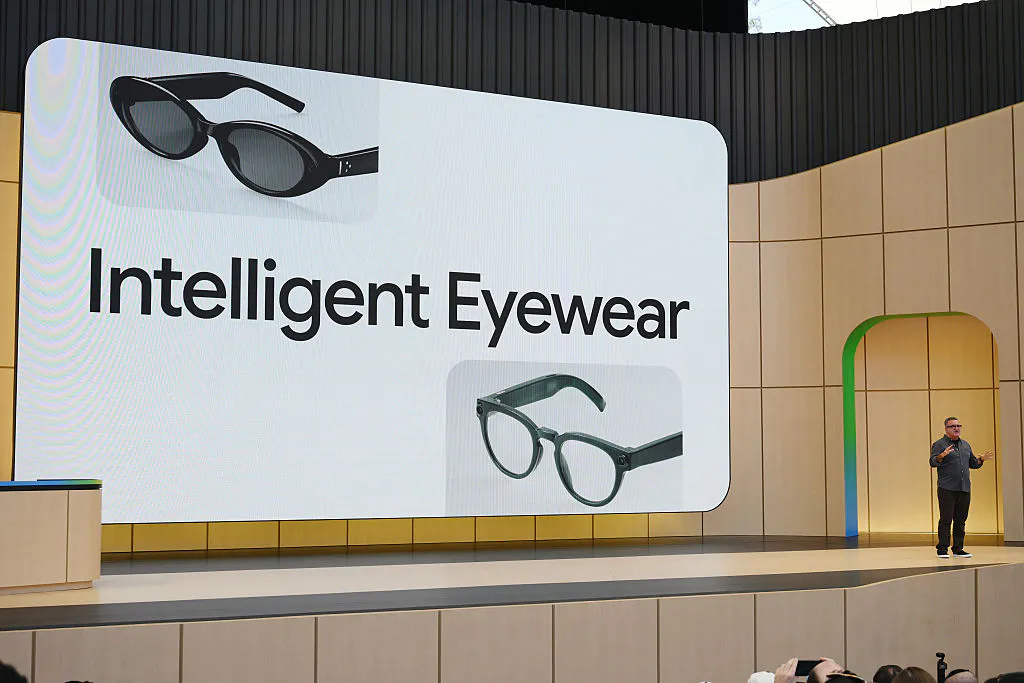
On Tuesday, Warby Parker co-CEOs Neil Blumenthal and Dave Gilboa discussed their company’s entry into the rapidly escalating race for artificial intelligence-powered smart glasses, positioning Warby Parker against Meta in what many in Silicon Valley believe could become the post-smartphone era.
Asked by CNBC’s Andrew Ross Sorkin if the smart glasses would “persistently listen” to or watch users, Blumenthal replied, “Our phones are already listening to us, so we’ve already given that up. Now, for us, you’re going to need a prompt. But I think we probably have to have honest discussions about what we’ve already decided in society.”
Unlike Warby Parker, which openly acknowledged that consumers have already surrendered privacy to always-on technology, Meta has stopped short of saying its devices are constantly listening. The company has instead compared its smart glasses to voice assistants like Siri, maintaining that they only activate and begin listening after a user prompt.
Warby Parker’s upcoming smart glasses are powered by Google’s Gemini AI platform and developed in partnership with Samsung. The company says the devices are being built with visible privacy safeguards, including cameras that are turned off by default, and an LED indicator light that becomes “incredibly visible” whenever recording is activated.
Executives argue the tradeoff is worth it because of the productivity gains AI-powered eyewear could bring to everyday life.
Gilboa believes the glasses will allow people to “keep their heads up” by allowing them to take calls, send emails and texts, and browse the internet all without taking out a phone or logging onto a computer.
Blumenthal drew a distinction between Google’s business model and Meta’s, arguing that Google is designed to help users quickly find information, while competitors aim to keep consumers trapped inside their platforms for as long as possible.
“One of the primary reasons we are so excited to partner with Google is if you think about Google’s business model, it is designed to help you find information and then get you off Google properties,” Blumenthal said. “Others in the market are designed to keep you in their ecosystem. For us, it’s about making the world more useful.”
“You can also imagine super vision as well,” he added. “That’s how we think about these products, how we give ourselves superpowers.”
Warby Parker’s AI-powered smart glasses are expected to launch in the fall of 2026.
Warby Parker first jumped into the industry in 2010 when it was founded by four Wharton MBA students, each of whom invested $30,000 of their own savings to launch the company. Since then, the eyewear startup has expanded into contact lenses, opened in-store eye care services, and generated nearly $872 million in revenue last year.
Later this year, Apple is also expected to unveil its first AI-powered smart glasses, which are expected to launch in 2027.
More from this network:
Domains for Sale · GOTPeople.org · TheDSAPlatform · The Truth About Socialism
What's Your Reaction?
 Like
0
Like
0
 Dislike
0
Dislike
0
 Love
0
Love
0
 Funny
0
Funny
0
 Wow
0
Wow
0
 Sad
0
Sad
0
 Angry
0
Angry
0

I am just an average American. My teen years were in the late 70s and I participated in all that that decade offered. Started working young, too young. Then I joined the Army before I graduated High School. I spent 25 years in, mostly in Infantry units. Since then I've worked in information technology positions all at small family owned companies. At this rate I'll never be a tech millionaire. When I was young I rode horses as much as I could. I do believe I should have been a cowboy. I'm getting in the saddle again by taking riding lessons and see where it goes.
Premium domains for sale






















Comments (0)