

My son’s disease progressed while the FDA waited
Premium domains for sale
Freedom Is Back In Style
Birthdays should mark milestones, offer hope for another year, and remind us to cherish the people we love.
Freedom Is Back
In Style
Premium domains for sale
But on the first anniversary of the Food and Drug Administration’s decision to restrict access to Elevidys, a gene therapy for Duchenne muscular dystrophy, there will be no cake or candles in our home.
The only birthdays Duchenne families want to celebrate are the ones our children are still here to have. The FDA should help us light those candles.
My 14-year-old son, Ryu, is still fighting to reach another birthday.
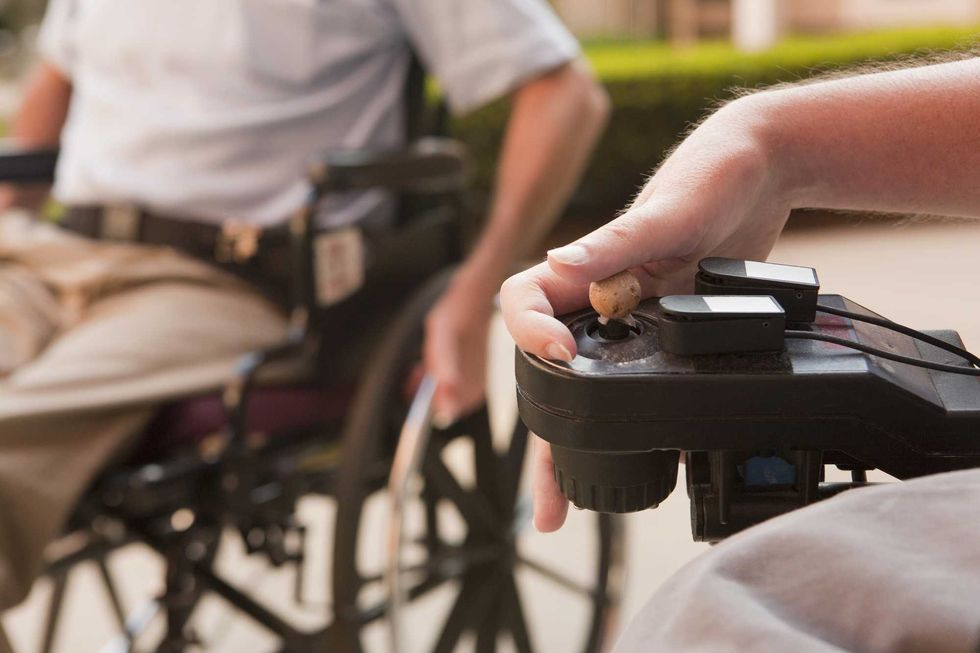
A year ago, I was exploring Elevidys as a treatment that might help him live a longer, fuller life. Then, almost overnight, that hope disappeared. The FDA first halted use of the therapy entirely before restoring access only for boys who could still walk. Ryu, who already uses a wheelchair, was left behind.
By age 14, more than 82% of Duchenne patients use a wheelchair. After age 15, the share exceeds 90%.
I have spent my life living with Duchenne muscular dystrophy, a rare, progressive genetic disease that causes muscles to waste away and almost always leads to premature death. It has shaped every chapter of my family’s story. I watched my brothers, Angelo and Antonio, die from Duchenne in their early 20s.
I began considering Elevidys because I trusted the science and the physician who brought it to my attention. I believed my son deserved the same opportunity other eligible patients were receiving.
Instead, the past year has been heartbreaking.
Ryu’s disease has progressed. His breathing is weaker, and he relies on his BiPAP machine more than he did a year ago. Duchenne families measure time differently. Every lost ability is marked by a clock that never turns back.
RELATED: The FDA seems to care more about celebrities than sick Americans
 MarioGuti/iStock/Getty Images
The FDA said it restricted Elevidys after reports of three patient deaths. Those boys died from liver complications, not complications caused by wheelchair use. Families like mine struggle to understand why patients with advanced disease lost access to a treatment because of risks that were not unique to them.
Safety must remain paramount. We are not asking regulators to approve every experimental therapy or ignore serious adverse events. Elevidys had already passed through years of research and clinical trials and had been administered to Duchenne patients before access was narrowed.
We are asking for something more modest and more humane: When a disease is progressive and fatal, families should be allowed to work with their doctors to decide whether the potential benefit justifies the risk for their own children.
The anniversary of the Elevidys restriction also marks the moment I turned 40 years of helplessness into action. I learned what an op-ed was and wrote my first one. I entered the intimidating world of social media.
On my first trip to Washington, D.C., I learned how to call an Uber and met with senators, staff members, other rare-disease mothers, and patients. I did not go because I wanted to become an activist. I went because I am a mother. I had to speak for my son and honor the memory of my brothers, who never lived to see the possibilities available to patients today.
My brother Angelo volunteered for experimental research in the 1990s, when almost no treatment options existed. He wanted future children with Duchenne to benefit from his courage. Years later, one of those children would be his nephew — my son.
RELATED: Medicare red tape turned insurers into villains
 stevegraham/iStock/Getty Images
The FDA is entering a period of new leadership. The next commissioner should put patients first, recognize that rare diseases demand urgency, and trust families and physicians to make informed decisions together. Returning to the old approach would cost families the one thing no regulator can restore: time.
Hope has a birthday too. We celebrate it whenever a scientist makes a breakthrough, a doctor refuses to give up, a parent fights for one more chance, or the FDA chooses urgency over bureaucracy.
I pray this dark anniversary is the last time FDA policy leaves Duchenne families behind — and the beginning of a new era in which boys like Ryu have the chance to live as fully and as long as possible.
The only birthdays Duchenne families want to celebrate are the ones our children are still here to have. The FDA should help us light those candles.
More from this network:
Domains for Sale · GOTPeople.org · TheDSAPlatform · The Truth About Socialism
What's Your Reaction?
 Like
0
Like
0
 Dislike
0
Dislike
0
 Love
0
Love
0
 Funny
0
Funny
0
 Wow
0
Wow
0
 Sad
0
Sad
0
 Angry
0
Angry
0

I am just an average American. My teen years were in the late 70s and I participated in all that that decade offered. Started working young, too young. Then I joined the Army before I graduated High School. I spent 25 years in, mostly in Infantry units. Since then I've worked in information technology positions all at small family owned companies. At this rate I'll never be a tech millionaire. When I was young I rode horses as much as I could. I do believe I should have been a cowboy. I'm getting in the saddle again by taking riding lessons and see where it goes.
Premium domains for sale




















Comments (0)