

Citizenship Follies
Premium domains for sale
Freedom Is Back In Style
The administration was never going to win the birthright citizenship case before the Supreme Court. Changing something as fundamental as our current practices regarding membership in the national community shouldn’t be changed by executive order.
Freedom Is Back
In Style
Premium domains for sale
But the real losers from Tuesday’s decision are the American people.
That’s because the high court didn’t just strike down Trump’s January 2025 executive order on “Protecting the Meaning and Value of American Citizenship.” Rather, by a 5-4 vote, it said that Congress did not have the authority to change our current practice of granting U.S. citizenship to almost everyone born here, even children born to tourists, foreign students, visa workers, or illegal aliens. This removes the issue from normal democratic politics.
The only way to reform the rules now is a constitutional amendment. But that requires a two-thirds vote of both houses of Congress and ratification by three-fourths of the state legislatures — so at a time when Republicans have a tiny House majority, and Democrats are sending literal communists to Washington, D.C., it’s a safe bet that this ruling will be with us for a while.
Mass Deportation
So what are the likely policy consequences?
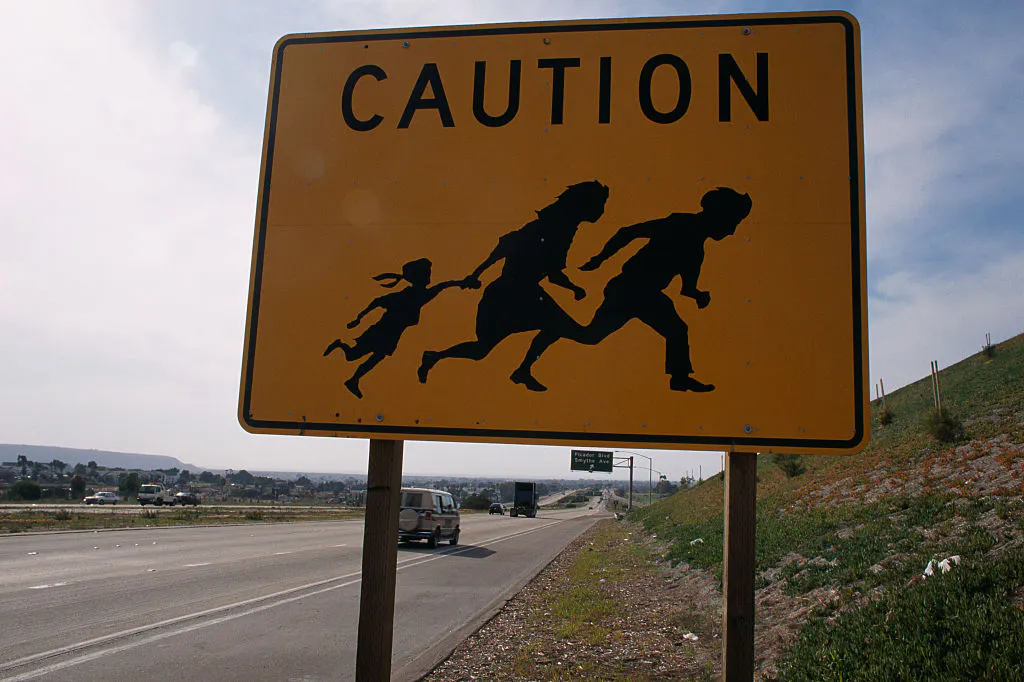
First, the ruling gives added urgency to the administration’s rhetorical push for large-scale deportations. The Biden administration let in at least eight million illegal aliens, thousands of whom have had automatic U.S.-citizen children here, with more born every day. The fact of U.S.-born children gives illegal aliens no automatic right to stay, but it creates “equities” that make it politically more difficult to send people home.
This means the “worst of the worst” talk from the administration has to end, or at least be supplemented by aggressive, high-profile moves to force non-rapist illegals out of the country as well. This means dramatically stepped-up work-related enforcement needs to happen, now. That would involve raids of worksites, for sure, but also paperwork measures, what I call “briefcase enforcement,” involving not just DHS, but also the IRS and the Social Security administration.
Most illegal aliens aren’t dealing drugs or killing people — so why would they decide to self-deport if all the talk is about violent and dangerous illegals? There has indeed been some self-deportation, but the only way to scale it up is to make it impractical to live here illegally by locking illegals out of jobs, driver’s licenses, financial services (bank accounts, remittances, mortgages), etc.
In some of these areas, the administration has moved aggressively — Treasury Secretary Scott Bessent has been especially active in his bailiwick. But flushing illegal aliens out of the job market has to be the main objective; it’s something the administration has been loath to do — and that impulse is coming from the top. Maybe this week’s setback at the Supreme Court will focus the White House’s attention on the urgency of worksite enforcement.
Birth Tourism
The citizenship ruling has implications for legal admissions, as well. One issue that has finally been getting attention is birth tourism. Thousands of foreign women every year come to the United States on tourist visas to give birth, and then return home with their newly minted-on-paper U.S. citizens. Those children are raised entirely abroad, with no instruction in American history or traditions, and certainly no patriotic education — in many cases, quite the opposite, since some of the top sources of birth tourists are communist China, Russia, Nigeria, Turkey, and elsewhere. Peter Schweizer, in his recent book “The Invisible Coup: How American Elites and Foreign Powers Use Immigration as a Weapon,” estimates there may be as many as 1.5 million paper U.S. citizens living in China as a consequence of birth tourism. I suspect the number isn’t that high, but there’s no question it’s a large-scale problem.
The State Department and ICE have already been cracking down on birth tourism networks here and abroad, but more is needed. Now that reform of our citizenship rules is off the table, pregnant women are going to have to be barred from traveling to the United States on tourist, student, or work visas.
That means, for starters, the State Department visa form needs to add a question asking whether the applicant is pregnant, which it does not do now. What’s more, the regulations governing visa issuance now handcuff consular officers in this regard. They read:
You must not ask a visa applicant whether they are pregnant unless you have a specific articulable reason to believe they may be pregnant and planning to give birth in the United States. … You must not, as a matter of course, ask all female applicants (or any specific sub-sets of applicants) whether they are pregnant or intend to become pregnant; you also may not require B NIV [tourist or business-travel] applicants to provide evidence that they are not pregnant.
This has to change.
Tourists aren’t the only temporary visitors whose children born here are accorded citizenship. Each year, hundreds of thousands of foreign students and workers are admitted on temporary visas, and the longer they remain, the more of them will have children here. For instance, the tech industry’s open-borders lobbying group estimated a few years ago that there were more than 175,000 spouses of H-1B visa holders in the U.S., overwhelmingly women of childbearing age. Their visa designation is H-4, and the Supreme Court has made a strong case for abolishing the H-4 visa altogether, prohibiting the South Indian male tech workers who account for the lion’s share of H-1B visas from bringing their families.
Some have even suggested the president use his absolute exclusion authority under sec. 212(f) of the Immigration and Nationality Act to simply bar the admission of all women of child-bearing age from coming on temporary (i.e. nonimmigrant, non-green-card) visas.
Would it be better to be more open to foreign tourists and other temporary visitors? I think so. But in an age of cheap and easy transportation and communication, you can have either tight citizenship rules with more openness to the outside world, or loose citizenship rules and less openness. This week’s Supreme Court ruling pushes us toward the latter.
***
Mark Krikorian is executive director of the Center for Immigration Studies.
More from this network:
Domains for Sale · GOTPeople.org · TheDSAPlatform · The Truth About Socialism
What's Your Reaction?
 Like
0
Like
0
 Dislike
0
Dislike
0
 Love
0
Love
0
 Funny
0
Funny
0
 Wow
0
Wow
0
 Sad
0
Sad
0
 Angry
0
Angry
0

I am just an average American. My teen years were in the late 70s and I participated in all that that decade offered. Started working young, too young. Then I joined the Army before I graduated High School. I spent 25 years in, mostly in Infantry units. Since then I've worked in information technology positions all at small family owned companies. At this rate I'll never be a tech millionaire. When I was young I rode horses as much as I could. I do believe I should have been a cowboy. I'm getting in the saddle again by taking riding lessons and see where it goes.
Premium domains for sale










Comments (0)