

CS Lewis: Angry atheist surprised by God
Premium domains for sale
Freedom Is Back In Style
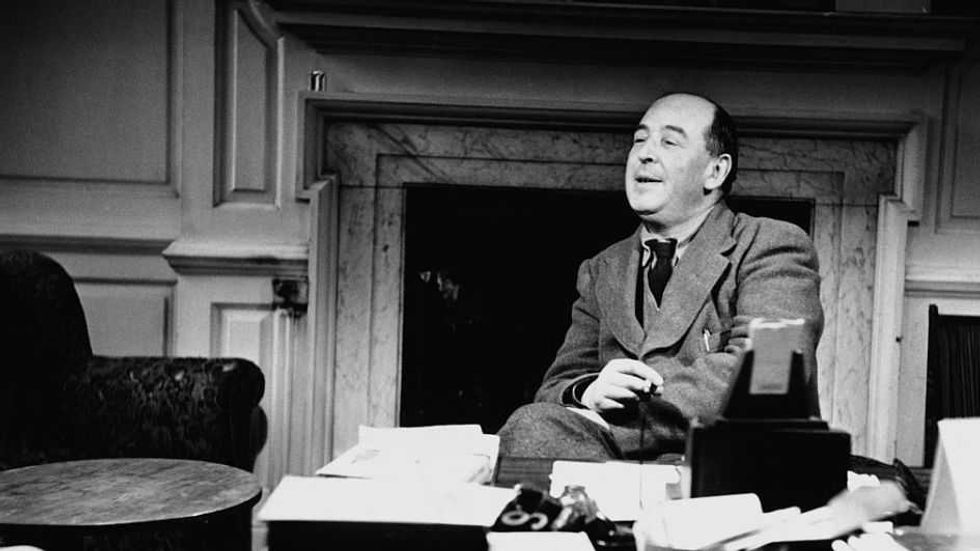
Before he became one of the 20th century’s most influential Christian writers, C.S. Lewis was a committed atheist who regarded religion with suspicion, irritation, and eventually contempt.
Freedom Is Back
In Style
Premium domains for sale
Christianity seemed to him a relic of humanity’s intellectual childhood — a comforting story for people unable to face reality without divine reassurance.
‘Amiable agnostics will talk cheerfully about “man’s search for God.” ... To me, as I then was, they might as well have talked about the mouse’s search for the cat.’
Return to sender
Lewis’ loss of faith began early. Though raised in a nominally Christian household in Belfast, his childhood belief collapsed after the death of his mother from cancer when he was just 9 years old.
“With my mother’s death,” he later wrote in his memoir, “Surprised by Joy,” “all settled happiness, all that was tranquil and reliable, disappeared from my life.”
Prayer seemed useless. God, if He existed at all, appeared absent and indifferent. Lewis later compared the experience to writing letters to someone who never replied.
As he grew older, his atheism hardened. Immersed in classical literature, philosophy, and modern rationalism, Lewis came to regard Christianity as one mythology among many — no more objectively true than the pagan stories he admired in ancient texts.
At Oxford, he became known among friends as a “foul-mouthed and riotously amusing atheist.” The horrors of the First World War only deepened his disbelief. After surviving trench warfare and seeing death at close range, Lewis later remarked with grim pride: “I never sank so low as to pray.”
Yet even at the height of his atheism, cracks had begun to appear.
Deeper longing
Lewis found himself haunted by experiences that materialism could not easily explain: sudden moments of longing triggered by music, poetry, memory, or beauty. Reading certain books or encountering particular images awakened in him what he later described as an intense, almost painful desire for something beyond ordinary experience.
“An unsatisfied desire,” he wrote, “which is itself more desirable than any other satisfaction. I call it Joy.”
If human beings consistently longed for something no earthly experience could fully satisfy, what did that suggest? Hunger points to food. Thirst points to water. Why should this deeper longing exist at all if reality were ultimately meaningless?
Lewis slowly began to suspect that the longing was not accidental. Just as hunger points to food and thirst to water, this deeper want revealed something essential about human beings. As he would write in “Mere Christianity,” “If I find in myself a desire which no experience in this world can satisfy, the most probable explanation is that I was made for another world.”
He also found that his outrage at injustice itself suggested a moral framework that preceded humanity.
“My argument against God was that the universe seemed so cruel and unjust. But how had I got this idea of just and unjust?”
RELATED: Chuck Colson: Nixon loyalist who found hope in true obedience
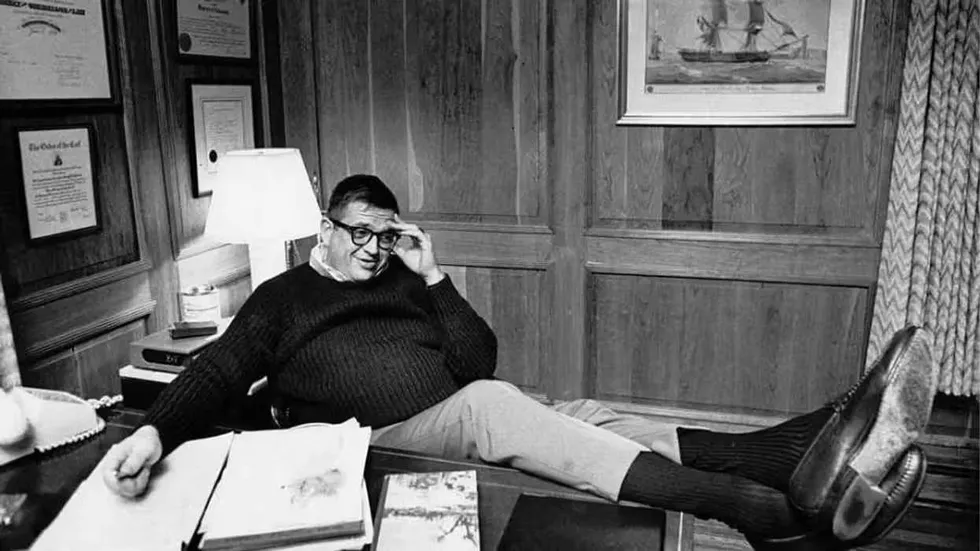 Washington Post/Getty Images
Kicking and screaming
Lewis did not move suddenly from atheism to Christianity. He resisted all the way, considering himself “the most dejected and reluctant convert in all England.”
“Amiable agnostics will talk cheerfully about ‘man’s search for God,’” he wrote. “To me, as I then was, they might as well have talked about the mouse’s search for the cat.”
Eventually, the chase ended. But having acknowledged God’s existence, Christianity itself remained a stumbling block.
Lewis loved mythology deeply and still regarded the Gospels as one myth among many. The breakthrough came largely through conversations with friends, including J.R.R. Tolkien, who challenged his assumption that myth and truth were opposites.
Christianity, Tolkien argued, was the “true myth”: the story toward which humanity’s myths and legends had always pointed, but one that had entered actual history.
The truth of myth
The idea struck Lewis with enormous force.
Themes that echoed through pagan mythology — sacrifice, death, resurrection, redemption — were not evidence that Christianity was fabricated, Lewis came to believe. They were signs that humanity had been reaching toward the same truth all along.
Soon afterward, while riding in the sidecar of his brother’s motorcycle on the way to a zoo, Lewis realized the final barrier had fallen. “When we set out,” he wrote in “Surprised by Joy,” “I did not believe that Jesus Christ is the Son of God, and when we reached the zoo I did.”
That belief shaped the rest of his life, which he would devote to helping make Christianity intellectually serious and imaginatively alive for millions of readers.
More from this network:
Domains for Sale · GOTPeople.org · TheDSAPlatform · The Truth About Socialism
What's Your Reaction?
 Like
0
Like
0
 Dislike
0
Dislike
0
 Love
0
Love
0
 Funny
0
Funny
0
 Wow
0
Wow
0
 Sad
0
Sad
0
 Angry
0
Angry
0

I am just an average American. My teen years were in the late 70s and I participated in all that that decade offered. Started working young, too young. Then I joined the Army before I graduated High School. I spent 25 years in, mostly in Infantry units. Since then I've worked in information technology positions all at small family owned companies. At this rate I'll never be a tech millionaire. When I was young I rode horses as much as I could. I do believe I should have been a cowboy. I'm getting in the saddle again by taking riding lessons and see where it goes.
Premium domains for sale























Comments (0)