

The Truth Behind The Disappearing Rainbow Logos
Premium domains for sale
Freedom Is Back In Style
This article is part of Upstream, The Daily Wire’s new home for culture and lifestyle. Real human insight and human stories — from our featured writers to you.
Freedom Is Back
In Style
Premium domains for sale
***
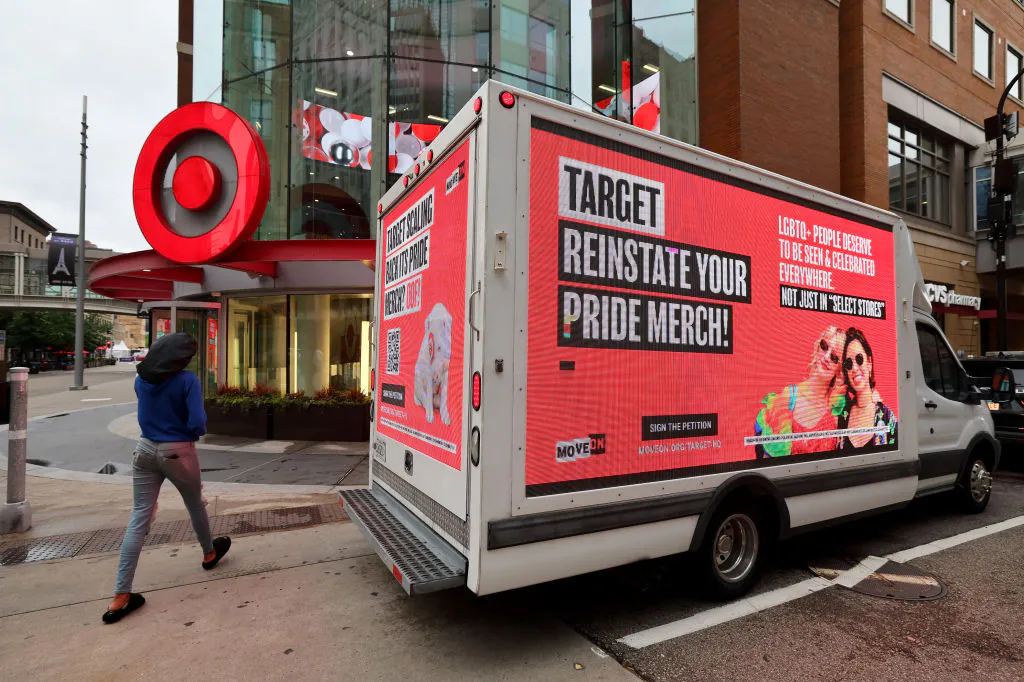
The massive Pride campaigns that Target and Bud Light splashed across their stores and cans a few years ago have quietly disappeared. Not because the culture moved on, but because those brands never truly believed in the slogans. They believed in revenue, and rainbow branding looked like an easy shortcut. When it backfired spectacularly, they walked away.
Woke corporate stances are merely pragmatic: marketing strategies dressed up as moral crusades. There’s nothing authentic or altruistic about them. At bottom, it’s always been about profits, and performative progressivism seemed like an efficient way to court younger consumers.
Though it started in the 2010s, woke capitalism took over in 2020 with the Black Lives Matter explosion and black squares all over Instagram. But since then, consumers have noticed it was all a bunch of bull.
Now people are just exhausted by brands that preach values they don’t practice. Faux-generous brands claim to take the harder right over the easier wrong, when in fact it is the opposite. The minute the numbers shift, they drop the social justice stance.
There’s nothing inherently wrong with chasing profits. Businesses exist to make money. The problem is when campaigns erode trust by promising principles they abandon at the first sign of trouble. It’s the misrepresentation, the lying, that is the problem.
A growing number of shoppers are demanding something simpler: brands that are honest.
As the founder of XX-XY Athletics, I started this brand with the idea that we would be the first pro-woman, pro-truth brand that champions female athletes, even when it’s hard. We would also promise to make our product ethically. We didn’t promise all made in the U.S. — because we didn’t know if we could pull it off given reduced capacities here at home. So we didn’t lie about it. But we continue working to make it a reality.
On the other hand, Nike makes money pretending to champion female athletes. In reality, when Allyson Felix, the most decorated female track athlete of all time, became pregnant, they proposed cutting her pay by 70%. When junior elite runner Mary Cain joined Nike’s Oregon Running Project, she was bullied for her weight and psychologically abused to the point of considering suicide.
Beyond the hypocrisy in the athletic category, fast fashion has changed everything in the clothing business. We buy twice as much and wear it for half as long as we did 20 years ago, and it all ends up in the landfill.
We used to shop twice a year: in spring and fall. Fast fashion brands created today’s modern demand cycle, which is basically always on. Buy more, buy it now, who cares if the quality sucks, you’ll just get more next week.
The average American buys close to 70 new items a year. More than 50% of those items remain unworn and go straight to the landfill. But that doesn’t stop major fast fashion brands from pretending they are “green.”
“Values-led” branding in fashion is especially performative. Fast fashion’s self-created economic reality makes real alignment an impossibility: chasing volume and low prices clashes with genuine sustainability or ethical labor.
But the fashion hypocrisy is everywhere. Take Everlane, once celebrated as a beacon of “radical transparency.” Founded in 2010, it built a loyal following by revealing production costs and factory details for basics such as t-shirts and jeans. It told us we deserved to know how and where our goods were made. And it promised to transform the industry through its “radically transparent” approach.
Guess what happened next? In May, after years of slumping sales and debt accrual, Everlane sold to ultra-fast-fashion giant Shein for about $100 million. The brand that sold a conscience is now under the roof of a company notorious for the opposite model. Shein has been cited as one of the biggest apparel polluters in the world, not to mention the well-founded allegations that the brand uses forced labor from the Uyghur Muslim minority in China.
H&M offers another textbook case. Its “Conscious” collection and ambitious goals — 100% recycled or sustainable materials by 2030, climate positive by 2040 — sound impressive in marketing. Yet the core business remains a fast-fashion volume machine churning out massive overproduction, waste, and pollution. The brand has faced lawsuits and criticism for misleading claims on polyester-heavy items marketed as eco-friendly. It also brags about its recycling program, offering discounts to encourage consumption to those who bring in products to dump in its bins. Talk sustainability; walk disposability.
Then there’s Lions Not Sheep, which wrapped itself in pro-America, patriotic messaging only to get fined by the Federal Trade Commission for ripping out “Made in China” tags and replacing them with fraudulent “Made in USA” labels on imported apparel. The penalty was over $211,000. Patriotism as costume.
Marketing fake values goes both ways, it seems.
Wellness brands such as Prime market themselves as clean and health-focused while drawing scrutiny over ingredients and formulations that don’t fully match the hype.
Even Patagonia, long hailed as the gold standard for environmental activism because it has touted itself as such, relies heavily on petroleum-based synthetics. No brand is perfect, but when your image vastly outpaces your practice, it’s greenwashing.
Brands that claim values must live them, especially when it’s hard, or they will lose the trust of their fans. Consumers should demand to know more about what they wear every day: where it comes from, how it’s made, and whether the company actually stands for anything beyond the next quarterly report.
Shoppers are waking up. They’re tired of being sold conscience by companies that treat principles as optional marketing strategies. Real values aren’t flexible. They don’t vanish when the market shifts.
Brands that understand this — the ones that align strategy with substance — will be the ones that endure. The rest are just full of it.
***
Jennifer Sey is the CEO of XX-XY Athletics. She is an author, filmmaker, and retired national champion gymnast.
More from this network:
Domains for Sale · GOTPeople.org · TheDSAPlatform · The Truth About Socialism
What's Your Reaction?
 Like
0
Like
0
 Dislike
0
Dislike
0
 Love
0
Love
0
 Funny
0
Funny
0
 Wow
0
Wow
0
 Sad
0
Sad
0
 Angry
0
Angry
0

I am just an average American. My teen years were in the late 70s and I participated in all that that decade offered. Started working young, too young. Then I joined the Army before I graduated High School. I spent 25 years in, mostly in Infantry units. Since then I've worked in information technology positions all at small family owned companies. At this rate I'll never be a tech millionaire. When I was young I rode horses as much as I could. I do believe I should have been a cowboy. I'm getting in the saddle again by taking riding lessons and see where it goes.
Premium domains for sale














Comments (0)