

EXCLUSIVE: Senators Unveil Reforms to Root Out ‘Learing Center’ Fraud
Premium domains for sale
Freedom Is Back In Style
FIRST ON THE DAILY SIGNAL—Two Republican senators introduced draft legislation to reform child care for low-income families after fraud was uncovered in Minnesota and other blue states.
Freedom Is Back
In Style
Premium domains for sale
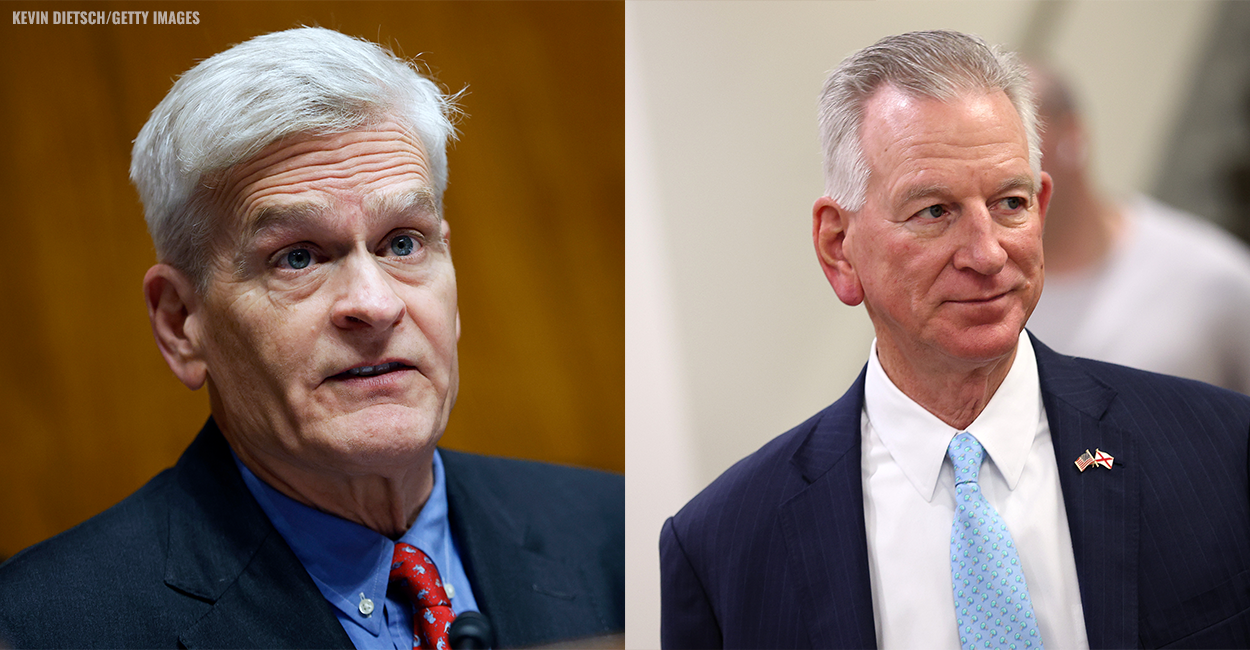
Sens. Bill Cassidy, R-La., and Tommy Tuberville, R-Ala., are asking stakeholders for feedback on the draft of a bill to amend the Child Care and Development Block Grant Act of 1990, a program to help low-income families afford child care. The program has not been reauthorized since 2014.
“Every dollar stolen is a dollar not going to children and working families,” said Cassidy, chair of the Senate Health, Education, Labor, and Pensions Committee. “While Minnesota brought attention to the issue, this is not just a Minnesota problem. Any criminal who steals from children and rips off taxpayers will be held accountable.”
The senators aim to reduce fraud and improper payments, enhance eligibility verification, increase transparency, and ensure corrective action in federally funded child care programs.
The Senate committee is currently investigating Minnesota, New York, Oregon, and Michigan for potential fraud in federal child care funding.
The Department of Health and Human Services in December paused child care payments to Minnesota over widespread fraud allegations there.
President Donald Trump signed an executive order Monday establishing the Task Force to Eliminate Fraud and selecting Vice President JD Vance as “fraud czar.”
“American families have been robbed for far too long,” Tuberville said. “We need to find the source of this abuse and cut it off so that our children and families can truly thrive. I will always work to hold the bad actors in the system accountable and advocate for Alabama’s hardworking families and their children.”
The deadline for feedback on the bill draft is April 8.
‘Strengthening Federal Oversight Authority‘
The draft gives HHS the authority to enforce program requirements and ensure states and lead agencies comply with program rules.
The agency can even disqualify the state from receiving further Child Care and Development funds.
“This discussion draft includes a provision that if a state is found noncompliant, penalties must (instead of may) include a disallowance or withholding of funds, a percentage reduction in funds, or disqualification from receipt of funds,” the draft says.
The draft also aims to increase oversight by requiring states to publish their error reports every two years rather than every three years.
The Government Accountability Office would have to review the state reports to provide recommendations to the HHS Office of Inspector General for additional oversight and policy suggestions.
‘Enhancing Monitoring for High-Risk States’
States with error rates above a certain percentage should be subject to additional monitoring by HHS, according to the draft.
HHS would be required to ramp up monitoring of states identified as “high-risk” if a state’s error report is above 9%. Any state consistently above a 6% error rate for two consecutive audit cycles will also be considered “high risk.”
The senators also want to require states to post state plans, amendments to state plans, and corrective action plans due to non-compliance. The draft would also categorize fraudulent payments as improper payments when calculating state error rates.
HHS would be required to publish these state error reports on a publicly available website so taxpayers can review how their state is administering Child Care and Development Block Grant Act funds.
This draft would require states to compensate child care providers based on verified attendance, not enrollment. It would still allow state flexibility to pay providers prospectively or after services are delivered.
Removing the Marriage Penalty
While current rules may discourage marriage, the discussion draft modifies eligibility criteria to ensure families are not penalized when single parents marry.
This aims to ensure that the program helps children from married two-parent families where both adults are working a combined 60 hours per week or are enrolled in job training or educational programs, and are considered to have a moderate to low-income, not exceeding 85% of the state median income.
‘Tightening Eligibility and Payment Verification’
The discussion draft seeks to tighten eligibility verification requirements for families.
Cassidy and Tuberville want to require participants to self-report income changes within three months and require states to verify recipients’ income every six months. In addition, they seek to require participants to report significant income changes within that period.
Additional provisions would eliminate retroactive eligibility and require states to use electronic authentication tools to verify a participant’s identity.
The post EXCLUSIVE: Senators Unveil Reforms to Root Out ‘Learing Center’ Fraud appeared first on The Daily Signal.
More from this network:
Domains for Sale · GOTPeople.org · TheDSAPlatform · The Truth About Socialism
What's Your Reaction?
 Like
0
Like
0
 Dislike
0
Dislike
0
 Love
0
Love
0
 Funny
0
Funny
0
 Wow
0
Wow
0
 Sad
0
Sad
0
 Angry
0
Angry
0

I am just an average American. My teen years were in the late 70s and I participated in all that that decade offered. Started working young, too young. Then I joined the Army before I graduated High School. I spent 25 years in, mostly in Infantry units. Since then I've worked in information technology positions all at small family owned companies. At this rate I'll never be a tech millionaire. When I was young I rode horses as much as I could. I do believe I should have been a cowboy. I'm getting in the saddle again by taking riding lessons and see where it goes.
Premium domains for sale






















Comments (0)